



Zoom CS-mount lenses for smart traffic
02/03/2026
Smart agriculture multispectral imaging lenses
02/05/2026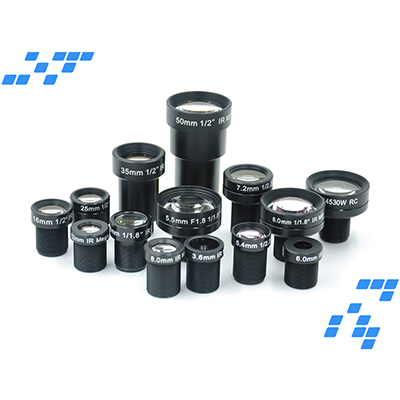
Table of Contents
- Introduction
- General Guidelines for Outdoor Athermalized lens Design
- Optical System Design of Athermalized lens
- Material Selection for Athermalized lens
- Comparison of Athermal Technology Routes
- Core Design Methods of Passive Athermalization
- Special Design Considerations for Outdoor Environments
- Performance Evaluation Standards for Outdoor Athermalized lens
- Outdoor Application Cases of Athermalized lens
- FAQs
- Conclusion
Key Takeaways
- Core demand for outdoor Athermalized lens: Temperature resistance, low distortion, and consistent clear imaging 24/7.
- Value of athermal technology: No active temperature control, lower cost, and reliable adaptation to extreme outdoor conditions.
- Optical design focus: Lens selection, focal length optimization, and chromatic aberration/distortion suppression.
- Material selection criteria: Low thermal expansion optical materials, weather-resistant housings, and durable sealing components.
- Technical route comparison: Passive athermal solutions are preferred for most outdoor scenarios (higher reliability, lower cost).
- Core passive athermal methods: Material matching, structural compensation, and optical compensation.
- Special outdoor considerations: IP protection, UV resistance, and mechanical stability.
- Performance evaluation: Temperature adaptability, imaging precision, and environmental durability.
- Typical applications: Traffic monitoring, security surveillance, industrial machine vision, etc.
Introduction
Outdoor environments pose unique challenges to optical lenses: extreme temperature fluctuations (-40℃ to +85℃), humidity, dust, UV radiation, and mechanical vibrations. Traditional lenses often suffer from blurred imaging, distortion, or structural damage due to thermal expansion/contraction, failing to meet the demands of 24/7 stable operation. As a professional optical lens supplier, TOWIN specializes in designing and manufacturing Athermalized lens tailored for outdoor use. Our full range of athermal lenses (including M12/S-Mount, C-Mount, and CS-Mount series) integrates advanced athermalization technology, premium materials, and rugged designs to deliver consistent performance in harsh outdoor conditions. This article explores the core principles, design methods, and practical applications of outdoor athermal lenses to help you select the optimal solution for your project.
1. General Guidelines for Outdoor Athermalized lens Design
1.1 Core Optical Performance Requirements for Outdoor Scenarios
Outdoor athermal lenses must address the unique stressors of open environments. Key performance requirements include:
- Wide temperature adaptability: Operate stably between -40℃ and +85℃ (standard range) to withstand seasonal and diurnal temperature swings.
- Low distortion: Ensure geometric accuracy for critical applications like license plate recognition (LPR) and object measurement.
- Chromatic aberration correction: Maintain color fidelity across visible and IR spectra for day/night surveillance.
- High light transmittance: Optimize low-light performance for dawn, dusk, and night operation (compatible with low-light sensitive cameras).
- Mechanical stability: Resist vibration, shock, and wind loads (compliant with IEC 60068 standards for outdoor equipment).
- Long-term durability: Withstand UV radiation, rain, dust, and corrosion without performance degradation.
1.2 Application Value & Core Position of Athermal Technology
Athermal technology is the cornerstone of reliable outdoor imaging, offering distinct advantages:
- Cost efficiency: Eliminates the need for active heating/cooling modules, reducing power consumption and component failure risks.
- Compact design: Passive athermalization avoids bulky temperature control hardware, enabling integration with space-constrained outdoor cameras.
- High reliability: Fewer moving parts mean lower maintenance costs and longer service life (critical for remote outdoor installations).
- Consistent imaging: Compensates for thermal-induced focal shifts and distortion, ensuring image clarity across temperature ranges.
- Core positioning: Athermal technology is not an optional upgrade but a fundamental requirement for outdoor lenses, bridging the gap between laboratory performance and real-world outdoor reliability.
2. Optical System Design of Athermalized lens
2.1 Lens Selection & Athermal Adaptation Design
The foundation of Athermalized lens performance lies in strategic lens selection and optimization:
- Optical glass with low thermal expansion: Choose materials like BK7 (borosilicate glass) and SF11 (high-index glass) to minimize thermal deformation.
- Multi-element lens configuration: Combine positive and negative lenses to offset focal length shifts caused by temperature changes.
- Anti-reflective (AR) multi-coating: TOWIN’s proprietary multi-coating technology reduces reflection losses (≥95% transmittance) and enhances UV resistance.
- IR correction: Integrate IR-corrected lens elements to ensure focus consistency across visible (400-700nm) and near-IR (700-1100nm) spectra, ideal for day/night cameras.
2.2 Outdoor Adaptation Optimization of Focal Length & Field of View (FOV)
Focal length and FOV must be tailored to specific outdoor use cases. Below is a practical adaptation guide for common scenarios:
| Outdoor Application | Recommended Focal Length | Field of View (FOV) | TOWIN Athermal Lens Series |
| Traffic monitoring (LPR) | 16mm-25mm | 45°-60° | C-Mount ITS Athermal Lens |
| Wide-area security surveillance | 8mm-12mm | 90°-120° | CS-Mount Wide-Angle Athermal Lens |
| Industrial outdoor inspection | 25mm-50mm | 20°-45° | M12/S-Mount Low Distortion Athermal Lens |
| Residential security | 4mm-6mm | 110°-130° | CS-Mount Fisheye Athermal Lens |
Key optimization principles:
- Balance FOV and resolution: Wider FOV for large-area coverage, longer focal lengths for high-magnification details.
- Match camera sensor size: Ensure focal length compatibility with 1/2″, 1/3″, or 2/3″ sensors (e.g., TOWIN’s 1/2″ 5MP athermal lenses for high-resolution cameras).
2.3 Suppression of Chromatic Aberration & Distortion for Outdoor Clear Imaging
Outdoor imaging requires precise correction of optical defects:
- Chromatic aberration suppression: Use achromatic doublets (combining crown and flint glass) to align focal points of different wavelengths, eliminating color fringing.
- Distortion control: Implement low-distortion optical designs (barrel distortion ≤1%, pincushion distortion ≤0.5%) for applications like LPR and object tracking.
- Field curvature correction: Ensure flat image planes to maintain sharpness across the entire frame (critical for panoramic surveillance).
TOWIN’s athermal lenses integrate these corrections with passive athermalization, delivering clear, accurate images even in extreme temperature conditions.
3. Material Selection for Athermalized lens
3.1 Athermal Characteristics & Outdoor Applicability of Optical Materials
Optical materials directly impact athermal performance. The table below compares common options:
| Optical Material | Thermal Expansion Coefficient (10⁻⁶/℃) | Outdoor Advantages | TOWIN Application |
| BK7 Borosilicate Glass | 7.1 | Wide temperature range, low cost, high transmittance | Standard outdoor athermal lenses |
| SF11 High-Index Glass | 6.5 | High refractive index, ideal for telephoto lenses | Traffic monitoring (long focal length) |
| Special Athermal Resin | 4.8 | Lightweight, impact-resistant | Portable outdoor detection equipment |
| Fused Silica | 0.55 | Ultra-low thermal expansion, extreme temperature resistance | Customized high-precision lenses |
3.2 Temperature-Resistant & Corrosion-Resistant Housing Materials
Lens housings must withstand outdoor harshness:
- Aluminum alloy (6061-T6): Lightweight, excellent thermal conductivity, and corrosion-resistant (anodized finish). TOWIN’s standard housing material for most outdoor athermal lenses.
- Stainless steel (316L): Superior corrosion resistance for marine, coastal, or industrial environments (high humidity/salt spray).
- Engineered plastic (PC/ABS): Cost-effective, lightweight, and impact-resistant for low-risk outdoor applications.
All TOWIN Athermalized lens housings undergo environmental testing (salt spray, UV aging) to ensure 5+ years of outdoor service life.
3.3 Waterproof, Dustproof & Long-Term Stable Sealing Materials
Sealing is critical for IP protection (IP67/IP68 standard for TOWIN outdoor lenses):
- Silicone rubber O-rings: Excellent temperature resistance (-60℃ to +200℃) and waterproof performance.
- Fluororubber (Viton): Superior chemical resistance (resists oil, acid, and UV) for extreme industrial outdoor environments.
- Pressure-balanced design: Prevents internal condensation caused by temperature differences, ensuring long-term optical clarity.
4. Comparison of Athermal Technology Routes (Outdoor Application Perspective)
Two primary athermal technology routes exist, with distinct suitability for outdoor use:
| Technical Route | Passive Athermalization | Active Athermalization |
| Core Principle | Compensate thermal deformation via material matching, structural design, and optical configuration | Adjust lens position or temperature via electronic heating/cooling modules |
| Outdoor Advantages | No power required, compact, high reliability, low cost | Extreme temperature adaptability (-60~+120℃) |
| Outdoor Disadvantages | Limited temperature range (-40~+85℃) | High power consumption, bulky, high cost, higher failure risk |
| Applicable Scenarios | Most outdoor scenarios: security, traffic, industrial vision | Specialized scenarios: polar regions, desert oil fields |
| TOWIN Recommendation | Primary product line (80% of outdoor orders) | Customized solutions only |
For 90% of outdoor applications, passive athermalization is the optimal choice, balancing performance, cost, and reliability.
5. Core Design Methods of Passive Athermalization (Outdoor First Choice)
Passive athermalization is TOWIN’s focus for outdoor lenses, leveraging three core methods:
5.1 Material Matching Method
- Principle: Select optical materials and housing materials with complementary thermal expansion coefficients to minimize overall structural deformation.
- Implementation: Pair low-expansion optical glass (e.g., BK7) with aluminum alloy housings (thermal expansion coefficient matching) to reduce stress-induced focal shifts.
- Advantage: Simple structure, low cost, and high reliability for standard temperature ranges.
5.2 Structural Compensation Method
- Principle: Design the lens barrel with thermal compensation structures (e.g., floating lens groups, telescopic barrels) to offset focal length changes.
- Implementation: TOWIN’s patented floating lens group design allows internal lens elements to move slightly with temperature, maintaining focus accuracy.
- Advantage: Effective for wider temperature ranges (-40~+85℃) and compatible with complex optical systems.
5.3 Optical Compensation Method
- Principle: Combine positive and negative lens elements with different thermal optical properties to cancel out focal shifts.
- Implementation: Use achromatic doublets or triplets with carefully calculated curvatures and spacings to achieve athermalization.
- Advantage: Maintains high optical performance while eliminating thermal effects, ideal for high-resolution outdoor lenses (5MP+).
TOWIN integrates these three methods to develop passive athermal lenses that meet the diverse needs of outdoor applications.
6. Special Design Considerations for Outdoor Environments
Beyond athermalization, outdoor lenses require additional safeguards against environmental stressors:
- IP protection: All TOWIN outdoor athermal lenses meet IP67/IP68 standards, preventing water and dust ingress.
- UV resistance: Lens coatings and housing materials are UV-stabilized to avoid yellowing or degradation over time.
- Anti-condensation: Pressure-balanced design and hydrophobic coatings prevent condensation on lens surfaces (common in high-humidity environments).
- Vibration/shock resistance: Reinforced lens mounts and shock-absorbing structures comply with IEC 60068-2-6 (vibration) and IEC 60068-2-27 (shock) standards.
- Easy installation: Compatible with standard mounts (M12/S-Mount, C-Mount, CS-Mount) and designed for quick, tool-less assembly in outdoor settings.
7. Performance Evaluation Standards for Outdoor Athermalized lens
To ensure reliability, TOWIN subjects outdoor athermal lenses to rigorous testing against industry standards:
| Evaluation Dimension | Test Standard | Qualification Criteria | TOWIN Testing Method |
| Temperature Adaptability | IEC 60068-2-1 (cold) / IEC 60068-2-2 (heat) | Imaging clarity change ≤5% across -40~+85℃ | High-low temperature cycle test (500 cycles) |
| Imaging Precision | ISO 12233 (resolution) / ISO 17850 (distortion) | Resolution ≥100 lp/mm, distortion ≤1% | Optical test bench with temperature-controlled chamber |
| Environmental Durability | IEC 60068-2-11 (dust) / IEC 60068-2-18 (humidity) | IP67/IP68 rating, no corrosion after 500-hour salt spray test | Salt spray test chamber + dust test chamber |
| Mechanical Stability | IEC 60068-2-6 (vibration) / IEC 60068-2-27 (shock) | No structural damage, imaging performance unchanged | Vibration test 台 + shock test 台 |
| Long-Term Reliability | Accelerated aging test | Performance unchanged after 2000-hour aging (equivalent to 5 years of outdoor use) | Temperature-humidity aging chamber |
8. Outdoor Application Cases of Athermalized lens
TOWIN’s athermal lenses have been widely adopted in global outdoor projects. Below are typical cases:
8.1 Traffic Monitoring (Intelligent Traffic Systems – ITS)
- Challenge: Extreme temperature fluctuations (-30℃ to +60℃), strong sunlight, and need for precise LPR.
- Solution: C-Mount ITS Athermalized lens (16mm focal length, IR-corrected, low distortion ≤0.8%).
- Effect: 24/7 clear license plate recognition, even in winter frost and summer heat. Deployed in 20+ countries (USA, Germany, Australia, etc.).
8.2 Outdoor Security Surveillance
- Challenge: Wide temperature range, rain, dust, and low-light conditions.
- Solution: CS-Mount Wide-Angle Athermalized lens (12mm focal length, IP68, multi-coating for low-light performance).
- Effect: Consistent imaging in deserts (Saudi Arabia) and cold regions (Scandinavia), supporting 5MP camera resolution.
8.3 Industrial Outdoor Inspection
- Challenge: Vibration, high humidity, and precise object measurement.
- Solution: M12/S-Mount Low Distortion Athermalized lens (25mm focal length, shock-resistant design).
- Effect: Used in outdoor solar panel inspection and construction site monitoring, maintaining measurement accuracy ±0.1mm across -20~+70℃.
FAQs
Q1: What is the difference between athermal lenses and regular outdoor lenses?
A1: Regular outdoor lenses lack thermal compensation, leading to blurred imaging or distortion when temperatures change. Athermal lenses (especially passive ones) use material/optical/structural design to offset thermal effects, ensuring consistent performance without active temperature control.
Q2: What temperature range do TOWIN’s outdoor athermal lenses cover?
A2: Standard models operate between -40℃ and +85℃. Customized versions for extreme environments (e.g., polar regions, deserts) can cover -60℃ to +120℃.
Q3: Which lens mount is best for outdoor applications?
A3: It depends on your camera:
- M12/S-Mount: Ideal for compact PCB cameras (e.g., outdoor IoT devices).
- C-Mount: Suitable for industrial machine vision and traffic monitoring (higher resolution, longer focal lengths).
- CS-Mount: Common for security surveillance cameras (balance of size and performance).
TOWIN offers athermal lenses in all three mounts.
Q4: Can athermal lenses work with day/night cameras?
A4: Yes. TOWIN’s athermal lenses are IR-corrected, ensuring focus consistency across visible and near-IR spectra, making them perfect for day/night surveillance systems.
Q5: How to request a customized outdoor athermal lens from TOWIN?
A5: Contact our engineering team at info@towin-elec.com with your requirements (temperature range, focal length, sensor size, mount type, application scenario), and we’ll provide a tailored solution within 3 working days.
Conclusion
Outdoor athermal lenses are essential for reliable imaging in harsh environmental conditions, and passive athermalization is the most cost-effective and reliable solution for most outdoor scenarios. As a professional optical lens supplier, TOWIN adheres to the principles of “PROFESSIONAL-ALL-EASY-FAST” to deliver high-quality athermal lenses (M12/S-Mount, C-Mount, CS-Mount) that meet the diverse needs of global outdoor applications.
Whether you need a standard Athermalized lens for security surveillance or a customized solution for extreme environments, TOWIN’s team of engineers is ready to support you. Contact us today to discuss your project and get a free quote!
Contact Us: info@towin-elec.com