


Low distortion surveillance lens
09/04/2025
M12 lenses for sports action cameras
09/04/2025
When it comes to photography, selecting the right lens can make or break your shot. Two of the most distinct options are a telephoto lens and a short-focus lens, each designed for vastly different purposes. Understanding their differences is essential for photographers aiming to master composition, perspective, and storytelling.
1. Focal Length: Zooming In vs. Capturing the Big Picture
The most obvious difference lies in focal length. A telephoto lens typically has a focal length of 70mm to 600mm or more, allowing you to zoom in on distant subjects like wildlife or sports action. Its design magnifies faraway objects, making them appear closer. In contrast, a short-focus lens (often called a wide-angle lens) has a focal length of 35mm or less, capturing expansive scenes such as landscapes or architecture. This lens lets you fit more into the frame, emphasizing the environment over isolated details.

12-50mm-P-Iris-Telephoto CCTV-lens
2. Perspective Compression: Flattening vs. Expanding Space
- A telephoto lens compresses perspective, making elements in the background appear closer to the foreground. This effect is ideal for portraits, where it creates a flattering, blurred background (bokeh) while keeping the subject sharp. For example, a 200mm lens can make a mountain range seem adjacent to a person, even if they’re miles apart.
- A short-focus lens, however, exaggerates spatial relationships. Objects closer to the camera appear disproportionately large compared to those farther away, creating a dramatic, immersive effect. This is perfect for emphasizing scale, such as capturing a tiny hiker beneath a towering cliff.
3. Depth of Field: Sharpness vs. Blur
Depth of field (DoF) refers to the range of sharpness in an image. A telephoto lens naturally produces a shallower DoF, isolating subjects from distracting backgrounds. This is why sports photographers rely on telephoto lenses to keep athletes in focus while blurring the crowd.
A short-focus lens offers a deeper DoF, ensuring more of the scene remains sharp—even at wider apertures. This makes it indispensable for landscape photography, where you want everything from foreground rocks to distant mountains in focus.
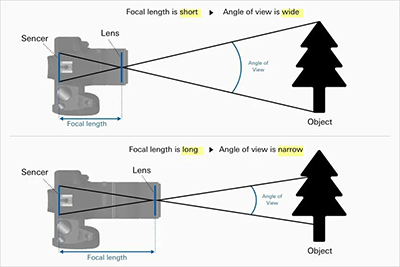
A telephoto lens and a short-focus lens
4. Physical Size and Weight: Heavy vs. Lightweight
- A telephoto lens is often bulky and heavy due to its complex optics and long barrel. For instance, a 300mm f/2.8 lens can weigh over 5 pounds, requiring a sturdy tripod for stability.
- A short-focus lens, by contrast, is compact and lightweight. A 24mm prime lens might weigh just a few ounces, making it easy to carry for street or travel photography.
5. Creative Applications: Specialization vs. Versatility
- A telephoto lens excels in niche scenarios: wildlife, sports, astrophotography, and portraits. Its ability to isolate subjects and compress space makes it indispensable for specific genres.
- A short-focus lens is more versatile, suited for vlogging, real estate, environmental portraits, and creative storytelling. Its wide field of view encourages experimentation with angles and compositions.

2.8mm 5MP short-focus Lens
Conclusion
Understanding the differences between a telephoto lens and a short-focus lens empowers you to select the right tool for your creative goals.