Low-Distortion Lens for Industrial Applications
09/03/2025
M12 wide-angle lenses for drones
09/03/2025
In the realm of photography, creativity knows no bounds, and one of the most exciting tools that photographers use to push the envelope is the fisheye lens. These lenses feature distinctive ultra-wide-angle views that produce dramatic, curved perspectives, turning ordinary scenes into extraordinary visuals. So, What Are the Three Types of Fisheye Lenses?
The Three Types of Fisheye Lens:
Fisheye lenses fall into categories according to their design and the kind of distortion they generate. Understanding these differences is crucial for photographers who want to harness the full potential of these unique lenses. Here’s a detailed look at each type:
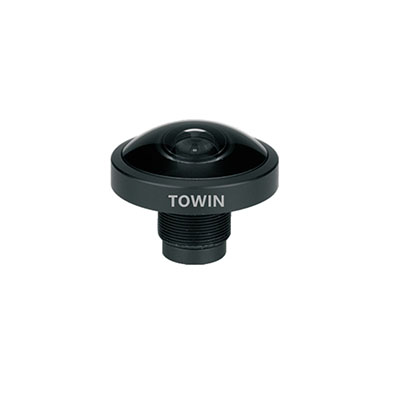
8-Megapixel F2.0 M12 mount Fisheye Lens
1. Circular Fisheye Lenses
Circular fisheye lenses are the original and most distinctive type of fisheye lenses. They generate a circular image with a black vignette encircling it, creating the impression that you’re looking through a porthole. The lens accomplishes this effect by capturing a complete 180-degree view in every direction—horizontally, vertically, and diagonally. The result is a striking, hemispherical image that can make viewers feel as though they are inside the scene.
One of the key advantages of circular fisheye lenses is their ability to capture an expansive view, making them ideal for landscape photography, architectural shots, and creative portraits. However, their unique distortion can be challenging to work with, especially for those new to fisheye photography. To master the art of using circular fisheye lenses, it’s essential to experiment with different angles and compositions to find what works best for your subject.
2. Full-Frame Fisheye Lenses
Full-frame fisheye lenses, also known as diagonal fisheye lenses, offer a different approach to ultra-wide-angle photography. Unlike circular fisheyes, these lenses fill the entire frame with an image, eliminating the black vignette. They typically provide a 180-degree field of view along the diagonal, resulting in a more rectangular image with pronounced barrel distortion.
This type of fisheye lens is particularly popular among photographers who want to capture wide-angle shots without the extreme curvature of circular fisheyes. Full-frame fisheyes are versatile and can be used for a variety of genres, including sports, street, and environmental portraiture. Their ability to create dynamic compositions with strong leading lines makes them a valuable addition to any photographer’s toolkit.
3. Zero Distortion Fisheye Lenses
While traditional fisheye lenses are known for their distortion, zero distortion fisheye lenses offer a unique twist on this concept. These lenses are designed to minimize or eliminate the barrel distortion typically associated with fisheye photography, resulting in images that are remarkably straight and true to life. This makes them an excellent choice for architectural and real estate photography, where maintaining accurate proportions is essential.
Zero distortion fisheye lenses are relatively rare and often come with a higher price tag, but their ability to produce distortion-free ultra-wide-angle images can be invaluable in certain situations. For photographers who want the benefits of a fisheye lens without the extreme curvature, zero distortion fisheyes are worth considering.

Fisheye IR Cut Filter S-Mount Lens
Choosing the Right Fisheye Lens for Your Needs
Selecting the right fisheye lens depends on your specific photography goals and preferences. If you’re looking to create bold, artistic images with extreme curvature, a circular fisheye lens might be the perfect choice. For more versatile applications with a balance between distortion and frame coverage, a full-frame fisheye lens could be ideal. And if you need to capture ultra-wide-angle shots with minimal distortion, a zero distortion fisheye lens might be the best option.
Conclusion
Fisheye lenses are powerful tools that can add a new dimension to your photography. By understanding what are the three types of fisheye lenses—circular, full-frame, and zero distortion—you can make an about which lens best suits your needs.