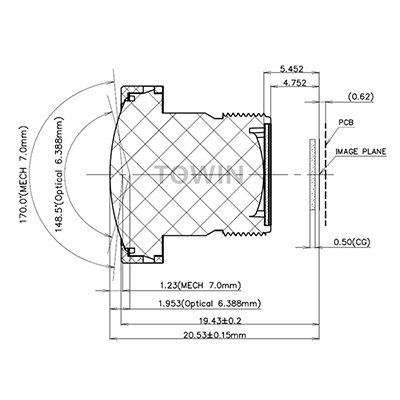



M12 lenses for AR/VR headsets
08/18/2025
Wide Angle wich Low Distortion Lens
08/18/2025
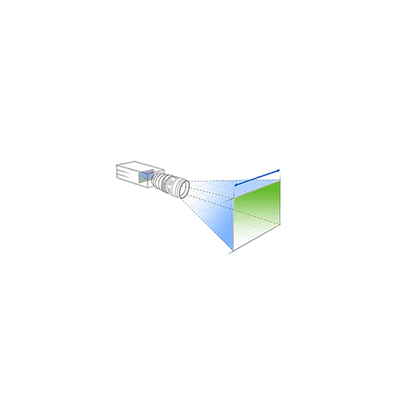
Machine vision lenses are the cornerstone of modern industrial automation, enabling machines to “see” and interpret their surroundings with human-like precision. These specialized lenses transform raw visual data into actionable insights, driving efficiency in manufacturing, robotics, quality control, and beyond.
But not all machine vision lenses are created equal. Depending on the application, environment, and performance requirements, selecting the right lens type can mean the difference between flawless operation and costly errors.
The five most powerful types of machine vision lenses
1. Fixed Focal Length Machine Vision Lenses
Fixed focal length (FFL) lenses, also known as “prime lenses,” are the workhorses of machine vision. These lenses have a non-adjustable focal length, meaning their field of view (FOV) and magnification are fixed. This simplicity makes them highly reliable and cost-effective for applications where the object distance and size remain constant.
Key Advantages:
- High Optical Performance: FFL lenses deliver sharp images with minimal distortion, making them ideal for high-resolution inspections.
- Compact Design: Their straightforward construction allows for smaller, lighter systems.
- Cost Efficiency: Lower complexity translates to lower costs compared to zoom or telecentric lenses.
Common Applications:
- Barcode scanning
- Print verification
- Electronic component inspection
Example: A fixed 12mm lens is perfect for inspecting small PCB components at a consistent working distance.
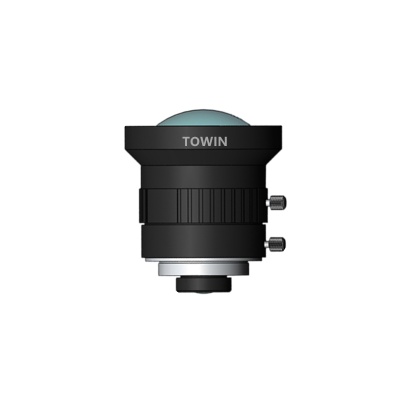
C mount machine vision lenses
2. Zoom Machine Vision Lenses
Zoom lenses offer adjustable focal lengths, allowing users to change the FOV and magnification without physically moving the camera or object. This flexibility makes them invaluable for applications requiring dynamic adjustments, such as multi-object inspection or variable working distances.
Key Advantages:
- Versatility: One lens can replace multiple fixed-focal-length lenses, reducing inventory costs.
- Rapid Setup: Operators can fine-tune the FOV on the fly without recalibrating the system.
- Adaptability: Suitable for environments where object sizes or distances vary frequently.
Common Applications:
- Robotic sorting systems
- Large-area defect detection
- Research and development prototyping
Example: A 12–50mm zoom lens can inspect both tiny components and larger assemblies without swapping lenses.
3. Telecentric Machine Vision Lenses
Telecentric lenses are engineered to eliminate perspective distortion, ensuring that objects appear the same size regardless of their distance from the lens. This makes them indispensable for metrology and dimensional measurement applications where accuracy is non-negotiable.
Key Advantages:
- Zero Parallax Error: Objects remain in focus even if they shift along the optical axis.
- Uniform Magnification: Critical for measuring features like holes, edges, and gaps.
- High Depth of Field: Maintains sharpness across thick or uneven objects.
Common Applications:
- Gauging parts in automotive manufacturing
- Medical device inspection
- 3D reconstruction
Example: A bilateral telecentric lens can measure the diameter of a cylindrical part with sub-pixel accuracy.Recommended Reading: M12 telecentric lenses for machine vision
4. Macro Machine Vision Lenses
Macro lenses specialize in capturing extreme close-up images with high magnification. These lenses are essential for inspecting minute details, such as surface textures, microchips, or pharmaceutical tablets.
Key Advantages:
- High Magnification: Reveals details invisible to the naked eye.
- Short Working Distance: Ideal for compact inspection setups.
- High Resolution: Captures fine textures without blurring.
Common Applications:
- Semiconductor wafer inspection
- Print quality analysis
- Forensic evidence examination
Example: A 10x macro lens can detect scratches on a smartphone screen that are just a few microns wide.
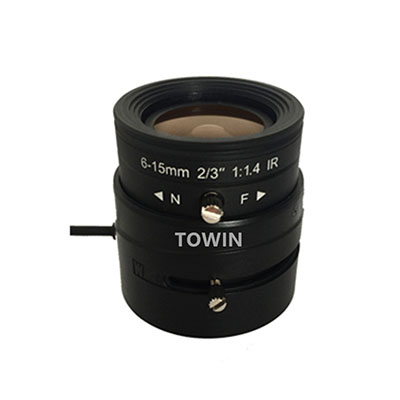
2/3″ 6-15mm Auto Iris F1.4 3MP C mount IR corrected CCTV lens
5. LiDAR Machine Vision Lenses
LiDAR (Light Detection and Ranging) lenses are designed for 3D sensing applications, such as autonomous vehicles, drones, and robotics. These lenses work in tandem with LiDAR sensors to create high-resolution depth maps of the environment.
Key Advantages:
- 3D Mapping: Enables machines to perceive depth and navigate complex spaces.
- Wide FOV: Captures large areas in a single scan.
- Durability: Built to withstand harsh environmental conditions.
Common Applications:
- Self-driving cars
- Warehouse automation
- Agricultural drones
Example: A LiDAR lens with a 120° FOV helps a delivery robot avoid obstacles in real time.
Choosing the Right Machine Vision Lens
Selecting the optimal lens depends on your specific requirements:
- Fixed Focal Length: Best for static, high-precision tasks.
- Zoom: Ideal for dynamic environments with variable object sizes.
- Telecentric: Essential for distortion-free measurements.
- Macro: Perfect for microscopic inspections.
- LiDAR: Critical for 3D sensing and autonomous systems.
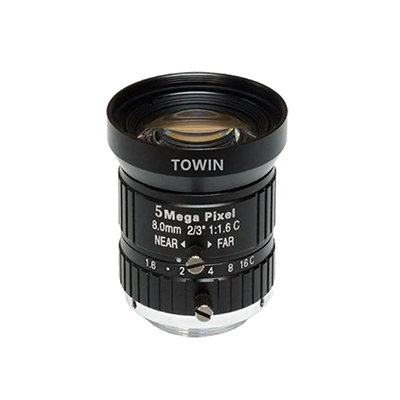
C-mount-lens-Short-focus lenses
Conclusion
Machine vision lenses are the eyes of industrial automation, each type serving a unique purpose in the pursuit of precision and efficiency. From fixed focal length lenses for cost-effective inspections to LiDAR lenses for autonomous navigation, understanding these five types empowers you to build systems that see the world with unparalleled clarity.
By choosing the right lens, you’re not just enhancing image quality—you’re future-proofing your operations against errors, inefficiencies, and missed opportunities. So, whether you’re optimizing a production line or pioneering robotics, invest in the lens that matches your vision.