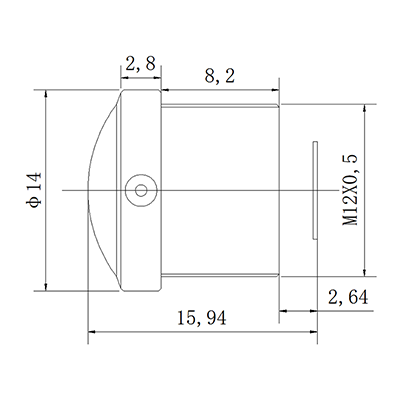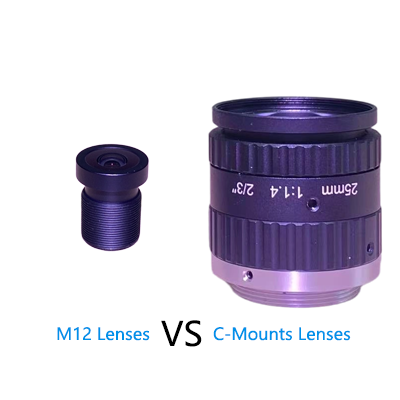



M12 lenses with M12x0.5 thread size
08/25/2025
FAQs About Low-Distortion Lenses Answered
08/25/2025
Imagine driving through a dense fog or a pitch-black road at midnight. Visibility is near zero, and hazards like pedestrians, animals, or obstacles remain invisible until it’s too late. This is where a car infrared thermal imaging lens transforms the driving experience. By detecting heat signatures rather than relying on visible light, this advanced technology provides drivers with a crystal-clear view of their surroundings, even in complete darkness.
But what exactly is a car infrared thermal imaging lens, and how does it work? Let’s dive into its mechanics, benefits, and why it’s becoming a must-have feature in modern vehicles.
How Does a Car Infrared Thermal Imaging Lens Work?
A car infrared thermal imaging lens operates on the principle of thermography, which captures infrared radiation (heat) emitted by objects. Unlike traditional cameras that rely on ambient light, thermal lenses detect temperature differences, converting them into a visual image. Here’s a breakdown of the process:
- Infrared Detection: The lens captures infrared waves, which are invisible to the human eye but emitted by all objects with a temperature above absolute zero.
- Thermal Sensing: A microbolometer or similar sensor processes the infrared data, creating a thermogram (a heat map of the scene).
- Image Processing: Advanced algorithms enhance the thermogram, adjusting contrast and clarity to produce a real-time video feed.
- Display Integration: The processed image is projected onto the car’s dashboard screen or heads-up display (HUD), allowing drivers to see heat signatures clearly.
- This technology is particularly effective in low-light conditions, such as nighttime, tunnels, or adverse weather like heavy rain or snow.
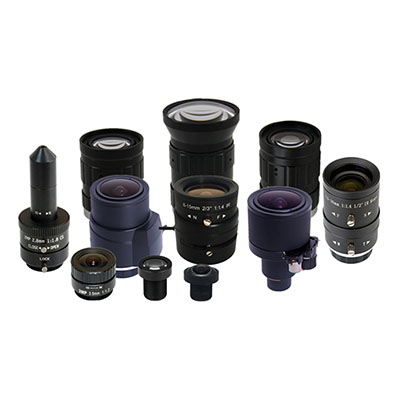
optical lens supplier
5 Key Benefits of a Car Infrared Thermal Imaging Lens
1. Enhanced Night Driving Safety
The primary advantage of a car infrared thermal imaging lenses is its ability to reveal hidden dangers. Pedestrians, animals, or debris on the road emit heat, making them visible long before they’d appear in headlights. Studies show that thermal imaging reduces nighttime accident rates by up to 50% (source: National Highway Traffic Safety Administration).
2. All-Weather Performance
Traditional cameras struggle in fog, rain, or dust, but thermal lenses thrive. Since they detect heat, not light, they’re unaffected by visual obstructions. This makes them ideal for regions prone to extreme weather.
3. Early Hazard Detection
Thermal imaging can spot hazards up to three times farther away than headlights. For example, a deer crossing the road 300 meters ahead will appear as a bright heat signature, giving drivers ample time to react.
4. Reduced Driver Fatigue
Straining to see in low light causes eye fatigue, a leading cause of accidents. A car infrared thermal imaging lenses eliminates this stress by providing a consistently clear view, promoting safer long-distance driving.
5. Compatibility with ADAS
Modern vehicles equipped with Advanced Driver-Assistance Systems (ADAS) can integrate thermal imaging for improved functionality. For instance, thermal data enhances automatic emergency braking (AEB) systems, ensuring they activate sooner when pedestrians are detected.
Technical Specifications of Car Infrared Thermal Imaging Lenses
- Resolution: Ranges from 160×120 to 640×512 pixels, with higher resolutions offering sharper images.
- Detection Range: Typically 300–500 meters, depending on the lens quality.
- Frame Rate: 30–60 Hz for smooth real-time video.
- Durability: Built to withstand extreme temperatures (-40°C to 85°C) and vibrations.
- Integration: Compatible with CAN bus systems for seamless vehicle integration.
The Future of Car Infrared Thermal Imaging Lenses
As autonomous driving technology advances, thermal imaging will play a pivotal role. Self-driving cars require redundant sensing systems, and thermal lenses provide critical data that LiDAR and cameras might miss. Recommended Reading: The main characteristics of IR correction lenses
Conclusion
A car infrared thermal imaging lens isn’t just a luxury—it’s a lifesaver. By detecting heat signatures, it eliminates blind spots, reduces accidents, and enhances driver confidence in challenging conditions. Whether you’re a night owl, a long-haul trucker, or simply someone who prioritizes safety, this technology is worth exploring.