


Why Multi-Sensor CCTV Lens Are Gaining Popularity
09/29/2025
Fisheye Lens for Panoramic Stitching
09/29/2025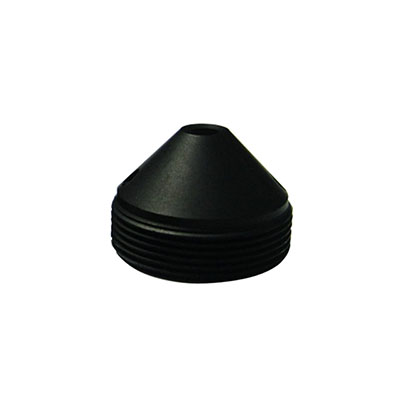
Pinhole lens, with their minimalist design and lack of traditional glass elements, might seem rudimentary at first glance. However, these tiny apertures pack a punch in specialized applications, offering unique advantages over conventional lenses.
1. Artistic Photography: Embracing Imperfection
Pinhole lenses are a favorite among experimental photographers seeking to break free from sharp, clinical imagery. By allowing light to pass through a tiny hole, they create dreamy, soft-focus effects with infinite depth of field. This makes them ideal for capturing ethereal landscapes, abstract compositions, or portraits with a vintage flair. The lack of lens distortion also means fewer optical flaws, resulting in raw, unfiltered visuals.

Pinhole lens 45mm IR corrected CCTV M12 telecentric lens
2. Security Cameras: Stealth and Simplicity
In surveillance systems, pinhole lenses excel due to their compact size. They can be discreetly embedded in walls, objects, or even everyday items like clocks or smoke detectors. Unlike bulky lenses, pinhole variants avoid drawing attention, making them perfect for covert operations. Their wide depth of field ensures entire rooms stay in focus, reducing the need for multiple cameras.
3. Scientific Research: Precision in Extreme Conditions
Pinhole lenses thrive in environments where traditional optics fail. For instance, in high-radiation zones like nuclear reactors or outer space, glass lenses can degrade or malfunction. Pinhole designs, being metal or ceramic, withstand harsh conditions while maintaining functionality. Researchers also use them in X-ray and gamma-ray imaging, where simplicity reduces interference.
4. Solar Observation: Safe Skywatching
Staring directly at the sun is dangerous, but pinhole projectors offer a safe alternative. By projecting sunlight through a small hole onto a screen, users can observe solar eclipses or sunspots without risking eye damage. Schools and astronomy clubs often use this method for educational demonstrations.
5. DIY Innovation: Hacking Creativity
Pinhole lenses inspire a maker’s spirit. Enthusiasts repurpose materials like aluminum cans or 3D-printed parts to craft custom cameras. Websites like Instructables feature tutorials on building pinhole devices for under $10, democratizing access to photography. This hands-on approach fosters creativity and resourcefulness.

45mm F1.6 pinhole M12 telecentric CCTV lens
Why Pinhole Lenses Stand Out
While pinhole lenses lack the versatility of zoom or macro lenses, their strengths lie in simplicity and durability. They require no focusing mechanism, reducing mechanical failure risks. Additionally, their low light sensitivity makes them suitable for long-exposure photography, capturing star trails or cityscapes at night.
The Future of Pinhole Technology
Advancements in nanotechnology could shrink pinhole sizes further, enhancing resolution in medical endoscopes or drone cameras. Meanwhile, hybrid designs combining pinhole principles with digital sensors may redefine compact imaging.
Conclusion
From artistic expression to scientific breakthroughs, what are pinhole lens used for reveals a world where less is more. Their ability to adapt to extreme environments, ensure discretion, and inspire innovation cements their place in imaging history.