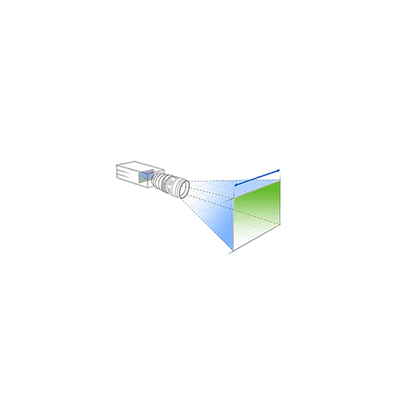



Machine vision lens and a regular lens?
09/23/2025
Fisheye Lens with Low Minimum Focusing Distance
09/23/2025
When it comes to security systems, the quality of your CCTV footage hinges on one critical component: the lens. A poorly chosen lens can render even the most advanced camera ineffective, while the right one ensures crisp, detailed images that deter crime and provide evidence when needed. How to Understanding CCTV Lens?
1. Focal Length: The Foundation of Field of View
The focal length of a CCTV lens determines how much area the camera can capture and how distant objects appear. Measured in millimeters (mm), lenses fall into two categories:
- Fixed Focal Length (Prime Lenses): These lenses have a single focal length (e.g., 3.6mm, 8mm, 12mm) and are ideal for specific scenarios. A 3.6mm lens provides a 90° wide view for small rooms, while a 12mm lens offers a 30° narrow view, capturing details up to 50 feet.
- Varifocal Lenses: Adjustable lenses (2.8–12mm) let users manually change focal length, adapting easily to changing security demands.
Pro Tip: For outdoor surveillance, opt for a varifocal lens to adapt to varying distances, such as parking lots or building perimeters.

C-mount IR corrected CCTV lens
2. Aperture and Light Sensitivity: Seeing Clearly in Low Light
The aperture, denoted by the f-number (e.g., f/1.2, f/2.0), controls how much light enters the lens. A lower f-number like f/1.2 widens the aperture, letting more light in for better low-light performance. Conversely, a higher f-number (e.g., f/2.8) is better for bright environments but may struggle at night.
Key Insight: For 24/7 surveillance, pair a low-f-number lens with infrared (IR) technology. This combination ensures clear footage even in complete darkness, a critical feature for high-security areas.
3. Lens Types: Fixed vs. Motorized vs. P-Iris
- Fixed Lenses: Cost-effective and simple, these lenses are pre-set to a specific focal length and aperture, making them ideal for static monitoring points like entryways.
- Motorized Lenses: These lenses allow remote adjustment of focal length and aperture via software, eliminating the need for manual intervention. They’re perfect for large-scale installations where repositioning cameras is impractical.
- P-Iris Lenses: Designed for high-resolution cameras, P-Iris lenses use a motorized iris to maintain optimal aperture settings, preventing overexposure or underexposure. This technology is a game-changer for applications requiring precise image quality, such as facial recognition.
4. Resolution Compatibility: Future-Proofing Your System
As 4K and 8K CCTV cameras become popular, your lens needs to match these resolutions to ensure top image quality. A high-resolution lens ensures that every pixel is utilized, delivering sharp details critical for identifying license plates or facial features.
Warning: Using a low-resolution lens with a 4K camera is like installing a Ferrari engine in a bicycle—it won’t perform to its potential. Always verify lens compatibility with your camera’s specifications.
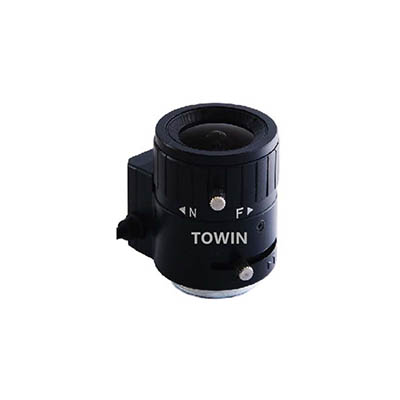
2.8-12mm F1.4 IR Corrected Lens , CCTV Zoom Lens
5. Mount Types: Ensuring Seamless Integration
CCTV lenses come in various mount types, with C-mount and CS-mount being the most common:
- C-Mount Lenses: These have a flange focal distance of 17.5mm and require a 5mm spacer (C-CS adapter) when used with CS-mount cameras.
- CS-Mount Lenses: With a flange focal distance of 12.5mm, these lenses are directly compatible with CS-mount cameras, offering a more compact design.
Installation Tip: Double-check your camera’s mount type before purchasing a lens to avoid costly mismatches.
Conclusion
Understanding CCTV Lens technology is pivotal for designing an effective surveillance system. By prioritizing focal length, aperture, lens type, resolution compatibility, and mount types, you can ensure your cameras deliver the clarity and reliability needed to protect your assets.