


What is a C-mount machine vision lens?
09/26/2025
Fisheye Lens Macro Photography
09/26/2025
Pinhole lens, with their minimalist design and absence of traditional glass elements, offer a unique approach to capturing images. However, their resolution capabilities often spark debate among photographers and engineers. Pinhole Lens Resolution—a term that refers to the sharpness and detail a pinhole system can produce—is influenced by several factors, from aperture size to material quality.
Pinhole Lens Resolution: The Core Mechanics
At its heart, a pinhole lens operates on the principle of light diffraction. A tiny aperture projects an inverted image onto a sensor or film, bypassing the need for complex optics. Yet, this simplicity comes with trade-offs. The resolution of a pinhole lens is inherently limited by physics: smaller apertures increase sharpness but reduce light intake, while larger apertures brighten the image at the cost of blurriness. Striking the right balance is key to achieving optimal Pinhole Lens Resolution.
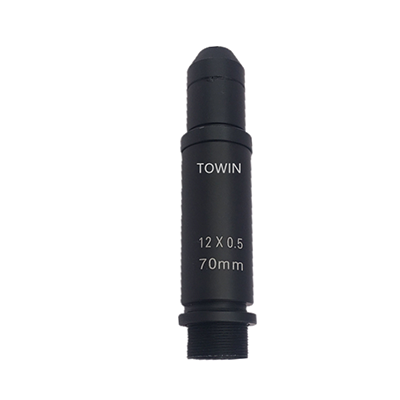
70mm pinhole M12 S-mount CCTV lens
1. Aperture Size: The Double-Edged Sword
The diameter of the pinhole is the most influential factor in resolution. A smaller aperture (e.g., 0.1mm) reduces diffraction blur, enhancing edge-to-edge sharpness. However, it also demands longer exposure times, risking motion blur in dynamic scenes. Conversely, a larger aperture (e.g., 0.5mm) gathers more light but softens details due to increased diffraction.
Pro Tip: For high-resolution results, aim for an aperture between 0.2mm and 0.3mm for most pinhole cameras. This range balances light gathering and diffraction limits.
2. Material Quality: Precision Matters
The material of the pinhole plate affects resolution significantly. A poorly machined or uneven aperture introduces distortions, reducing clarity. High-precision laser-cut metal or foil plates are ideal, as they ensure a perfectly circular hole with smooth edges.
3. Focal Length: Distance and Detail
Focal length—the distance between the pinhole and sensor—impacts resolution and field of view. Shorter focal lengths (e.g., 25mm) create wider angles but may suffer from vignetting and edge softness. Longer focal lengths (e.g., 100mm) narrow the field of view while improving central sharpness.
Practical Application: For portraiture, a longer focal length enhances facial detail. For landscapes, a shorter length captures expansive scenes but requires meticulous alignment to avoid resolution loss.
4. Wavelength of Light: Color Fringing Challenges
Light’s wavelength introduces chromatic aberration in pinhole systems, albeit to a lesser extent than in glass lenses. Shorter wavelengths (blue light) diffract more than longer ones (red light), causing subtle color fringing. While this effect is minimal, it can impact resolution in high-contrast scenes.
Solution: Use monochromatic filters or shoot in low-contrast lighting to mitigate color fringing and preserve Pinhole Lens Resolution.
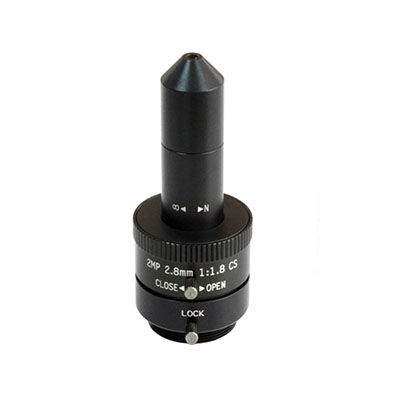
2.8-CS-pinhole-manual-iris CCTV Lens
5. Sensor/Film Sensitivity: Capturing the Nuances
The resolution of a pinhole image also depends on the recording medium. High-resolution digital sensors (e.g., 24MP+) resolve finer details than lower-megapixel counterparts. Similarly, fine-grain film (e.g., Ilford Delta 100) captures more nuanced tones than coarse-grain alternatives.
Data Point: A 50MP medium-format sensor can resolve twice the detail of a 12MP APS-C sensor when paired with a pinhole lens, according to DPReview tests.
Optimizing Pinhole Lens Resolution: Practical Steps
- Test Aperture Sizes: Use a pinhole calculator (like this one from PhotoPills) to determine the optimal diameter for your setup.
- Invest in Quality Materials: Purchase pre-made pinhole plates from reputable suppliers.
- Stabilize Your Camera: Use a tripod to eliminate motion blur during long exposures.
- Post-Processing: Apply sharpening tools sparingly in editing software to enhance perceived resolution.
Conclusion
While Pinhole Lens Resolution cannot rival that of high-end glass lenses, its unique aesthetic and simplicity offer creative freedom. By understanding the factors above—aperture, material, focal length, light wavelength, and sensor sensitivity—you can push the boundaries of what pinhole photography can achieve.