


What Is a CCTV Lens?
09/09/2025
Fisheye Lens for Portraits
09/09/2025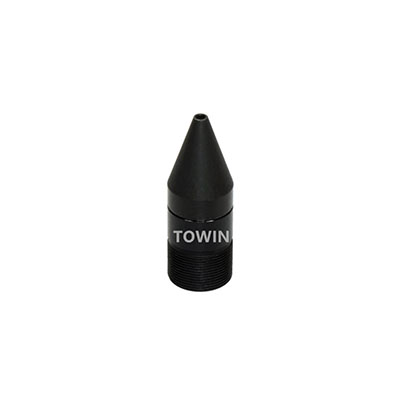
At the heart of minimalist optics lies the Pinhole Lens Definition—a concept that strips photography down to its essence. By replacing traditional glass elements with a single, microscopic aperture, this tool transforms light into ethereal images, challenging our understanding of focus and clarity.
Pinhole Lens Definition: The Core Concept
A pinhole lens is an optical system that replaces traditional glass elements with a single, tiny hole. This aperture acts as a natural lens, allowing light rays from a scene to converge and form an inverted image on a surface (e.g., film, sensor, or the retina). Unlike curved lenses that refract light, the pinhole relies on geometric optics: light travels in straight lines, and the hole’s size determines the image’s sharpness and brightness.
The term “pinhole lens” can be misleading, as it lacks the glass components of a standard lens. However, its functionality as a lens is undeniable. For instance, in a pinhole camera, the aperture projects an image onto photographic paper, creating ethereal, soft-focus results. Similarly, ophthalmologists use pinhole occluders to test visual acuity, proving the aperture’s role in focusing light.
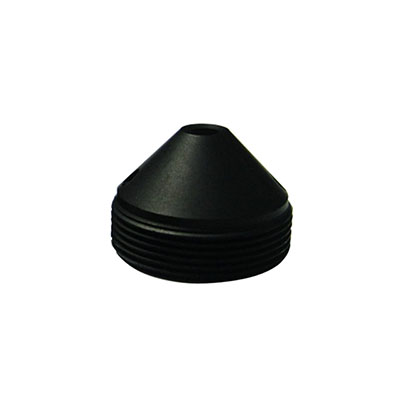
2.1mm wide angle pinhole lens lens
How Pinhole Lenses Work: The Science Simplified
The effectiveness of a pinhole lens hinges on two principles:
- Diffraction Limitation: Smaller apertures reduce blur from off-axis light but increase diffraction (light bending around edges), which softens images. The optimal pinhole size balances these effects, typically ranging from 0.1mm to 0.5mm for visible light.
- Depth of Field: Pinhole lenses boast an infinite depth of field, meaning everything from near to far appears in focus. This makes them ideal for landscapes or macro photography where sharpness across distances is critical.
For example, the PINHOLE LENS 025, a commercial accessory for DSLRs, features a 0.25mm aperture. Despite its simplicity, it produces dreamy, vintage-style images with extended exposure times, requiring tripods and stable environments.
Historical Roots and Modern Applications
The pinhole lens traces its origins to the camera obscura, a darkened room with a small hole used by ancient scholars like Aristotle and Mozi (5th century BCE) to project outdoor scenes. Over centuries, this principle evolved into portable pinhole cameras, popularized in the 19th century for artistic and educational purposes.
Today, pinhole lenses thrive in niche markets:
- Photography: Enthusiasts celebrate Worldwide Pinhole Photography Day (last Sunday of April) to showcase the medium’s timeless appeal.
- Solar Imaging: Pinhole projectors safely observe sunspots during eclipses.
- Medical Devices: Pinhole glasses claim to improve vision by reducing scattered light, though scientific consensus remains mixed.
- Industrial Inspection: Micro-pinholes detect flaws in materials like aluminum foil.
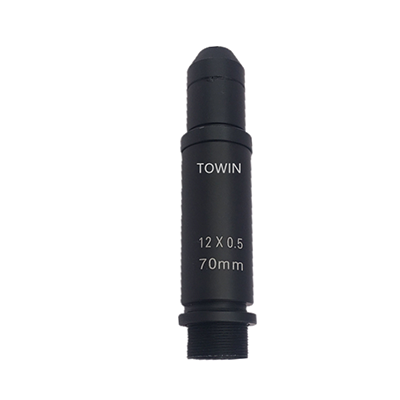
70mm pinhole M12 S-mount CCTV lens
The Allure of Imperfection: Why Pinhole Lenses Endure
In an era of high-resolution sensors and AI-enhanced lenses, the pinhole lens persists for its unreplicable aesthetic. Its soft focus, infinite depth of field, and long exposures evoke nostalgia, transforming mundane scenes into painterly compositions. As photographer Mete Balci notes, “A pinhole lens isn’t about perfection—it’s about embracing limitations to uncover beauty.”
Conclusion
The Pinhole Lens Definition transcends mere technicality; it’s a testament to human ingenuity in harnessing simplicity. By reducing optics to a single hole, we unlock a world of creativity, proving that sometimes, less truly is more.