


History of aperture control in lenses
09/04/2025
Best Fisheye Lens for Astrophotography
09/04/2025
Medical imaging has long been the cornerstone of modern diagnostics, enabling clinicians to peer inside the human body with remarkable clarity. However, traditional imaging systems often face challenges like radiation exposure, high costs, and limited accessibility. Enter Medical Imaging with Pinhole Lenses—a groundbreaking approach that leverages the physics of pinhole optics to revolutionize diagnostic accuracy, safety, and affordability.
Medical Imaging with Pinhole Lenses: How It Works
At its core, Medical Imaging with Pinhole Lenses relies on a simple yet powerful principle: a tiny aperture (the pinhole) projects an inverted image of an object onto a detector. Unlike conventional lenses, which use multiple optical elements to focus light, pinhole systems require no complex focusing mechanisms. This makes them inherently compact, lightweight, and resistant to aberrations like chromatic distortion.
In medical applications, pinhole lenses are integrated into devices such as X-ray machines, CT scanners, and even portable ultrasound systems. For instance, in X-ray imaging, a pinhole collimator narrows the radiation beam to a precise point, enhancing image sharpness while minimizing scatter radiation. This results in clearer images with lower doses—a critical advantage for pediatric and radiosensitive patients.
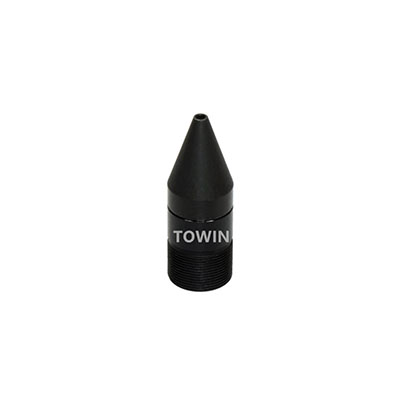
Fixed focus M12 Mount pinhole lens
Key Advantages of Pinhole-Based Imaging
- Reduced Radiation Exposure: Traditional X-ray and CT scans expose patients to ionizing radiation, which carries long-term cancer risks. Medical Imaging with Pinhole Lens cuts radiation doses by up to 90% by focusing beams tightly, reducing scatter, and enabling shorter exposure times.
- Cost-Effectiveness: Pinhole systems eliminate the need for expensive multi-lens assemblies and heavy shielding, lowering manufacturing and maintenance costs. A 2022 study by the Journal of Medical Physics found that pinhole-based dental X-rays reduced equipment costs by 40% compared to conventional models.
- Portability and Accessibility: The compact size of pinhole lenses allows for the development of handheld imaging devices. Startups like NanoRad Imaging are pioneering battery-powered pinhole X-ray units for use in remote clinics and emergency settings.
- Enhanced Image Quality: By eliminating lens aberrations, pinhole systems produce sharper images with higher contrast. This is particularly valuable in mammography, where early detection of microcalcifications hinges on sub-millimeter precision.
Real-World Applications
- Dental Imaging: Pinhole intraoral cameras provide detailed 3D scans of teeth without the bulk of traditional sensors.
- Oncology: Pinhole-based SPECT (Single-Photon Emission Computed Tomography) improves tumor localization by reducing background noise.
- Veterinary Medicine: Portable pinhole X-ray devices enable on-site imaging of large animals, reducing stress and logistical challenges.

Pinhole lens 45mm IR corrected high temperature
Challenges and Future Directions
Despite its promise, Medical Imaging with Pinhole Lenses faces hurdles. The tiny aperture limits light intake, requiring longer exposure times in low-light conditions. However, advances in detector sensitivity—such as CMOS sensors with quantum efficiency exceeding 90%—are mitigating this issue.
Researchers are also exploring hybrid systems that combine pinhole optics with artificial intelligence (AI) for real-time image enhancement. For example, a 2023 Nature Biomedical Engineering paper demonstrated how AI could correct pinhole-induced distortions in MRI scans, paving the way for multi-modal imaging platforms.
Conclusion
Medical Imaging with Pinhole Lenses represents a paradigm shift in diagnostics, merging simplicity with cutting-edge innovation. By slashing radiation risks, cutting costs, and expanding access to imaging, this technology is democratizing healthcare one pinhole at a time. As research progresses, we can expect even more breakthroughs—from AI-powered portable scanners to ultra-low-dose pediatric CT systems. The future of medical imaging is not just bright; it’s pinpoint-perfect.