


MIL-STD Automotive lens
10/24/2025
F2.0 Aperture M12 Lenses
10/24/2025
Photography enthusiasts often debate between Low-Distortion Lens vs. Fisheye Lens when selecting gear for specific projects. While both lenses serve unique purposes, their design, applications, and visual outcomes differ significantly.
What Is a Low-Distortion Lens?
A low-distortion lens is engineered to minimize optical aberrations, such as barrel distortion (where straight lines appear curved). These lenses prioritize accuracy, making them ideal for architectural photography, product shoots, and portraits where geometric precision is critical.
Key Features:
- Minimal Distortion: Straight lines remain straight.
- Sharp Edges: High clarity across the entire frame.
- Versatility: Suitable for both professional and casual use.
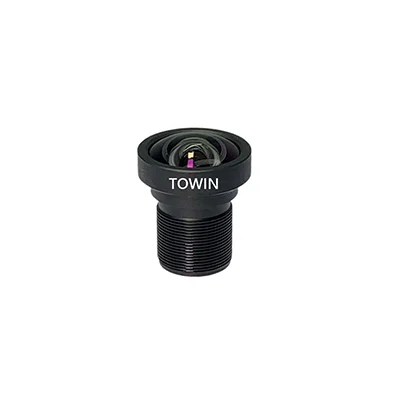
Low distortion lens 12-Megapixel M12 F2.2 CCTV lens
What Is a Fisheye Lens?
A fisheye lens, on the other hand, embraces extreme distortion to create a wide, panoramic view. It produces a 180-degree (or more) field of view, often with a convex, “bulging” effect. This lens is popular in creative photography, action sports, and artistic projects where unconventional perspectives are desired.
Key Features:
- Extreme Distortion: Delivers a unique, curved aesthetic.
- Ultra-Wide Angle: Captures expansive scenes.
- Artistic Appeal: Adds drama to images.
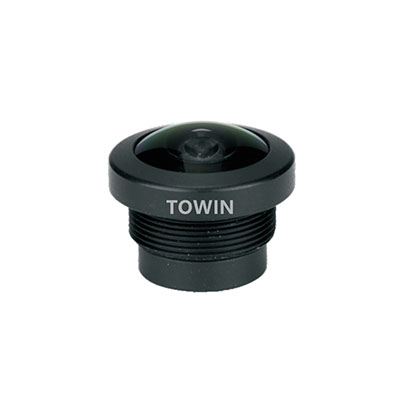
4-Megapixel F2.4 M12 mount fisheye lens
Low-Distortion Lens vs. Fisheye Lens: 5 Critical Comparisons
1. Distortion Levels
The most obvious difference lies in distortion. A low-distortion lens corrects optical flaws, ensuring subjects appear natural. In contrast, a fisheye lens intentionally exaggerates distortion for artistic effect.
Example: Shooting a cityscape with a low-distortion lens will render buildings accurately, while a fisheye lens may warp them into dramatic curves.
2. Field of View
Fisheye lenses offer an ultra-wide angle (often 180°+), perfect for capturing vast landscapes or tight indoor spaces. Low-distortion lenses typically have a narrower field of view, focusing on precision over breadth.
Tip: Use a fisheye lens for immersive action shots and a low-distortion lens for detailed product photography.
3. Image Clarity
Low-distortion lenses excel in edge-to-edge sharpness, making them ideal for commercial work. Fisheye lenses may sacrifice some clarity at the edges due to their extreme curvature.
Statistic: According to LensTip, low-distortion lenses often outperform fisheye lenses in resolution tests.
4. Creative Applications
Low-Distortion Lens: Best for real estate, fashion, and fine art photography where accuracy matters.
Fisheye Lens: Ideal for skateboarding, underwater photography, and abstract art.
5. Price and Accessibility
Low-distortion lenses are generally more expensive due to their advanced optics. Fisheye lenses, while still pricey, are often more affordable and available in entry-level models.
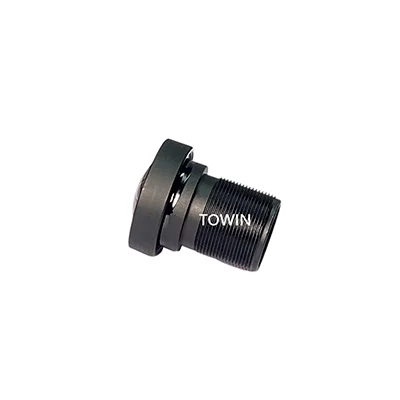
Low distortion lens 12-Megapixel M12 F2.2 CCTV lens
When to Choose a Low-Distortion Lens vs. Fisheye Lens
Opt for a Low-Distortion Lens if:
- You need straight lines and realistic proportions.
- You’re shooting commercial or editorial content.
- Budget allows for premium optics.
Choose a Fisheye Lens if:
- You want to create surreal, dynamic images.
- You’re capturing fast-paced action or tight spaces.
- You’re experimenting with artistic styles.
FAQs
1. Can I Use a Fisheye Lens for Portraits?
While possible, fisheye lenses distort facial features, making them unflattering for traditional portraits. Use them sparingly for creative effects.
2. Are Low-Distortion Lenses Heavy?
Not necessarily. Many modern low-distortion lenses are lightweight, though professional models may be bulkier.
3. Do Fisheye Lenses Work Well in Low Light?
Fisheye lenses often have wide apertures (e.g., f/2.8), making them suitable for low-light conditions. However, their distortion may become more pronounced.
4. Can I Correct Fisheye Distortion in Post-Processing?
Yes, software like Adobe Lightroom can reduce distortion, but it may compromise image quality.
5. Which Lens Is Better for Video?
Low-distortion lenses are preferred for professional video work, while fisheye lenses add a unique flair to music videos or vlogs.

Fisheye IR Cut Filter S-Mount Lens
Final Verdict
The choice between Low-Distortion Lens vs. Fisheye Lens boils down to your creative vision. If you prioritize accuracy and versatility, invest in a low-distortion lens. For bold, experimental photography, a fisheye lens is unmatched.