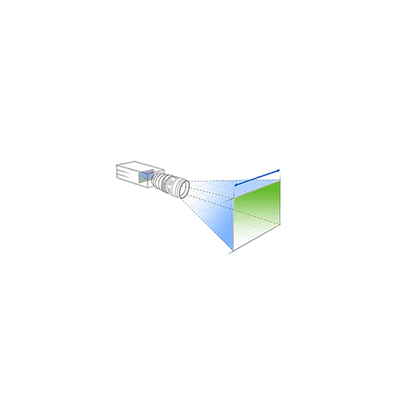



1/2.7″ 2.7mm 102° M9 mount Wide angle lens
03/20/2026
The Importance of ISO 9001 Certification in Optical Mfg
03/21/2026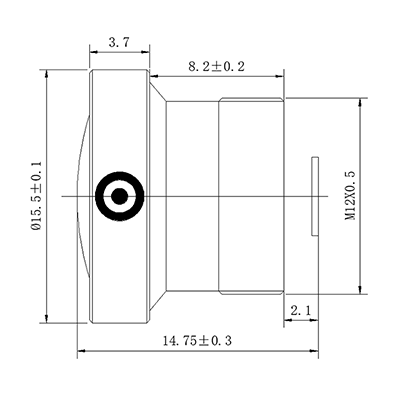
Table of Contents
Key Takeaways
- Active Alignment (AA):Real‑time optical feedback + 6‑axis precision adjustment;delivers superior depth accuracy, low distortion, and high consistency;ideal for high‑end 3D sensing.
- Passive Assembly:Mechanical fixture‑based, low cost, fast mass production;lower precision, higher distortion, suitable for cost‑sensitive basic applications.
- TOF lens performance directly depends on assembly method:AA improves depth precision, reduces noise, and boosts reliability;Passive cuts cost but compromises accuracy.
- Towin TOF lenses support both assembly processes to match sensor size, FOV, budget, and use case.
Introduction
TOF lens performance determines the accuracy, resolution, and stability of 3D depth sensing in scanning, tracking, positioning, and surveillance. Even a well‑designed lens will underperform if assembled poorly.
Assembly technology is the hidden backbone of TOF lens performance—it directly impacts:
- Depth measurement accuracy
- Optical distortion
- Centration & tilt control
- Yield & consistency
- Long‑term reliability
Active Alignment vs Passive Assembly: Core Principles
What Is Active Alignment (AA)
- Closed‑loop optical positioning with real‑time MTF, focal plane, and distortion feedback
- 6‑axis high‑precision adjustment for lens groups and sensor
- Glue curing only after optimal optical performance is confirmed
- Sub‑micron level centration and tilt control
What Is Passive Assembly
- Relies on high‑precision mechanical fixtures and jigs
- Lens groups placed by mechanical reference without optical feedback
- Fast, high‑volume production with lower equipment cost
- Accuracy limited by machining tolerance and manual error
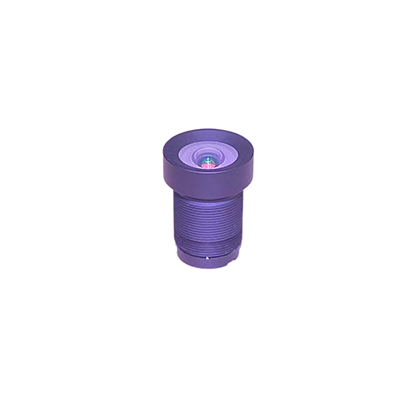
4.1mm Wide-angle 12″ M12 TOF lens
Full Process Comparison
Active Alignment Workflow
- Lens and sensor loading
- Real‑time optical performance testing
- 6‑axis micro‑adjustment of position and tilt
- Lock position after reaching target specs
- UV curing and final calibration
Passive Assembly Workflow
- Fixture setup and tolerance verification
- Manual or semi‑auto lens stacking
- Mechanical positioning and fixation
- Glue curing
- Post‑inspection (no in‑line optical tuning)
Performance Impact Comparison Table
| Parameter | Active Alignment (AA) | Passive Assembly |
| Depth Accuracy | ±1%–±3% | ±5%–±10% |
| Optical Distortion | Lower, more stable | Higher, batch variation |
| Centration Precision | Sub‑micron | Micron level |
| CRA Control | Excellent (<8.5°–<13.5°) | Good to poor |
| Consistency (Batch) | >95% pass rate | 80%–90% pass rate |
| Production Cost | High | Low |
| Lead Time | Moderate | Fast |
| Best For | High‑precision 3D sensing | Cost‑focused basic projects |
How Assembly Method Shapes Key TOF Lens Performance
Depth Accuracy & Measurement Stability
- Active Alignment:Minimizes off‑axis error;stable depth data across FOV
- Passive Assembly:Prone to centration shift;depth noise increases at edges
Distortion Control
- Active Alignment:Corrects optical distortion in real time;ideal for low‑distortion TOF lenses
- Passive Assembly:Distortion fixed by design;hard to compensate in production
Resolution & Image Clarity
- Active Alignment:Optimizes focal plane alignment;maximizes effective resolution
- Passive Assembly:Resolution limited by mechanical tolerance
Reliability & Durability
- Active Alignment:Stable positioning under temperature & vibration
- Passive Assembly:Risk of shift in harsh environments
Best Application Scenarios
Choose Active Alignment When
- High‑precision 3D scanning & metrology
- Robot vision & AGV positioning
- Medical & biometric 3D sensing
- Low‑distortion surveillance
- High consistency required
Choose Passive Assembly When
- Cost‑sensitive consumer electronics
- Basic depth detection
- High volume, low to mid accuracy
- Short development cycles
Towin TOF Lenses: Optimized for Both Assembly Methods
At Towin, our TOF lens series is engineered to support both active alignment (AA) and passive assembly without compromising real-world TOF lens performance.Each model is designed with tight centration tolerance, stable optical structure, and standardized M12 mount to ensure consistent depth sensing, whether produced in high-precision AA lines or high-volume passive production lines.
Below are our most popular TOF lenses and their detailed specifications, assembly compatibility, and recommended applications.
S01714012013IRB9 – Ultra-Wide FOV TOF Lens
Key Specifications
- Focal length: 1.7 mm
- Compatible sensor size: 1/4″
- Diagonal field of view: 147°
- Aperture: F1.3
- Operating wavelength: 940 nm IR bandpass filter integrated
- Mount type: M12
Structural & Performance Features
- Ultra-wide-angle design for full-scene depth capture
- High transmittance at 940 nm for stable TOF signal
- Low stray light and near-infrared reflection
- Excellent center-to-edge uniformity
Assembly Compatibility
- Supports both active alignment and passive assembly
- Active alignment recommended for ultra-low noise and consistent depth accuracy in wide FOV
Typical Applications
- 3D depth scanning
- Wide-angle positioning & tracking
- Consumer 3D sensing modules
- Robot obstacle avoidance
S04112009316IR – Balanced Medium-Wide TOF Lens
Key Specifications
- Focal length: 4.1 mm
- Compatible sensor size: 1/2″
- Diagonal field of view: 120°
- Aperture: F1.6
- Optical structure: 6G + 1 ASPG (aspherical glass lens)
- Operating wavelength: 940 nm IR optimized
- Mount type: M12
Structural & Performance Features
- High-resolution optical design for sharp depth imaging
- Aspherical lens reduces distortion and improves image quality
- Balanced performance between FOV and resolution
- Strong environmental stability
Assembly Compatibility
- Highly compatible with both active alignment and passive assembly
- Flexible for mass production and high-precision projects alike
Typical Applications
- Medium-wide 3D vision systems
- AGV & AMR depth detection
- Industrial vision positioning
- Smart device face recognition & gesture control
S08012004812IR – High-Precision Low-Distortion TOF Lens
Key Specifications
- Focal length: 8.0 mm
- Compatible sensor size: 1/2″
- Diagonal field of view: 60°
- Aperture: F1.2 (high light-gathering capability)
- Distortion: < 10%
- Operating wavelength: 940 nm IR bandpass filter
- Mount type: M12
Structural & Performance Features
- Ultra-low distortion for high-precision measurement
- Fast aperture improves TOF signal strength in low light
- High centration accuracy for stable long-distance depth sensing
- Optimized for industrial and surveillance-grade reliability
Assembly Compatibility
- Supports passive assembly for cost-sensitive projects
- Strongly recommends active alignment to achieve best-in-class depth accuracy and stability
Typical Applications
- High-precision 3D metrology
- Long-range security surveillance
- Industrial automation inspection
- Automotive in-cabin sensing
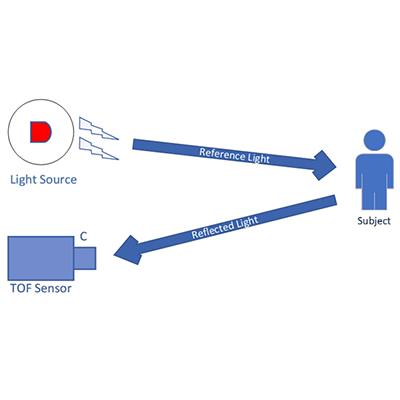
ToF sensor
FAQs
Does active alignment always improve TOF lens performance?
For high‑precision 3D sensing:yes. For cost‑focused basic use:passive may be sufficient.
Can passive lenses match AA depth accuracy?
Only in narrow FOV and ideal conditions;AA is more stable across angles and environments.
Which Towin lenses support AA?
All three models support AA;S0801204812IR benefits most for low distortion.
How does assembly affect yield?
AA improves yield by in‑line correction;passive depends more on parts consistency.
Conclusion
Assembly method defines the real‑world TOF lens performance. Active Alignment delivers superior accuracy, stability, and consistency for professional 3D sensing. Passive Assembly offers cost and speed advantages for standard applications.
Towin TOF lenses are engineered to support both processes, helping you balance performance, budget, and application needs.