


1/3.2″ Φ2.8 220° M12 Fisheye lens
01/04/2026
M8 wide-angle Automotive Lens IP67 waterproof
01/05/2026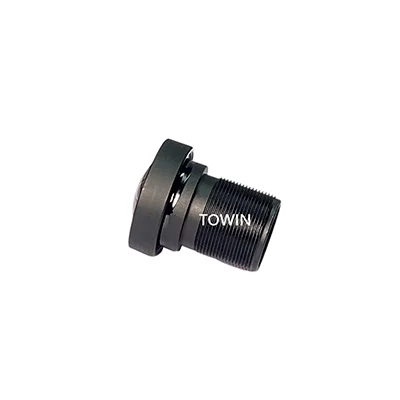
Table of Contents
- Introduction
- Wide Angle Lens Basics: Key Factors to Consider
- Core Advantages of 90° Wide Angle Lenses
- Core Advantages of 120° Wide Angle Lenses
- How FOV & Perspective Differences Impact Composition & Use Cases
- Distortion Control Technology: 90° vs 120°
- Low-Light Performance: Which Shines Brighter?
- TOWIN 90° vs 120° Wide Angle Lens: Full Spec Comparison
- Professional Application Cases: 90° vs 120°
- FAQs
- Conclusion
Introduction
Wide angle lens are essential for security surveillance, specialized imaging, and smart device applications—delivering an expanded field of view (FOV) to capture more contextual details without losing critical information. Among popular wide angle options, 90° and 120° lenses stand out for their versatility. But how to choose between them? The key lies in your core needs: Do you prioritize minimal distortion for precise identification, or maximum coverage for large-scale monitoring?
Wide Angle Lens Basics: Key Factors to Consider
Before comparing 90° and 120° lenses, it’s critical to understand the fundamentals that define a wide angle lens’s performance—these factors directly impact its suitability for your application.
- Field of View (FOV): The horizontal/vertical area a lens can capture. A wider FOV means more scene coverage, but it often comes with tradeoffs like increased distortion or reduced detail clarity.
- Focal Length & Sensor Size: FOV is inversely related to focal length—shorter focal lengths equal wider FOV. However, sensor size also influences FOV; a lens paired with a larger sensor will capture a wider area than the same lens on a smaller sensor.
- Core Applications: Wide angle lenses excel in CCTV surveillance, smart home cameras, industrial machine vision, drone imaging, and any scenario where “seeing more” is critical for safety, monitoring, or data collection.
- Critical Performance Metrics: Resolution (image sharpness), distortion (scene accuracy), aperture (low-light performance), and mount type (device compatibility) are the key metrics that determine a lens’s practical usability.
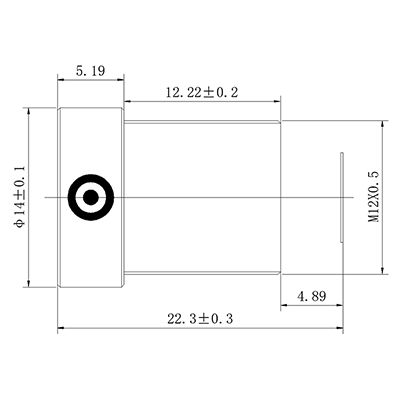
1/2.7″ 4.1mm 90° wide-angle lens
Core Advantages of 90° Wide Angle Lenses: Balance of Precision & Coverage
90° wide angle lenses strike an ideal balance between coverage and detail accuracy, making them the top choice for scenarios where distortion control and clear identification are non-negotiable. TOWIN’s S03012709024F (90° model) is a prime example of these strengths in action.
1. Ultra-Low Distortion for Accurate Identification
With a distortion rate of <-1.5%—one of the lowest in its class—the 90° lens delivers near-perfect scene representation. Unlike wider lenses that stretch or warp edge objects, this minimal distortion ensures faces, license plates, and object shapes remain true to life. This is critical for security surveillance, retail loss prevention, and law enforcement applications where precise identification is essential.
2. Superior Low-Light Performance for 24/7 Monitoring
Equipped with a bright F2.4 aperture (wider than the typical 120° lens’s F2.8), the 90° model captures 30% more light in dim conditions. Paired with its 2G2P+IRCF (Infrared Cut Filter) optical structure, it excels in low-light environments like office hallways, convenience stores, and residential entryways—producing sharp, noise-free images both day and night without relying on supplemental lighting.
3. Close-Up Focus Flexibility for Tight Spaces
With a Minimum Object Distance (M.O.D.) of 0.2m, the 90° lens shines in confined areas. It can clearly capture close-range details (e.g., cash registers, door locks, or assembly line components) while still covering a practical wide area. This versatility makes it ideal for both close-range and medium-range monitoring scenarios.
4. Compact, Durable Design for Easy Integration
At just 15.6mm in Total Track Length (T.T.L.), the 90° lens is compact enough to fit in small camera housings—perfect for smart doorbells, mini CCTV cameras, and industrial machine vision modules. Its industry-standard M12x0.5 mount ensures easy installation and compatibility with most modern small-format cameras, while the 2G2P lens structure balances long-term durability with consistent optical performance.
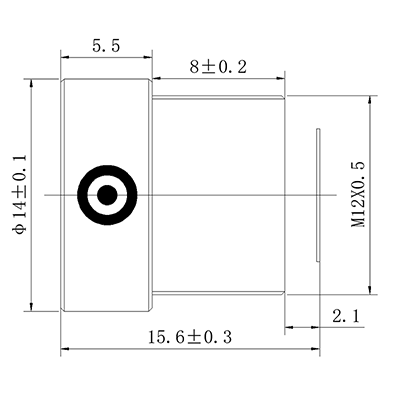
Wide-angle low distortion 3-Megapixel lens
Core Advantages of 120° Wide Angle Lenses: Maximum Coverage for Large-Scale Scenarios
120° wide angle lenses prioritize ultra-wide coverage, making them the go-to option for monitoring large areas with fewer cameras. TOWIN’s CCL123030MPF (120° model) leverages advanced optical design to deliver expansive FOV while minimizing performance tradeoffs.
1. Expansive Coverage to Eliminate Blind Spots
A 120° lens covers 40% more area in a single frame than a 90° lens, significantly reducing the number of cameras needed for large-scale monitoring. This is a game-changer for parking lots, warehouses, campus grounds, and stadiums—where covering wide open spaces efficiently is key. For specialized imaging (e.g., drone surveying or astrophotography), it also eliminates the need for image stitching, capturing full panoramic scenes in one shot.
2. Optimized Low-Light Performance for Outdoor Use
While many 120° lenses feature an F2.8 aperture (slightly narrower than the 90° lens’s F2.4), models like TOWIN’s CCL123030MPF boast >71% light transmittance (exceeding the industry average of 65-70%). Paired with an optimized IRcut filter, this design ensures bright, clear footage in outdoor low-light conditions (e.g., nighttime parking lots or rural perimeters) and seamless integration with IR cameras for total darkness vision.
3. High Resolution for Detailed Wide-Angle Shots
With support for up to 18MP resolution, the 120° lens delivers sharp details even across its expansive FOV. This is critical for applications like warehouse inventory monitoring or outdoor security—where you need to track both large-scale movement and small details (e.g., package labels or vehicle license plates) within the same frame.
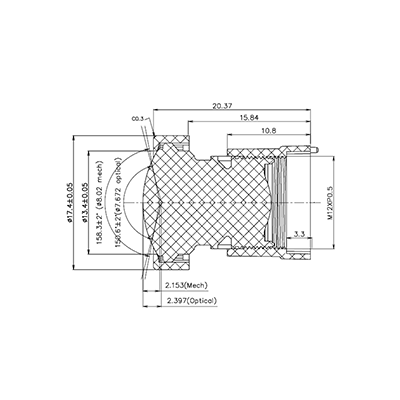
Ultra-wide-angle 1/2.3″ HD lens
How FOV & Perspective Differences Impact Composition & Use Cases
The gap in FOV between 90° and 120° lenses transforms how scenes are framed—directly influencing which lens is best for your specific application.
90° Lens: Balanced, Detail-Focused Framing
The 90° lens offers a “natural” wide view without extreme edge stretching, making it ideal for framing specific zones (e.g., store aisles, stairwells, or office entrances). It reduces empty space in the frame, keeping subjects (people, objects) centered and detailed—perfect for scenarios where “less is more” and precision matters over maximum coverage.
120° Lens: Panoramic, Context-Rich Framing
The 120° lens’s panoramic FOV is designed to capture the “big picture,” including more surrounding environment to provide context for events (e.g., how a trespasser entered a property or how a package moved through a warehouse). While slight barrel distortion may occur at the edges (mitigated by TOWIN’s optical correction technology), this tradeoff is negligible for applications where coverage takes priority over absolute edge accuracy.
Distortion Control Technology: 90° vs 120°
Distortion is a common concern with wide angle lenses—but TOWIN uses specialized technology to address it for both 90° and 120° models:
| Feature | 90° Lens (S03012709024F) | 120° Lens (CCL123030MPF) |
| Distortion Rate | <-1.5% (ultra-low) | <-64% (managed barrel distortion) |
| Lens Structure | 2G2P+IRCF | 6G1ASP+IRcut |
| Key Distortion Fixes | Simplified lens design + IRCF filter to reduce edge warping | Aspherical (ASP) lenses + multi-element configuration to balance wide FOV and distortion |
| Best For | Precise identification (no shape distortion) | Large-area coverage (distortion minimized for practical use) |
Key Takeaway:
The 90° lens is engineered for distortion-free accuracy, while the 120° lens prioritizes coverage with controlled distortion. For applications where object shape integrity is non-negotiable (e.g., facial recognition), the 90° model is superior. For scenarios where coverage matters more (e.g., perimeter security), the 120° lens’s distortion is manageable and outweighed by its FOV advantage.
Low-Light Performance: Which Shines Brighter?
Low-light performance is make-or-break for surveillance lenses—here’s how 90° and 120° models compare:
90° Lens (F2.4 Aperture)
- Wider Aperture = More Light: F2.4 lets in 30% more light than F2.8, making it ideal for indoor spaces with poor lighting (e.g., basements, stairwells) or nighttime indoor monitoring.
- IRCF Filter: Enhances contrast in low light by blocking stray infrared light, reducing noise and improving image clarity.
120° Lens (F2.8 Aperture + >71% Transmittance)
- High Light Transmittance: Even with a slightly narrower aperture, its >71% light transmittance (vs. industry averages of 65-70%) ensures bright images.
- IRcut Filter: Optimized for outdoor night vision—works seamlessly with IR cameras to capture clear footage in total darkness (e.g., parking lots, rural properties).
Best For:
- Indoor Low-Light: 90° lens (F2.4 aperture).
- Outdoor Night Vision: 120° lens (IRcut filter + high transmittance).
TOWIN 90° vs 120° Wide Angle Lens: Full Spec Comparison
To simplify your decision, here’s a side-by-side comparison of TOWIN’s flagship 90° and 120° wide angle lenses:
| Specification | 90° Wide Angle Lens (S03012709024F) | 120° Ultra-Wide Angle Lens (CCL123030MPF) |
| Focal Length | 3.0mm | 3.0mm |
| Horizontal FOV | 90° | 120° |
| Sensor Compatibility | 1/2.7″ (Max Φ7.9mm) | 1/2.3″ |
| Resolution | 3MP | 18MP |
| Aperture (FNo.) | F2.4 | F2.8 |
| Distortion | <-1.5% | <-64% |
| Mount Type | M12x0.5 (S-Mount) | M12x0.5 |
| Minimum Object Distance (M.O.D.) | 0.2m | 0.4m |
| Total Track Length (T.T.L.) | 15.6mm | 21mm |
| Lens Structure | 2G2P+IRCF | 6G1ASP+IRcut |
| Lens Barrel Material | N/A (compact design) | PC+30%GF (impact-resistant) |
| Key Features | Low distortion, built-in filter, low-light performance | Ultra-wide coverage, high resolution, IR compatibility, rugged build |
| Primary Use Cases | Indoor surveillance, close-range monitoring, small spaces | Outdoor surveillance, large-area coverage, high-detail imaging |
Professional Application Cases: 90° vs 120°
90° Wide Angle Lens (S03012709024F) Ideal Use Cases
- Convenience Store Security: Captures the checkout counter and adjacent shelves with minimal distortion—critical for identifying shoplifters or resolving customer disputes.
- Office/Hotel Hallways: Covers narrow corridors without warping images, ensuring clear footage of foot traffic and door access events.
- Smart Doorbell Cameras: Balances close-up facial recognition (0.2m M.O.D.) with front porch coverage—ideal for home security and package delivery monitoring.
- Industrial Machine Vision: Inspects small assembly line components with accurate shape representation, supporting quality control processes.
120° Wide Angle Lens (CCL123030MPF) Ideal Use Cases
- Parking Lot Surveillance: Covers entire lots with fewer cameras, capturing vehicle movement and license plates across wide areas.
- Warehouse/Fulfillment Centers: Monitors wide aisles and inventory zones, tracking employee activity and preventing theft or damage.
- Outdoor Campus/Community Security: Protects parks, schoolyards, or corporate campuses with a 150.6° diagonal FOV—eliminating blind spots in open spaces.
- Drone/Aerial Imaging: Captures panoramic aerial shots for land surveying, event coverage, or construction site monitoring, leveraging 18MP resolution for detailed analysis.
FAQs
Q1: Does the 120° lens require special post-processing for distortion correction?
A: While minor edge distortion may occur, TOWIN’s 120° lenses feature built-in optical correction that keeps distortion within an acceptable range for most applications. For professional imaging (e.g., drone surveying), you can use lens correction tools in post-processing to refine edge accuracy further.
Q2: Is the 90° lens suitable for drone imaging?
A: Yes! Its lightweight design (typically <50g) and low distortion make it ideal for aerial surveying, where accurate scene representation and detail clarity are critical. It’s particularly well-suited for small drones used in residential or commercial property inspections.
Q3: How important is low distortion for surveillance applications?
A: Extremely important! Distortion can warp faces, license plates, or object shapes—making identification impossible in legal or security contexts. The 90° lens’s <-1.5% distortion rate is a key advantage for applications where accuracy directly impacts safety or liability (e.g., retail security, law enforcement, or access control).
Q4: Are these lenses compatible with my existing CCTV camera?
A: Both TOWIN 90° and 120° lenses use the industry-standard M12x0.5 mount, so they’re compatible with most modern CCTV, IP, and smart cameras. For optimal performance, check your camera’s sensor size: 1/2.7″ for the 90° lens and 1/2.3″ for the 120° lens.
Q5: Can the 120° lens be used indoors?
A: Absolutely! While it’s optimized for large outdoor spaces, it works well in indoor areas like gyms, auditoriums, big-box stores, or warehouses—where wide coverage is needed to monitor large groups or expansive floor plans. The slight edge distortion is managed by TOWIN’s optical design and is rarely noticeable in indoor environments.
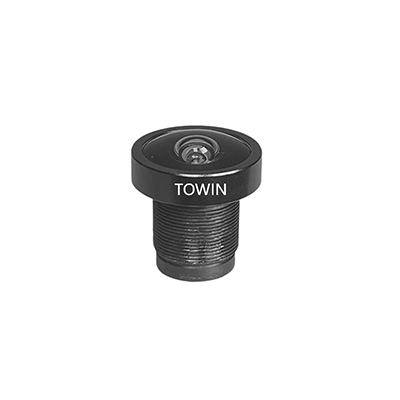
M12 S-mount wide angle 2.8mm 120° board lens
Conclusion
The choice between 90° and 120° wide angle lenses ultimately comes down to your most critical need: if precise identification, minimal distortion, and strong indoor low-light performance are non-negotiable (e.g., retail security, smart doorbells, or machine vision), the 90° lens is the clear choice. Its balance of coverage and accuracy makes it the most versatile option for small to medium-scale monitoring scenarios.
On the other hand, if you need to cover large open spaces efficiently (e.g., parking lots, warehouses, or outdoor campuses) and prioritize eliminating blind spots over absolute edge accuracy, the 120° lens is the better fit. Its expansive FOV reduces camera counts and provides context-rich footage for large-scale monitoring.
Whichever you choose, TOWIN’s 90° (S03012709024F) and 120° (CCL123030MPF) lenses deliver industry-leading performance, durable designs, and broad compatibility—ensuring you get reliable, high-quality imaging for your specific application.