


Diagonal FoV Calculator for M12 Lenses
11/17/2025
Low-Distortion Lenses in Machine Vision
11/18/2025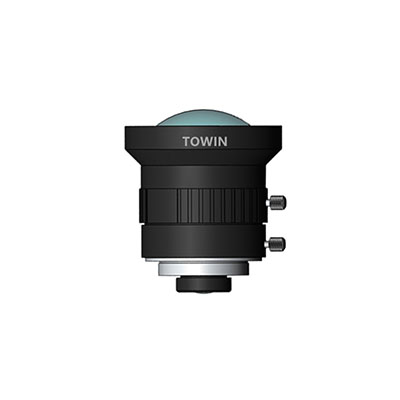
If you’re looking for lenses for industrial cameras, machine vision systems, or specialized imaging applications, then the C-Mount lens is the perfect choice. How does a C-Mount lens work, and why is it suitable for so many high-performance, specific applications?
What is a C-Mount Lenses?
C-Mount lenses are primarily used in cameras and other imaging devices, characterized by a standardized threaded mounting system. “C” stands for the thread diameter, which is 1 inch (25.4 mm). These lenses are mainly used in machine vision, industrial cameras, and other devices requiring precise imaging.
C-Mount lenses securely attach to cameras with matching threaded interfaces. They are suitable for a wide range of imaging systems, from scientific research to surveillance applications. Understanding how a C-Mount lens works helps in recognizing its importance across numerous technological fields.
How Does a C-Mount Lens Work?
- 1. Lens Mounting System: C-Mount lenses feature a threaded design that securely attaches to the camera body. The standard 1-inch thread ensures compatibility with most industrial cameras, allowing users to easily change lenses as needed.
- 2. Focusing Mechanism: Like other camera lenses, C-mount lenses have a focusing mechanism used to adjust the distance between the lens elements and the camera sensor. This helps obtain sharp, clear images, which is crucial for precision imaging tasks.
- 3. Optical Element: C-mount lenses contain multiple optical elements, such as glass or plastic lenses, that work together to focus light onto the camera sensor. These elements control the light, resulting in a sharp, well-defined image.
- 4. Sensor Alignment: C-mount lenses are specifically designed to maintain a precise alignment distance with the camera sensor. This ensures the lens accurately captures light, providing a sharp, distortion-free image. The precise distance from the lens to the sensor is typically approximately 17.5 mm, a key difference between it and other lens types.
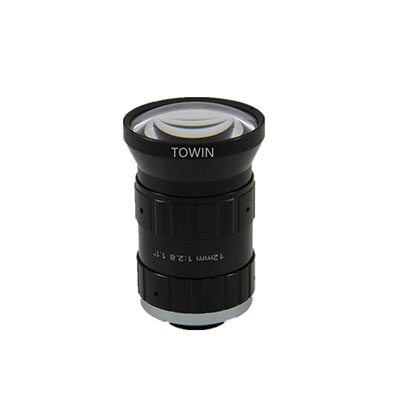
20MP 12mm low distorton C-mount FA lens
Key Features of C-Mount Lenses
- 1. Standardized Design: The 1-inch thread size is standard, making C-mount lenses compatible with a wide range of cameras and imaging systems.
- 2. Versatility: C-mount lenses offer a variety of focal lengths, apertures, and resolutions, making them suitable for different types of cameras, from high-end industrial equipment to scientific research cameras.
- 3. High Image Quality: C-mount lenses are designed to minimize distortion, resulting in clear, high-quality images, crucial for precision applications.
- 4. Compact Size: C-mount lenses are typically small in size, which is especially advantageous in situations where space is limited and larger lenses cannot be installed.
Applications of C-Mount Lenses
- Industrial Cameras: Machine vision systems commonly use C-mount lenses for quality control, inspection, and process automation.
- Scientific Imaging: In laboratory and research environments, microscopes and cameras use C-mount lenses for detailed imaging and analysis.
- Security Surveillance: C-mount lenses play a key role in closed-circuit television (CCTV) systems, delivering clear images for monitoring and security.
- Medical Imaging: Some medical devices, such as endoscopes, use C-mount lenses to capture high-quality images of the human body’s interior.
Advantages of Using C-Mount Lenses
- Accuracy: C-mount lenses offer high optical quality, ensuring image accuracy and clarity. This is crucial for industrial inspection and scientific research.
- Interchangeability: Due to the standardized design of C-mount lenses, you can easily change lenses without worrying about compatibility issues, allowing for flexible configuration of imaging solutions. Durability: These lenses are designed for harsh industrial environments and are durable.
- Customization: C-mount lenses offer a wide range of focal lengths and apertures, allowing you to customize them to your specific imaging needs.
How to Choose the Right C-Mount Lens
- Focal Length: The focal length of a lens affects the field of view and image magnification. A longer focal length results in a sharper image, while a shorter focal length provides a wider field of view.
- Aperture Size: The aperture determines the amount of light entering the lens. A larger aperture (smaller f-number) allows more light in, which is very useful in low-light conditions.
- Sensor Compatibility: Ensure that your C-mount lens is compatible with your camera’s sensor size. Some lenses target specific sensor formats, such as full-frame or smaller sensors.
- Resolution Requirements: Higher resolution imaging systems may require lenses with superior optical performance to capture images with richer detail.

40mm C mount IR corrected machine vision lenses
FAQs
How to Mount a C-Mount Lens to a Camera?
Mounting a C-mount lens is very simple. Align the lens’s threaded mount with the corresponding thread on the camera body and rotate clockwise until secure. Be careful not to overtighten the lens, as this may damage the threads.
What is the difference between C-mount and CS-mount lenses?
The main difference between C-mount and CS-mount lenses is the back focal length. CS-mount lenses have a shorter back focal length (12.5 mm) than C-mount lenses (17.5 mm). This means that when used with cameras designed specifically for C-mount, C-mount lenses offer better image quality.
Can C-mount lenses be used with any camera?
While many industrial and scientific cameras are compatible with C-mount lenses, it is essential to ensure that the lens is designed specifically for your camera model. Before purchasing a lens, always check the camera’s mount type and sensor format.
Conclusion
C-mount lenses play an indispensable role in a wide range of imaging applications, from industrial testing to scientific research. Understanding how C-mount lens work will help you make an informed choice based on your needs. Whether you’re shooting high-resolution images in low-light conditions or using professional equipment, Type-C lenses offer unparalleled versatility, precision, and durability.