

Low-temperature resistant CCTV lens
11/10/2025
Humidity-resistant Automotive lens
11/10/2025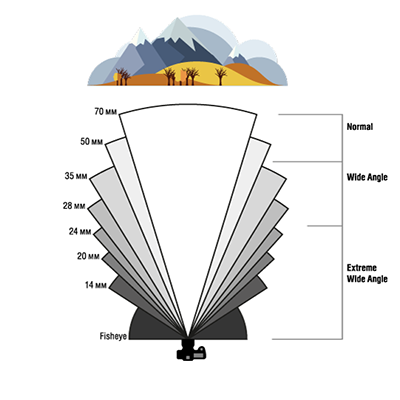
Photography enthusiasts often debate Fisheye Lens vs. Wide-Angle Lens when capturing expansive scenes or creative perspectives. Both lenses excel at distorting reality, but their approaches differ dramatically. Whether you’re shooting landscapes, architecture, or abstract art, understanding the nuances of Fisheye Lens vs. Wide-Angle Lens can elevate your work.
What Is a Fisheye Lens?
A fisheye lens is an ultra-wide-angle lens that creates extreme distortion, producing a hemispherical or panoramic image. Its focal length typically ranges from 4mm to 16mm, delivering a 180-degree field of view or more. This lens is famous for its signature “bubble” effect, where straight lines curve dramatically toward the edges of the frame.
Key Features of Fisheye Lenses:
- Extreme Distortion: Straight lines, like buildings or horizons, bend into curves.
- Circular vs. Full-Frame: Circular fisheyes create a black vignette around the edges, while full-frame models fill the entire sensor.
- Low Focal Length: Shorter focal lengths (e.g., 8mm) enhance the distorted effect.
- Creative Applications: Ideal for abstract art, underwater photography, and action sports.
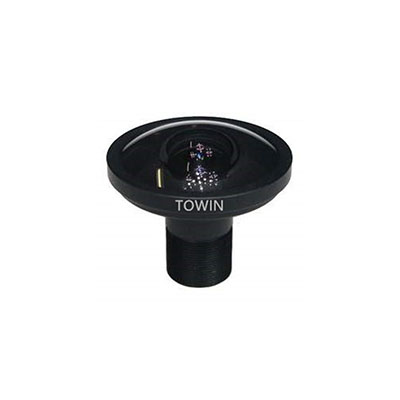
8-Megapixel M12 Fisheye Lens
What Is a Wide-Angle Lens?
A wide-angle lens has a focal length shorter than 35mm (for full-frame cameras) but less extreme than a fisheye. It captures a broad field of view with minimal distortion, making it versatile for landscapes, interiors, and group shots. Wide-angle lenses range from 14mm to 35mm, offering a natural perspective with slight stretching at the edges.
Key Features of Wide-Angle Lenses:
- Minimal Distortion: Straight lines remain mostly straight, with slight curvature at the edges.
- Versatile Focal Lengths: Options like 24mm or 35mm balance width and realism.
- Deep Depth of Field: Great for keeping foreground and background sharp.
- Practical Use Cases: Landscapes, real estate, and street photography.
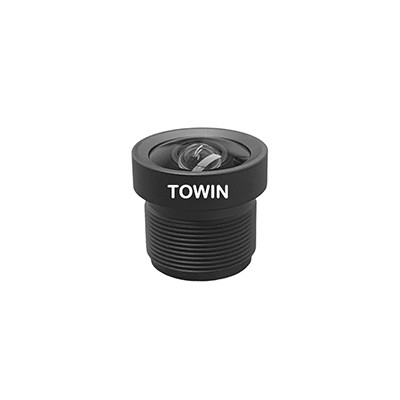
8-Megapixel Wide-angle lens
Fisheye Lens vs. Wide-Angle Lens: 5 Critical Differences
1. Distortion Level
Fisheye lenses embrace distortion, turning straight lines into dramatic curves. This effect is intentional and artistic, often used for surreal or playful compositions. Wide-angle lenses, however, minimize distortion, preserving natural geometry. If you want to emphasize reality, choose a wide-angle; for creativity, opt for a fisheye.
2. Field of View
Fisheye lenses offer a wider field of view (up to 180 degrees or more) compared to wide-angle lenses (typically 64–84 degrees). This makes fisheyes perfect for capturing entire rooms or skies in a single shot. Wide-angle lenses provide a broader view than standard lenses but stop short of the fisheye’s extremes.
3. Focal Length Range
Fisheye lenses have shorter focal lengths (4–16mm), while wide-angle lenses range from 14–35mm. Shorter focal lengths intensify distortion, while longer ones reduce it. For example, a 15mm fisheye will distort more than a 24mm wide-angle.
4. Image Quality and Sharpness
Wide-angle lenses generally produce sharper images with better edge-to-edge clarity. Fisheye lenses prioritize creative distortion over technical precision, often sacrificing sharpness at the edges. If you need crisp details, a wide-angle is superior.
5. Price and Accessibility
Fisheye lenses are often cheaper than high-end wide-angle lenses but may lack advanced features like autofocus or image stabilization. Wide-angle lenses vary in price, with premium models (e.g., Canon’s EF 16-35mm f/2.8L III) costing over $2,000. For budget-conscious shooters, third-party options like the Rokinon 14mm f/2.8 offer excellent value.
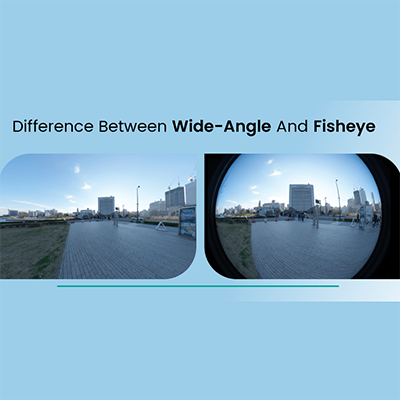
Fisheye Lens vs. Wide-Angle Lens
When to Use a Fisheye Lens vs. Wide-Angle Lens
Choose a Fisheye Lens For:
- Abstract Photography: Create mind-bending compositions with curved lines.
- Underwater Shoots: The distortion mimics the way light bends in water.
- Action Sports: Capture skateboarders or surfers in a dynamic, immersive frame.
- Panoramic Views: Shoot entire cityscapes or starry skies in one shot.
Choose a Wide-Angle Lens For:
- Landscapes: Emphasize vastness without extreme distortion.
- Real Estate: Showcase entire rooms with accurate proportions.
- Street Photography: Include more context while maintaining a natural look.
- Portraits (with caution): Use a 35mm lens for environmental portraits.
Pros and Cons of Fisheye Lens vs. Wide-Angle Lens
| Aspect | Fisheye Lens | Wide-Angle Lens |
| Distortion | Extreme, artistic | Minimal, realistic |
| Field of View | Ultra-wide (180°+) | Wide (64–84°) |
| Portability | Compact and lightweight | Bulkier, especially zoom models |
| Price | Affordable (entry-level models) | Expensive (premium zooms) |
| Best For | Creative projects, action shots | Landscapes, interiors, group photos |
FAQs
1. Can I use a fisheye lens for landscapes?
Yes, but the distortion may make horizons appear curved. A wide-angle lens is better for traditional landscape shots.
2. Are wide-angle lenses good for portraits?
Only with caution. Extreme wide-angles (e.g., 14mm) can distort facial features. A 35mm lens is safer for environmental portraits.
3. Do fisheye lenses work with crop-sensor cameras?
Yes, but the effective focal length increases due to the crop factor. For example, an 8mm fisheye on a crop sensor may act like a 12mm lens.
4. Which lens is better for real estate photography?
A wide-angle lens is ideal for showing entire rooms without distortion. Fisheye lenses may make spaces look unnatural.
5. Can I remove fisheye distortion in post-processing?
Software like Adobe Lightroom can correct some distortion, but it may reduce image quality. It’s better to embrace the fisheye effect or use a wide-angle lens.
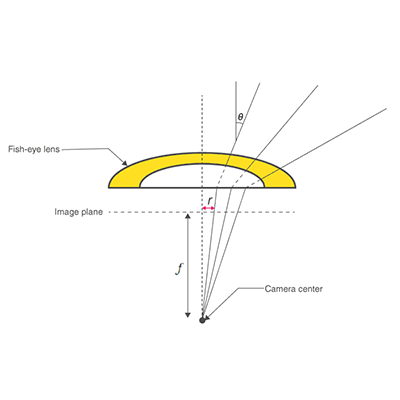
Full Frame Fisheye Lens
Final Verdict
The choice between Fisheye Lens vs. Wide-Angle Lens depends on your creative goals. Fisheye lenses excel at pushing boundaries with their surreal distortion, while wide-angle lenses offer versatility for everyday photography. If you’re on a budget, start with a wide-angle lens for its practicality. For artists and experimenters, a fisheye lens opens a world of unique perspectives.