


High-Quality CCTV Lens
10/31/2025
Diagonal vs. Orthographic Fisheye Lens
10/31/2025
The world of photography and optics is vast, with lenses of all shapes and sizes. Among these, the Pinhole Lens stands out as a fascinating and unique tool. Whether you’re a seasoned photographer or a curious hobbyist, understanding the Pinhole Lens can open up new creative possibilities. This Pinhole Lens FAQ aims to demystify this intriguing optical device, covering everything from its basic principles to practical applications.
What is a Pinhole Lens?
At its core, a Pinhole Lens is a simple optical device consisting of a small aperture (the pinhole) through which light passes to form an image. Unlike traditional lenses that use glass elements to focus light, the Pinhole Lens relies on the principles of diffraction and the natural focusing ability of a tiny hole. This minimalist design makes the Pinhole Lens incredibly lightweight and versatile.
How Does a Pinhole Lens Work?
The operation of a Pinhole Lens is rooted in basic physics. When light from a scene passes through the tiny pinhole, it projects an inverted image onto the camera’s sensor or film. The smaller the pinhole, the sharper the image, but also the dimmer it becomes. This trade-off between sharpness and brightness is a key consideration when using a Pinhole Lens.
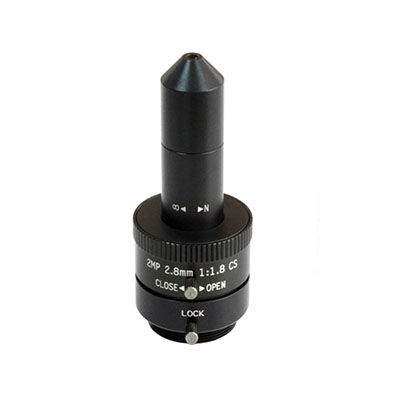
2.8-CS-pinhole-manual-iris CCTV Lens
Why Use a Pinhole Lens?
There are several compelling reasons to use a Pinhole Lens:
- 1. Creativity: The unique aesthetic qualities of Pinhole Lens photography, such as soft focus and infinite depth of field, can add a dreamy, ethereal quality to images.
- 2. Simplicity: With no moving parts or complex optics, a Pinhole Lens is incredibly easy to use and maintain.
- 3. Cost: Pinhole Lenses are often much cheaper than traditional lenses, making them accessible to photographers on a budget.
- 4. Educational Value: Understanding how a Pinhole Lens works can deepen your appreciation for the fundamentals of photography and optics.
Pinhole Lens FAQ
1. What is the ideal pinhole size?
The ideal pinhole size depends on the focal length of your camera and the desired image quality. Generally, a pinhole diameter of around 0.2mm to 0.5mm works well for most applications. Smaller pinholes produce sharper images but require longer exposure times, while larger pinholes allow more light in but can result in softer images.
2. Can I make my own Pinhole Lens?
Absolutely! Making your own Pinhole Lens is a fun and rewarding DIY project. All you need is a thin piece of metal (such as aluminum foil or a soda can), a needle to create the pinhole, and some tape to attach it to your camera. There are plenty of online tutorials and resources to guide you through the process.
3. What are the limitations of using a Pinhole Lens?
While Pinhole Lenses offer unique creative possibilities, they also have some limitations. The main drawback is the long exposure times required, especially in low-light conditions. This can make it challenging to capture moving subjects or achieve sharp images without a tripod. Additionally, the lack of a traditional lens means you can’t adjust the aperture or zoom, limiting your control over the image.
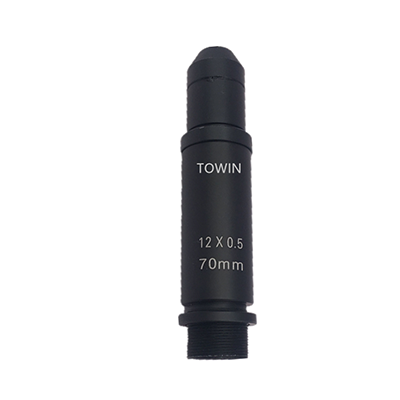
Low Distortion pinhole M12 S-mount CCTV lens
4. How can I improve the image quality of my Pinhole Lens photos?
To enhance the image quality of your Pinhole Lens photos, consider the following tips:
- Use a sturdy tripod: This will help minimize camera shake and ensure sharper images.
- Experiment with pinhole size: Finding the optimal pinhole diameter for your specific setup can significantly improve image quality.
- Choose the right time of day: Shooting during the golden hour or in bright daylight can help reduce exposure times and improve overall image brightness.
- Post-processing: Using photo editing software to adjust contrast, sharpness, and color can further enhance your Pinhole Lens images.
5. Are there any advanced techniques for using a Pinhole Lens?
Yes, there are several advanced techniques you can explore with a Pinhole Lens:
- Zone focusing: By pre-focusing your camera at a specific distance, you can quickly capture images without the need for precise focusing.
- Pinhole panoramas: Stitching together multiple Pinhole Lens images can create stunning panoramic views.
- Long-exposure photography: Combining a Pinhole Lens with long exposure times can produce unique and artistic effects, such as light trails and starry skies.
Conclusion
The Pinhole Lens is a remarkable tool that offers a unique perspective on the world of photography. Its simplicity, affordability, and creative potential make it a valuable addition to any photographer’s toolkit.