


Pinhole Lens FAQ
10/31/2025
Automotive Lenses for High-Humidity Environments
10/31/2025
When it comes to capturing wide-angle, panoramic views, the Fisheye Lens stands out as a powerful tool in a photographer’s arsenal. But within this category, there are subtle yet significant differences, particularly between the Diagonal and Orthographic Fisheye Lenses.
What is a Fisheye Lens?
Before diving into the specifics of Diagonal and Orthographic Fisheye Lenses, it’s essential to grasp what a Fisheye Lens is. A Fisheye Lens is an ultra-wide-angle lens that produces a strong visual distortion intended to create a wide panoramic or hemispherical image. This distortion, often resembling the view from a fish’s eye, gives the lens its name and makes it a favorite among photographers seeking unique perspectives.
Diagonal Fisheye Lens: Embracing Extreme Angles
The Diagonal Fisheye Lens is renowned for its ability to capture an extremely wide field of view, typically up to 180 degrees diagonally across the frame. This type of Fisheye Lens distorts the image in such a way that straight lines appear curved, creating a dramatic, spherical effect.
Key Characteristics of Diagonal Fisheye Lens:
- Ultra-Wide Field of View: Captures a vast expanse of the scene, making it ideal for landscapes, architecture, and crowded events.
- Strong Distortion: The pronounced curvature of lines adds a dynamic, almost surreal quality to images.
- Compact Design: Often smaller and lighter than other wide-angle lenses, making it portable and easy to handle.
Applications of Diagonal Fisheye Lens:
- Creative Photography: Perfect for experimenting with abstract and artistic compositions.
- Real Estate and Interior Shots: Provides a comprehensive view of small spaces, highlighting every detail.
- Action Sports: Captures the full scope of dynamic movements, such as skateboarding or surfing, from a unique angle.

1.1mm Waterproof Fisheye Lens
Orthographic Fisheye Lens: Precision in Projection
In contrast, the Orthographic Fisheye Lens offers a different approach to wide-angle photography. It projects the image in a way that minimizes distortion at the edges, resulting in a more linear perspective compared to its diagonal counterpart. This type of Fisheye Lens is particularly valued for its ability to maintain straight lines and reduce the “fishbowl” effect.
Key Characteristics of Orthographic Fisheye Lens:
- Reduced Edge Distortion: Straight lines remain relatively straight, even at the periphery of the frame.
- Balanced Field of View: While still offering a wide angle, typically up to 180 degrees, the projection is more uniform.
- Technical Precision: Preferred in applications where accurate representation of space and dimensions is crucial.
Applications of Orthographic Fisheye Lens:
- Architectural Photography: Ensures that buildings and structures are depicted with minimal distortion, preserving their true form.
- Scientific and Surveying Work: Provides accurate measurements and spatial relationships in fields like geology and cartography.
- Virtual Reality and 3D Modeling: Offers a realistic portrayal of environments, essential for creating immersive experiences.
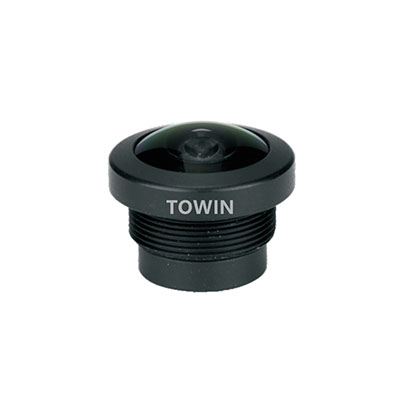
4-Megapixel F2.4 M12 mount fisheye lens
Diagonal vs. Orthographic Fisheye Lens: A Comparative Analysis
When deciding between a Diagonal and Orthographic Fisheye Lens, several factors come into play. The choice largely depends on the desired aesthetic effect and the specific requirements of the project.
- Distortion Level: The Diagonal Fisheye Lens embraces distortion, creating a bold, eye-catching look. The Orthographic Fisheye Lens, on the other hand, aims for a more natural representation with less pronounced curvature.
- Field of View: Both lenses offer an impressive 180-degree field of view, but the way they project this view differs. The Diagonal Fisheye Lens provides a spherical perspective, while the Orthographic Fisheye Lens maintains a flatter, more linear projection.
- Creative vs. Technical: If your goal is to push creative boundaries and produce striking, unconventional images, the Diagonal Fisheye Lens is the way to go. For projects requiring accuracy and precision, such as architectural documentation or scientific research, the Orthographic Fisheye Lens is the better choice.
FAQs
1. Which Fisheye Lens is better for landscape photography?
For landscape photography, the choice between Diagonal and Orthographic Fisheye Lenses depends on the desired effect. If you want to emphasize the vastness and curvature of the landscape, the Diagonal Fisheye Lens is ideal. However, if you prefer a more natural and less distorted representation, the Orthographic Fisheye Lens may be more suitable.
2. Can I use a Fisheye Lens for portrait photography?
While Fisheye Lenses are not traditionally used for portraits due to their extreme distortion, they can create unique and artistic effects when used creatively. The Diagonal Fisheye Lens, with its pronounced curvature, can add a playful and surreal element to portraits, while the Orthographic Fisheye Lens may offer a more subtle and unconventional take.
3. Are Fisheye Lenses only for professional photographers?
No, Fisheye Lenses are accessible to photographers of all levels. Whether you’re a hobbyist looking to experiment with new perspectives or a professional seeking specialized tools, both Diagonal and Orthographic Fisheye Lenses can enhance your photographic repertoire.
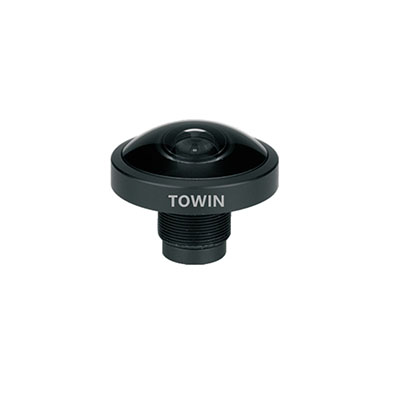
8-Megapixel F2.0 M12 mount Fisheye Lens
Conclusion
In the realm of Fisheye Lens photography, the Diagonal and Orthographic variations each bring their own set of advantages and creative possibilities. By understanding the distinct characteristics and applications of Diagonal vs. Orthographic Fisheye Lens, you can make an informed decision that aligns with your artistic vision and technical needs.