



Shockproof CCTV lens
10/21/2025
Large format low distortion lens
10/21/2025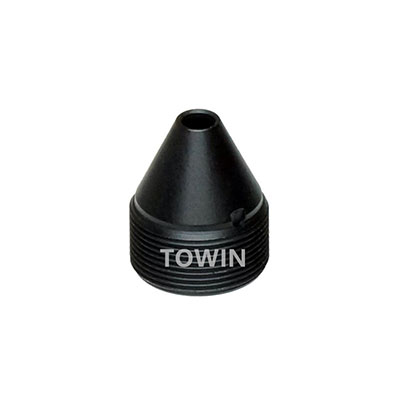
The world of optics is evolving at breakneck speed, and at the forefront of this transformation is the High-NA pinhole lens. Combining cutting-edge numerical aperture (NA) technology with the simplicity of a pinhole design, this innovation is reshaping industries from microscopy to semiconductor manufacturing.
What Is a High-NA Pinhole Lens?
A pinhole lens operates on the principle of restricting light to pass through a tiny aperture, creating sharp images by eliminating optical aberrations. The “High-NA” designation refers to its high numerical aperture, a measure of its ability to gather light at steeper angles. This combination allows the High-NA pinhole lenses to achieve unprecedented resolution and contrast, even in challenging lighting conditions.
Unlike traditional lenses, which rely on complex curved surfaces to focus light, the High-NA pinhole lens leverages its aperture size and NA to control light paths. This makes it lightweight, durable, and cost-effective, while delivering performance that rivals or exceeds conventional optics.
Key Advantages of High-NA Pinhole Lenses
- 1. Superior Resolution: The high NA enables the lens to capture finer details, making it ideal for applications requiring microscopic precision.
- 2. Aberration-Free Imaging: By design, pinhole lenses minimize spherical and chromatic aberrations, ensuring crisp, distortion-free images.
- 3. Compact Design: Without bulky glass elements, the High-NA pinhole lens is portable and easy to integrate into existing systems.
- 4. Deep Depth of Field: The lens maintains focus across a wide range of distances, reducing the need for manual adjustments.
- 5. Cost Efficiency: Manufacturing costs are lower compared to multi-element lenses, making high-performance optics more accessible.
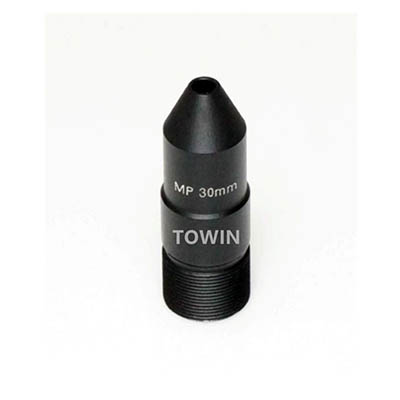
Pinhole-lens-30mm-IR-corrected-CCTV-M12-telecentric-lens
Applications of High-NA Pinhole Lenses
The versatility of the High-NA pinhole lens has led to its adoption across diverse fields:
- Microscopy: Used in confocal and fluorescence microscopy to enhance image clarity and reduce photobleaching.
- Semiconductor Inspection: Critical for detecting defects in wafer manufacturing with sub-micron accuracy.
- Medical Imaging: Enables non-invasive diagnostics with high-resolution endoscopes and ophthalmologic devices.
- Astronomy: Captures faint celestial objects by maximizing light collection efficiency.
- Industrial Metrology: Measures surface roughness and dimensional accuracy in precision engineering.
For example, companies like Zeiss and Olympus have integrated High-NA pinhole lenses into their advanced imaging systems, demonstrating their reliability in real-world scenarios.
Challenges and Limitations
While the High-NA pinhole lens offers remarkable benefits, it’s not without drawbacks:
- 1. Light Throughput: The small aperture limits the amount of light reaching the sensor, requiring longer exposure times in low-light conditions.
- 2. Diffraction Effects: At extremely small apertures, diffraction can blur edges, though High-NA designs mitigate this issue.
- 3. Narrow Field of View: The lens excels in focused applications but may struggle with wide-angle imaging.
However, ongoing research in nanophotonics and metamaterials is addressing these challenges, paving the way for next-gen High-NA pinhole lenses with enhanced capabilities.
Future Trends in High-NA Pinhole Lens Technology
The future of High-NA pinhole lenses is bright, with innovations such as:
- Adaptive NA Control: Dynamically adjusting the aperture size to optimize performance for different tasks.
- Hybrid Designs: Combining pinhole principles with freeform optics to balance resolution and light efficiency.
- AI-Driven Calibration: Using machine learning to auto-correct aberrations in real time.
Industry experts predict that by 2030, High-NA pinhole lenses will dominate 80% of high-resolution imaging markets, driven by demand for miniaturized, high-performance optics.

Pinhole lens 45mm IR corrected CCTV M12 telecentric lens
FAQs
1. How does a High-NA pinhole lens differ from a standard pinhole camera?
A standard pinhole camera uses a simple aperture without NA optimization, resulting in lower resolution. The High-NA pinhole lens enhances light collection and image quality through advanced aperture engineering.
2. Can High-NA pinhole lenses replace traditional microscope objectives?
While they excel in specific applications like confocal microscopy, traditional objectives still dominate in scenarios requiring variable magnification or wide fields of view.
3. What is the maximum resolution achievable with a High-NA pinhole lens?
Resolution depends on the NA and wavelength of light. For visible light (500 nm), a High-NA pinhole lens with NA = 0.9 can achieve resolutions below 300 nm.
4. Are High-NA pinhole lenses suitable for outdoor photography?
No, their narrow field of view and light sensitivity make them impractical for general photography. They’re designed for controlled environments like labs or industrial settings.
5. How do I choose the right High-NA pinhole lens for my application?
Consider factors like NA value, aperture size, and wavelength compatibility. Consult with manufacturers or refer to technical specifications to match your needs.
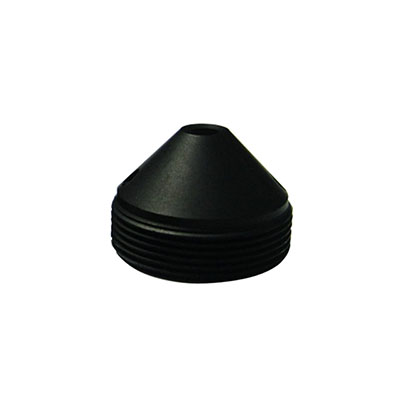
4.2mm 3MP HD CCTV M12 mount Pinhole lens
Conclusion
The High-NA pinhole lens represents a paradigm shift in optical engineering, merging simplicity with cutting-edge performance. Its ability to deliver aberration-free, high-resolution imaging at a fraction of the cost of traditional lenses makes it indispensable in fields like medicine, manufacturing, and astronomy.