


Do Wide Angle Lenses Work Well in Low Light?
09/03/2025
What are the three types of fisheye lenses?
09/03/2025
In modern industrial environments, precision is non-negotiable. From robotic assembly lines to 3D scanning and quality inspection systems, even minor distortions in imaging can lead to costly errors, defective products, or system failures. Enter the Low-Distortion Lens for Industrial Applications—a cutting-edge optical solution designed to eliminate image warping, enhance accuracy, and streamline operations across diverse sectors.
Why Distortion Matters in Industrial Imaging
Optical distortion occurs when light rays bend unevenly through a lens, causing straight lines to appear curved or warped. In industrial applications, this can lead to:
- Misaligned measurements in metrology tools.
- Inaccurate 3D reconstructions in scanning systems.
- Faulty defect detection in quality control.
- Reduced efficiency in robotic guidance.
Traditional lenses often struggle with barrel distortion (edges bulge outward) or pincushion distortion (edges pinch inward), compromising data integrity. Low-distortion lenses, however, minimize these effects, ensuring images remain true-to-life even under extreme magnification or harsh conditions.
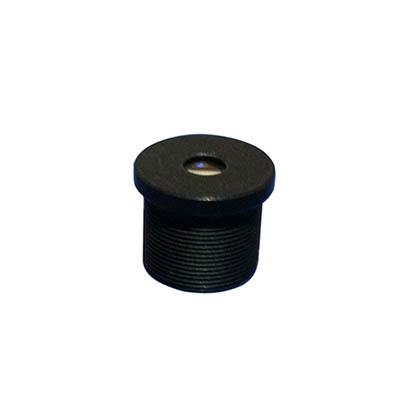
12mm M12 mount low-distortion lens
5 Key Benefits of Low-Distortion Lenses for Industrial Use
1. Unmatched Precision in Metrology and Inspection
Low-distortion lenses are critical for coordinate measuring machines (CMMs) and optical comparators, where sub-micron accuracy is required. By eliminating geometric warping, they enable engineers to detect flaws invisible to the naked eye. For example, in semiconductor manufacturing, a 0.1% distortion reduction can prevent millions in losses from faulty chip batches.
2. Enhanced Performance in Robotics and Automation
Robots rely on machine vision systems to navigate environments, pick components, or perform welding. Distorted images can mislead algorithms, causing collisions or misalignments. Low-distortion lenses ensure robots “see” clearly, boosting operational speed and safety. A study by the International Federation of Robotics found that high-precision optics reduce robotic downtime by up to 30%.
3. Durability in Harsh Environments
Industrial lenses must withstand vibrations, temperature extremes, and contaminants like dust or chemicals. Low-distortion lenses are often built with ruggedized coatings and sealed housings, making them ideal for automotive paint booths, oil refineries, or food processing plants.
4. Cost Efficiency Through Reduced Rework
Distortion-induced errors force manufacturers to discard defective products or halt production lines for recalibration. By integrating low-distortion lenses, companies like Siemens and Bosch report a 15–20% reduction in rework costs, translating to significant annual savings.
5. Versatility Across Industries
From aerospace (inspecting turbine blades) to medical devices (verifying catheter dimensions), low-distortion lenses adapt to multiple wavelengths (visible, IR, UV) and lighting conditions. Their flexibility reduces the need for multiple lens systems, simplifying workflows.
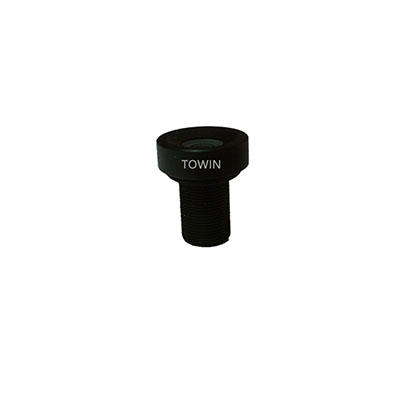
M8 mount low distortion lens
Technical Specifications: What Makes These Lenses Stand Out?
Low-distortion lenses achieve their performance through:
- Aspherical Elements: Curved surfaces correct distortion more effectively than traditional spherical lenses.
- Advanced Coatings: Anti-reflective layers minimize glare and chromatic aberration.
- Precision Alignment: Tight tolerances during assembly ensure consistent optical performance.
How to Choose the Right Low-Distortion Lens
When selecting a lens for industrial use, consider:
- Distortion Rating: Aim for <0.5% for most applications; <0.1% for ultra-precision tasks.
- Wavelength Range: Ensure compatibility with your imaging sensor (e.g., monochrome vs. color).
- Environmental Resistance: Look for IP67-rated housings if exposed to liquids or dust.
The Future of Industrial Optics
As industries embrace Industry 4.0 and AI-driven quality control, the demand for low-distortion lenses will surge. Innovations like liquid lenses (which adjust focus electronically) and multi-spectral imaging will further expand their capabilities, enabling real-time defect detection in even the most complex workflows.
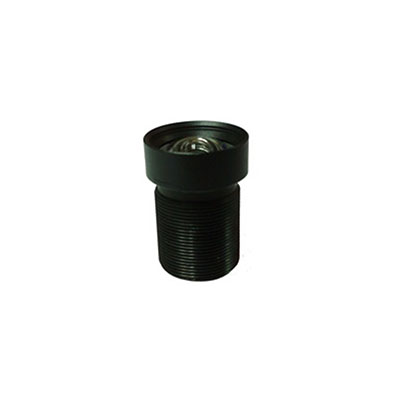
4mm low distortion IR Cut Filter S-Mount Lens
Conclusion
The Low-Distortion Lens for Industrial Applications it’s essential for companies competing in today’s era of hyper-precision manufacturing. By reducing errors, cutting costs, and enhancing versatility, these lenses empower industries to achieve levels of accuracy once thought impossible.