


Best Pinhole Lenses for DSLR Cameras
09/03/2025
Low-Distortion Lens for Industrial Applications
09/03/2025
Low-light photography is a battleground where equipment and technique collide. For photographers, the question of whether wide angle lenses hold their own in dim settings is more than academic—it’s practical. Wide angle lens, renowned for their expansive field of view, are staples in landscapes, architecture, and event photography.
1. The Physics of Light and Lenses
To evaluate performance, we must first understand how lenses interact with light. A lens’s ability to gather light hinges on its aperture, measured in f-stops (e.g., f/2.8, f/4). The lower the f-number, the wider the aperture opens, allowing more light to hit the sensor. Wide angle lenses typically range from 14mm to 35mm in focal length, but their aperture capabilities vary wildly.
For instance, a 14mm f/2.8 lens lets in significantly more light than a 24mm f/5.6 model. Here’s the catch: ultra-wide lenses (e.g., 14–20mm) often prioritize compactness over large apertures, capping out at f/4 or higher. This trade-off means fewer photons reach the sensor in low light, forcing photographers to compensate with slower shutter speeds or higher ISO settings—both of which introduce challenges like motion blur or noise.
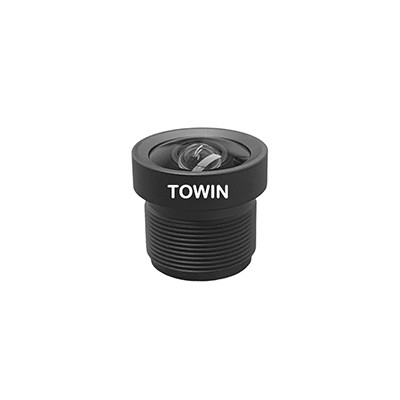
8-Megapixel Wide-angle lens
2. Sensor Size: The Game Changer
The camera’s sensor size amplifies or diminishes a lens’s low-light prowess. Full-frame sensors (35mm) capture more light than crop sensors (APS-C, Micro Four Thirds), making them ideal partners for wide angle lenses in dim settings. For example, a 24mm f/1.8 lens on a full-frame body will outperform the same lens on a crop sensor when light is scarce, thanks to the larger sensor’s superior light-gathering ability.
However, even full-frame systems have limits. A wide angle lens with a narrow aperture (e.g., f/5.6) on any sensor will struggle in low light without sacrificing image quality. This is why professionals often pair wide angles with bodies featuring excellent high-ISO performance, such as the Sony A7S III or Nikon Z6 II.
3. Practical Strengths: When Wide Angles Shine
Despite aperture constraints, wide angle lenses offer unique advantages in low light:
- Depth of Field Control: Wide angles inherently have deeper depth of field, meaning more of the scene remains in focus even at wider apertures. This is invaluable for astrophotography or nightscapes, where sharpness from foreground to stars is critical.
- Stabilization Synergy: Many modern wide angle lenses include optical stabilization (OS) or image stabilization (IS). Combined with in-body stabilization (IBIS), this allows handheld shooting at slower shutter speeds without blur, a boon in low light.
- Creative Flexibility: Wide angles excel at capturing expansive scenes, such as cityscapes at dusk or candlelit interiors. Their ability to “pull in” light from a broader area can create dramatic, immersive images even when lighting is suboptimal.
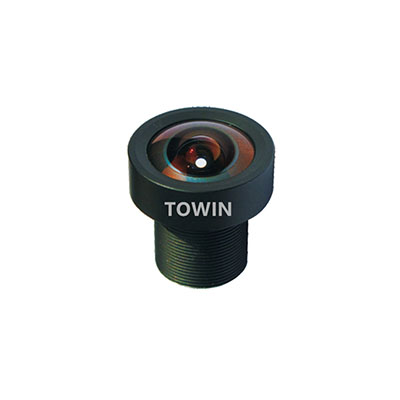
2.8mm drone UAV wide angle lens
4. Limitations: Where They Fall Short
No lens is perfect, and wide angles have notable drawbacks in low light:
- Narrow Maximum Apertures: As mentioned, many wide angles (especially zooms) max out at f/4 or higher, restricting light intake.
- Distortion Risks: Correcting barrel distortion in post-processing can reduce image sharpness, compounding issues in low-light shots where noise is already a concern.
- Focus Challenges: Autofocus systems may struggle in dim conditions, particularly with older lenses lacking modern focus motors.
5. Tips to Optimize Performance
To maximize a wide angle lens’s low-light potential:
- Prioritize Fast Glass: Invest in lenses with apertures of f/2.8 or wider (e.g., Sigma 14-24mm f/2.8 DG HSM).
- Use a Tripod: Stabilize your camera to enable slower shutter speeds without blur.
- Leverage High ISO Wisely: Modern sensors handle noise better than ever; don’t fear ISO 3200–6400 if it means capturing the shot.
- Shoot in RAW: This preserves detail for noise reduction in post-processing.
- Embrace Manual Mode: Take control of aperture, shutter speed, and ISO to balance exposure and creativity.
For further reading on low-light techniques, check out this comprehensive guide by DPReview, a trusted resource for photographers.

2.8mm 5MP short-focus Lens
Conclusion
So, do wide angle lenses work well in low light? The answer depends on context. Paired with a full-frame sensor and a fast aperture, they can produce stunning results in dim settings, especially for landscapes or architecture. However, slower lenses or crop-sensor bodies may require compromises.