


M12 lens for industrial cameras
08/21/2025
What Is a Low-Distortion Lens?
08/21/2025
Virtual reality (VR) technology has rapidly evolved over the past decade, offering users an unprecedented level of immersion and interactivity. The fisheye lens, with its ultra-wide view and unique distortion, is key to driving VR transformation.
The Power of the Fisheye Lens in Virtual Reality
The fisheye lens isn’t new; photographers and filmmakers have used it for decades for wide landscapes and creative effects. However, its application in virtual reality is relatively novel and incredibly promising. VR developers use the fisheye lens’s wide-angle capture to craft more immersive and realistic virtual environments.
1. Enhanced Field of View (FOV)
One of the most significant advantages of using a fisheye lens in VR is the substantial increase in the field of view. Traditional VR headsets often struggle with limited FOV, which can break the sense of immersion and make the experience feel restrictive. A fisheye lens’s 180-degree+ FOV lets users view more virtual surroundings comfortably, without excessive head turning. This creates a more natural and engaging experience, as it closely mimics human peripheral vision.
Oculus and HTC, for example, use fisheye lenses in their VR headsets to boost the field of view. The result is a more expansive and captivating virtual world that users can explore with greater ease and comfort. Recommended Reading: Fisheye Lens with Adjustable Aperture
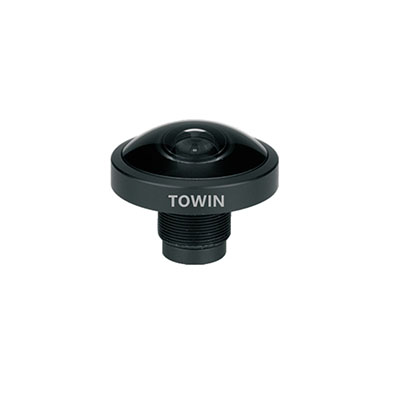
8-Megapixel F2.0 M12 mount Fisheye Lens
2. Improved Depth Perception
Depth perception is crucial for creating a realistic VR experience. The fisheye lenses aids in this by providing a more accurate representation of spatial relationships within the virtual environment. The lens’s unique distortion characteristics can be algorithmically corrected to produce images that maintain proper proportions and depth cues. This is particularly beneficial for applications like VR gaming, where precise spatial awareness can be the difference between victory and defeat.
The fisheye lens captures wide areas in one frame, cutting camera needs and stitching complexity, streamlining VR development.
3. Cost-Effective Solution
Developing high-quality VR content can be an expensive endeavor, especially when it comes to capturing or rendering wide-angle views. The fisheye lens offers a cost-effective alternative by allowing developers to capture expansive scenes with a single lens. This reduces the need for multiple cameras, rigs, and post-processing work, ultimately lowering production costs and speeding up development timelines.
For example, a small indie studio can leverage a fisheye lens to create immersive VR experiences without breaking the bank, making high-quality VR content more accessible to a broader audience.
4. Creative Visual Effects
The fisheye lens’s distinctive distortion can be used creatively to enhance the visual appeal of VR experiences. By intentionally incorporating the lens’s curvature into the design, developers can create unique and memorable environments that stand out from traditional VR content. This is particularly effective in artistic and experimental VR projects, where the goal is to push the boundaries of what is possible with visual storytelling.
Additionally, the fisheye lens can be used to simulate extreme perspectives, such as looking through a keyhole or peering through a tunnel, adding an extra layer of intrigue and immersion to the experience.
5. Enhanced Social Interactions
Social VR is an emerging field that aims to connect users in virtual spaces for socializing, collaboration, and entertainment. The fisheye lens can play a crucial role in this by providing a more inclusive and natural view of the virtual environment, making it easier for users to interact with each other and their surroundings.
For instance, in a virtual meeting room, a fisheye lens can capture the entire space, allowing participants to see each other and the room’s layout without the need for excessive head movement. This creates a more seamless and enjoyable social experience, fostering better communication and collaboration.

Fisheye IR Cut Filter S-Mount Lens
Conclusion
The fisheye lens is proving to be a game-changer in the world of virtual reality. Its ability to enhance the field of view, improve depth perception, offer cost-effective solutions, enable creative visual effects, and enhance social interactions makes it an invaluable tool for VR developers. As technology continues to advance, we can expect to see even more innovative applications of the fisheye lens in VR, pushing the boundaries of what is possible and creating truly immersive and unforgettable experiences.