


Best aperture lenses for low-light photography
08/12/2025
What is the essence of a zoom lens
08/12/2025
Fixed focus lenses have carved a niche in photography by offering speed, simplicity, and exceptional light-gathering capabilities. Among their most compelling advantages is their ability to achieve faster aperture speeds compared to autofocus lenses. But what makes this possible? Let’s explore the engineering, physics, and design choices that make fixed focus lens a powerhouse for photographers prioritizing speed and low-light performance.
Why Fixed Focus Lenses Have Faster Aperture Speeds: The Core Mechanics
To understand why fixed focus lenses excel in aperture speed, we must first unpack how aperture and focus systems interact. Aperture speed refers to the maximum size of the lens opening (e.g., f/1.4, f/2.8), which determines how much light enters the camera. A wider aperture (lower f-number) allows faster shutter speeds and better performance in dim conditions. Fixed focus lens, by design, eliminate the need for moving internal elements to adjust focus, enabling engineers to optimize their optical construction for maximum light transmission.
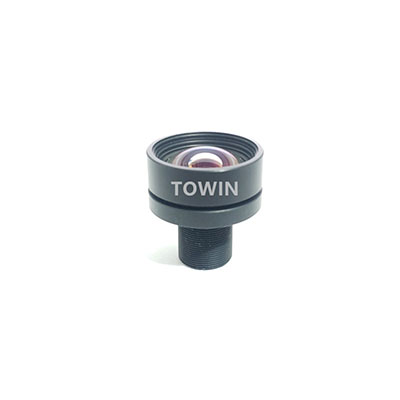
Low distortion industrial 8mm fixed focus lens
1. Simplified Optical Design Reduces Complexity
Autofocus lenses rely on motorized systems to shift lens elements forward or backward to achieve focus. This mechanism requires additional space, weight, and precision engineering, which can restrict the maximum aperture size. In contrast, fixed focus lens have a static optical path—no moving parts mean fewer compromises. Manufacturers can allocate more space to larger glass elements and wider apertures without worrying about collisions or alignment issues during focusing.
For example, a 50mm f/1.8 autofocus lens might sacrifice some aperture width to accommodate its focusing motor, while a fixed focus 50mm f/1.4 lens can prioritize light intake. This simplicity also reduces manufacturing costs, making high-speed fixed focus lenses more accessible.
2. Elimination of Autofocus Motor Weight and Power Draw
Autofocus systems add bulk and energy consumption to a lens. The motors, gears, and sensors required to drive focusing mechanisms demand physical space and electrical power, which can indirectly limit aperture design. Fixed focus lenses shed this weight, allowing for larger, heavier glass elements that improve light transmission.
Moreover, the absence of autofocus components reduces internal reflections and light loss. Every surface inside a lens can scatter or absorb photons, slightly diminishing image brightness. Fixed focus lens minimize these surfaces, ensuring more light reaches the sensor.
3. Precision Engineering for Optimal Light Paths
Fixed focus lenses are meticulously calibrated during manufacturing to focus at a specific distance (often hyperfocal or infinity). This permanence allows engineers to fine-tune the curvature and positioning of glass elements to maximize sharpness and light efficiency. Autofocus lenses, by contrast, must maintain acceptable image quality across a range of focusing distances, which can require trade-offs in aperture design.
For instance, a fixed focus lens designed for landscape photography might prioritize edge-to-edge sharpness at infinity, while an autofocus equivalent might soften edges slightly to ensure usability at close distances. The fixed focus lens’s dedicated design enables a wider aperture without sacrificing image quality.
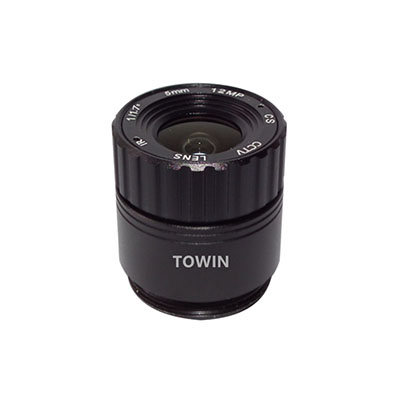
5mm IR corrected CS mount Wide Angle Lens
4. Cost-Effective Production of High-Speed Glass
Producing large-aperture glass elements is expensive due to the precision required to grind and polish them. Autofocus lenses often justify smaller apertures to keep costs manageable for consumers. Fixed focus lenses, however, cater to niche markets (e.g., astrophotography, street photography) where speed trumps versatility. Manufacturers can justify investing in high-quality, fast glass for these lenses, knowing enthusiasts will pay a premium for performance.
A real-world example is the Voigtlander Nokton 50mm f/1.2, a fixed focus lens renowned for its buttery bokeh and stellar low-light performance. Its autofocus counterparts rarely match its aperture speed due to the constraints of focusing mechanisms.
5. Durability and Reliability in Extreme Conditions
Fixed focus lens have fewer moving parts, making them more resistant to dust, moisture, and impact damage. This ruggedness is invaluable for photographers working in harsh environments, such as wildlife or sports photographers. Autofocus lenses, with their delicate motors and sensors, are more prone to failure when exposed to dirt or extreme temperatures.
Additionally, fixed focus lenses’ lack of focus hunting (the delay when autofocus systems struggle to lock onto a subject) ensures consistent performance in fast-paced scenarios. A journalist covering a protest, for example, can rely on a fixed focus lens to capture sharp images instantly, even in chaotic lighting.Recommended Reading: Fixed focus lenses with ISO certification for export
The Trade-Offs: When Fixed Focus Lenses Aren’t Ideal
While fixed focus lenses offer unmatched aperture speeds, they aren’t without drawbacks. Their inability to adjust focus limits versatility, making them unsuitable for portraits or macro photography where precise subject isolation is critical. They also require photographers to master techniques like zone focusing (pre-setting focus based on distance) to ensure sharpness.
For those needing flexibility, autofocus lenses remain the better choice. However, for specialists prioritizing speed, low-light performance, and simplicity, fixed focus lenses are unbeatable.
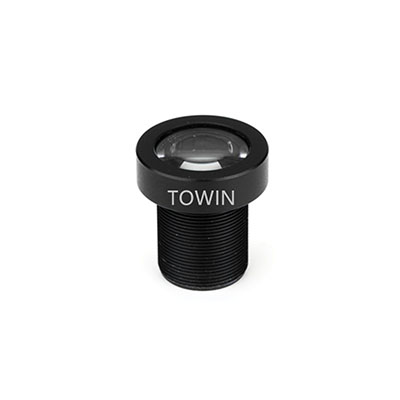
Low-distortion-3.4mm-fixed-focus-industrial-lens
Conclusion
Fixed focus lenses are a testament to the adage “less is more.” By eliminating autofocus mechanisms, they achieve faster aperture speeds, superior light transmission, and rugged reliability. Whether you’re shooting stars, street scenes, or candid moments, these lenses empower you to capture life’s fleeting details with unmatched clarity.