


Top 5 M12 lenses for industrial automation
09/02/2025
10-Megapixel Fisheye CCTV HD lens
09/02/2025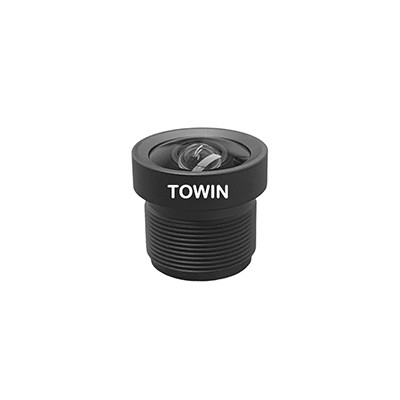
The imaging principle of wide-angle lens is a cornerstone of modern photography, enabling photographers to capture expansive landscapes, architectural marvels, and dynamic compositions with unparalleled depth. Unlike standard lenses, wide-angle lenses distort perspective in a controlled manner, creating dramatic effects that evoke emotion and scale.
The Imaging Principle of Wide-Angle Lens: How It Works
At its core, the imaging principle of wide-angle lens relies on a shorter focal length—typically 35mm or less—to capture a wider field of view (FOV). This design allows the lens to gather light from a broader angle, projecting it onto the camera sensor. However, this increased FOV comes with trade-offs:
- Perspective Distortion: Wide-angle lenses exaggerate the relative size of objects near the camera while minimizing distant elements. For example, a person standing close to the lens may appear disproportionately large compared to a mountain in the background. This effect, known as “extreme perspective”, is often used artistically to emphasize depth or create surreal compositions.
- Edge Distortion: Straight lines near the edges of the frame may appear curved, a phenomenon called “barrel distortion”. Modern lenses use advanced optics to minimize this, but some distortion remains inevitable. Post-processing software like Adobe Lightroom can correct this, but photographers often embrace it for stylistic flair.
- Depth of Field (DoF): Wide-angle lenses inherently have a deeper DoF, keeping more of the scene in focus. This makes them ideal for landscapes, where sharpness from foreground to horizon is critical. However, stopping down the aperture (e.g., f/16) further enhances DoF, though diffraction may reduce image quality at extreme settings.
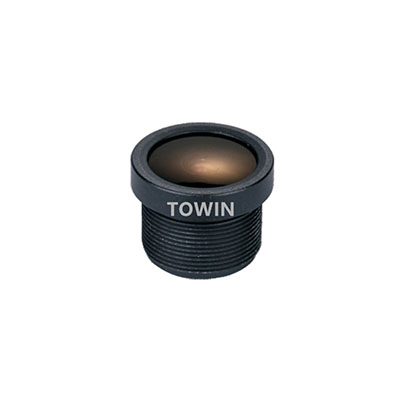
2.7mm Wide Angle Automotive Lens
Key Components of Wide-Angle Lens Design
The imaging principle of wide-angle lens is shaped by several technical factors:
- Focal Length: A shorter focal length (e.g., 14mm–24mm) expands the FOV. Ultra-wide lenses (below 14mm) are popular for astrophotography and real estate, where capturing every detail matters.
- Lens Elements: Wide-angle lenses use complex glass arrangements, including aspherical elements, to reduce chromatic aberration and distortion. For instance, the Nikon 14-24mm f/2.8G ED employs three aspherical lenses to maintain edge-to-edge sharpness.
- Aperture Size: Larger apertures (e.g., f/2.8) allow more light, enabling low-light shooting without sacrificing image quality. However, they also increase cost and weight.
Practical Applications of Wide-Angle Lenses
The imaging principle of wide-angle lens finds applications across genres:
- Landscape Photography: Wide-angle lenses capture sweeping vistas, emphasizing the grandeur of nature. The deep DoF ensures sharpness throughout, while the exaggerated perspective adds drama to skies and foregrounds.
- Architecture: Architects rely on wide-angle lenses to photograph entire buildings without stepping back miles. Tilt-shift lenses, a specialized subset, correct vertical lines to avoid the “falling building” effect.
- Street Photography: The immersive FOV of wide-angle lenses draws viewers into bustling city scenes. Photographers like Steve McCurry use them to capture candid moments while including contextual details.
- Vlogging and Video: Content creators favor wide-angle lenses for selfie videos, as they fit more background into the frame.

2.8mm 5MP short-focus Lens
Challenges and Solutions
While powerful, the imaging principle of wide-angle lens presents challenges:
- Composition Difficulty: Including too much of the scene can clutter the frame. Solution: Use leading lines or focal points to guide the viewer’s eye.
- Distortion Management: Barrel distortion can warp straight lines. Solution: Shoot with a slight tilt or use lens profiles in editing software.
- Limited Close-Up Focus: Wide-angle lenses struggle with macro photography due to their minimum focusing distance. Solution: Use extension tubes or switch to a dedicated macro lens.
Conclusion
The imaging principle of wide-angle lens is a blend of art and science, transforming how we perceive the world through a camera. By mastering its quirks—distortion, depth, and composition—photographers can elevate their work from ordinary to extraordinary. Whether you’re shooting starry skies or urban jungles, a wide-angle lens is an indispensable tool in your creative arsenal.