6mm M12 CCTV board lens IR corrected
11/10/2025
P-Iris ITS Lens: Precise Exposure
11/11/2025
In the realm of industrial metrology, selecting the right Industrial lens can make or break measurement accuracy, efficiency, and cost-effectiveness. Two prominent contenders dominate this space: Telecentric vs. Conventional Metrology Lens systems. Each offers unique advantages and limitations, but understanding their differences is essential for optimizing industrial processes.
What Are Telecentric and Conventional Metrology Lenses?
Before comparing the two, let’s define their core functions.
Telecentric Metrology Lenses are engineered to eliminate perspective errors (parallax) by projecting light rays parallel to the optical axis. This design ensures consistent magnification across the entire field of view, regardless of object distance. These lenses are ideal for high-precision tasks like dimensional measurement, 3D scanning, and quality control in industries such as automotive, aerospace, and electronics.
Conventional Metrology Lenses, on the other hand, follow standard optical designs where light rays converge at varying angles. While cost-effective and versatile, they introduce perspective distortion, making them less suitable for applications requiring sub-micron accuracy. Common uses include general-purpose imaging, basic inspection, and scenarios where extreme precision isn’t critical.
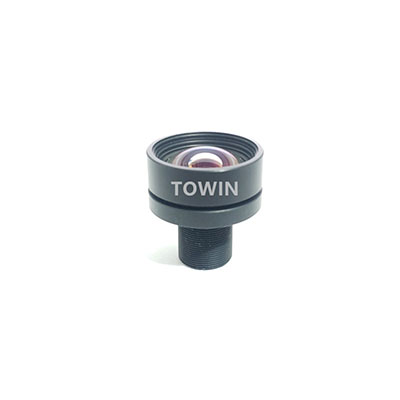
Low distortion industrial 8mm fixed focus lens
Telecentric vs. Conventional Metrology Lens: 5 Critical Comparisons
1. Precision and Accuracy
Telecentric lenses excel in scenarios demanding ultra-high precision. Their parallel light projection minimizes magnification errors, ensuring measurements remain consistent even if the object shifts slightly. For example, a telecentric lens measuring a 1mm feature will deliver the same result whether the object is 100mm or 150mm from the lens.
Conventional lenses, however, suffer from perspective distortion. A 1mm feature may appear larger or smaller depending on its position relative to the lens, leading to measurement inaccuracies of up to 5% or more in extreme cases.
2. Distortion Control
Telecentric systems boast near-zero distortion, a critical feature for applications like semiconductor wafer inspection or medical device manufacturing. Their optical design inherently corrects for barrel or pincushion distortion, ensuring straight lines remain straight.
Conventional lenses, while improving with advanced coatings and aspherical elements, still exhibit measurable distortion. This makes them less reliable for tasks requiring geometric fidelity, such as reverse engineering or CAD model comparison.
3. Depth of Field and Working Distance
Telecentric lenses offer a larger depth of field at a given magnification, allowing them to capture sharp images of objects with varying heights. This is invaluable for inspecting components with complex geometries, like engine blocks or printed circuit boards (PCBs).
Conventional lenses typically have a shallower depth of field, requiring precise focusing and limiting their use to flat or uniformly shaped objects.
4. Cost and Complexity
Telecentric lenses are more expensive due to their specialized design and higher-quality components. They also demand stricter alignment during setup, increasing installation complexity.
Conventional lenses are budget-friendly and easier to integrate, making them a go-to for startups or applications with moderate accuracy requirements.
5. Application Suitability
Telecentric lenses shine in:
- High-precision metrology (e.g., gauge block calibration).
- 3D surface profiling.
- Automated optical inspection (AOI) systems.
Conventional lenses are better suited for:
- General-purpose imaging.
- Low-cost inspection setups.
- Applications where speed trumps precision.
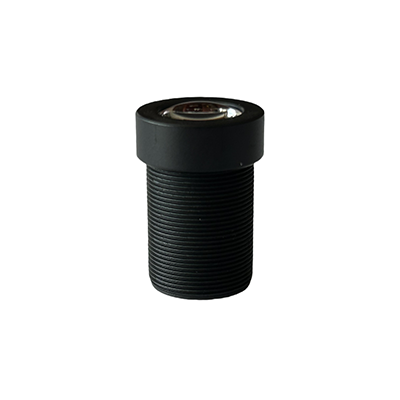
25mm-industrial-lens
FAQs
1. Which lens is better for measuring small features?
Telecentric lenses are superior for sub-millimeter features due to their distortion-free imaging and consistent magnification.
2. Can conventional lenses achieve telecentric-like performance?
No. While software corrections can mitigate some distortion, they cannot replicate the inherent optical advantages of telecentric designs.
3. Are telecentric lenses worth the extra cost?
If your application demands micron-level accuracy (e.g., in semiconductor manufacturing), the investment is justified. For less critical tasks, conventional lenses offer a cost-effective alternative.
4. How do working distances compare?
Telecentric lenses typically require longer working distances to accommodate their parallel light paths, whereas conventional lenses can operate at shorter distances but with reduced depth of field.
5. Do telecentric lenses work with all cameras?
Most telecentric lenses are compatible with standard C-mount or F-mount cameras, but always verify sensor size compatibility to avoid vignetting.
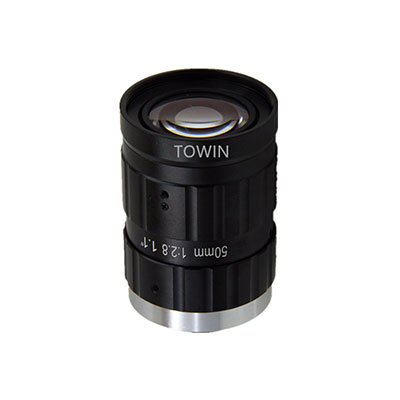
50mm-C-mount industrial lens
Conclusion
The choice between Telecentric vs. Conventional Metrology Lens systems hinges on your application’s precision demands, budget, and complexity tolerance. Telecentric lenses are unmatched for high-stakes metrology, offering unparalleled accuracy and distortion control. Conventional lenses, while less precise, provide a practical solution for cost-sensitive or less demanding tasks.