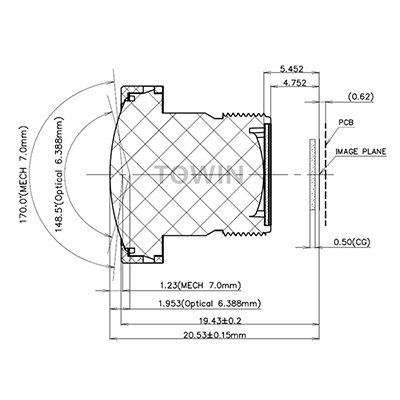



Fluorine-coated low distortion lens
10/16/2025
Custom aperture lenses for industrial applications
10/16/2025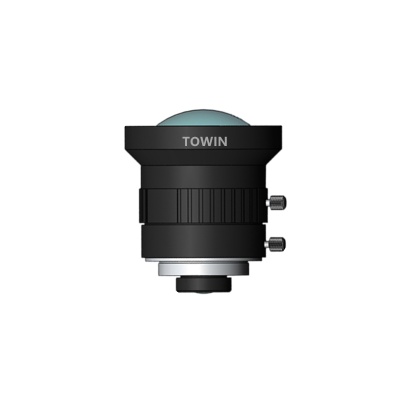
In the rapidly evolving field of robotics, machine vision lenses have emerged as a cornerstone technology, enabling robots to perceive, analyze, and interact with their environment with unprecedented precision. These specialized lenses, designed to capture high-resolution images and process visual data in real time, are transforming industries from manufacturing to healthcare. But how exactly are machine vision lenses used for in robotics?
Machine Vision Lenses Used for in Robotics: Key Applications
1. Quality Inspection and Defect Detection
Industrial robots equipped with machine vision lenses can inspect products at speeds far exceeding human capability. For example, in automotive manufacturing, these lenses detect surface flaws, misalignments, or assembly errors with sub-millimeter accuracy. By integrating advanced algorithms, robots identify defects in real time, reducing waste and ensuring compliance with strict quality standards.
2. Precision Assembly and Guidance
Robots performing intricate tasks, such as assembling electronic components or positioning parts in 3D space, rely on machine vision lenses for spatial awareness. These lenses provide detailed visual feedback, enabling robots to adjust movements dynamically. For instance, a robotic arm picking small parts from a cluttered bin uses vision systems to locate, grasp, and place items correctly, minimizing errors.
3. Navigation and Obstacle Avoidance
Autonomous mobile robots (AMRs) in warehouses or logistics centers depend on machine vision lenses to map environments and avoid collisions. By processing visual data, these robots navigate dynamic spaces, identify obstacles, and optimize paths. Companies like Amazon and FedEx use vision-guided robots to streamline operations, improving efficiency and safety.
4. Object Recognition and Sorting
In e-commerce fulfillment centers, machine vision lenses enable robots to classify and sort packages based on size, shape, or barcode data. These systems process thousands of items per hour, reducing labor costs and accelerating order fulfillment. Advanced lenses even recognize damaged goods, ensuring only intact products reach customers.
5. Medical Robotics and Surgical Assistance
Surgical robots, such as the da Vinci system, leverage machine vision lenses to provide surgeons with magnified, 3D views of operating sites. These lenses enhance depth perception and precision, allowing for minimally invasive procedures with reduced recovery times. In rehabilitation, vision-guided robots assist patients in regaining motor skills through interactive exercises.

40mm C mount IR corrected machine vision lenses
Why Machine Vision Lenses Are Essential for Robotics
- Accuracy: High-resolution lenses capture minute details, enabling robots to perform tasks with human-like dexterity.
- Speed: Vision systems process images faster than human eyes, accelerating production lines and decision-making.
- Adaptability: AI-powered lenses learn from data, improving performance over time and adapting to new environments.
- Cost Efficiency: Automating visual inspections reduces labor costs and minimizes human error.
Future Trends in Machine Vision Lenses for Robotics
The integration of machine vision lenses with emerging technologies like 5G, edge computing, and AI is poised to redefine robotics. For example, 5G connectivity enables real-time data transmission, allowing robots to collaborate seamlessly across global factories. Meanwhile, AI-driven lenses can now interpret complex scenes, such as distinguishing between similar-looking parts or predicting maintenance needs.
FAQs
1. Can machine vision lenses work in low-light conditions?
Yes, many modern lenses incorporate infrared technology or adaptive lighting to function in dim environments. This makes them ideal for applications like nighttime surveillance or underground mining.
2. How do AI and machine vision lenses collaborate?
AI algorithms analyze images captured by lenses, identifying patterns or anomalies. For instance, in semiconductor manufacturing, AI-powered vision systems detect defects invisible to the human eye.
3. What challenges do machine vision lenses face?
Ambient light interference, reflective surfaces, and occlusions can affect performance. However, advancements in multi-spectral imaging and deep learning are mitigating these issues.
4. Can small businesses adopt machine vision lenses?
Absolutely! Affordable, off-the-shelf solutions are now available for SMEs. For example, a bakery could use a vision system to sort pastries by size or shape.
5. What’s the future of machine vision lenses?
Expect lenses with embedded AI processors, enabling on-device decision-making without cloud dependency. This will enhance speed and reliability in critical applications like autonomous vehicles.
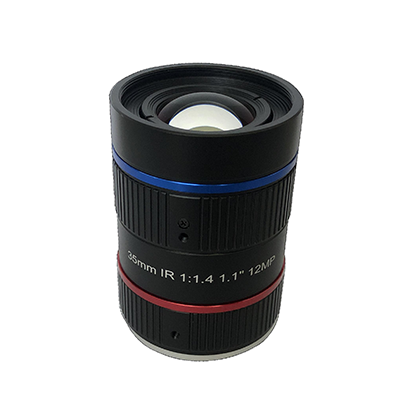
IR 12MP Low Distortion Machine Vision Lens
Conclusion
From factories to hospitals, machine vision lenses used for in robotics are redefining what’s possible. By combining cutting-edge optics with AI, these systems deliver unmatched precision, efficiency, and scalability. As technology advances, the integration of machine vision lenses will only deepen, driving innovation across industries.