


Wide Angle Lens with High Light Transmission Rate
09/10/2025
M12 lenses with 3-Megapixel
09/10/2025
When capturing crisp, true-to-life images, distortion can be a photographer’s worst enemy. Whether you’re shooting architecture, landscapes, or portraits, lens distortion can warp lines, skew proportions, and degrade image quality. But how do you Measure lens distortion?
Why a Low Distortion Lens Matters
A Low Distortion Lens minimizes optical aberrations like barrel distortion (where straight lines bow outward) or pincushion distortion (where lines bow inward). These issues are common in wide-angle or telephoto lenses but can be mitigated with advanced lens design. Measuring distortion helps you verify if your lens meets professional standards.
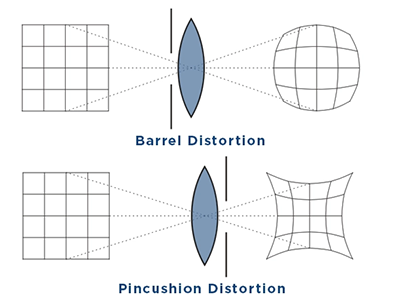
Lens Distortion
1. Use a Distortion Grid Test
The simplest way to measure distortion is with a grid pattern. Print a checkerboard or grid chart and photograph it head-on. A Low Distortion Lens will render straight lines perfectly parallel, while distorted lenses will show curves. Tools like Imatest or OpenCV can analyze the grid’s deviation for precise measurements.
2. Leverage Software Analysis
Software like Adobe Lightroom or DxO PhotoLab includes built-in distortion correction tools. Import a test image and check the software’s suggested correction profile. A Low Distortion Lens will require minimal adjustments, indicating superior optical performance.
3. Shoot Architectural Subjects
Natural grids like buildings or bridges are excellent real-world tests. A Low Distortion Lens will keep vertical and horizontal lines straight, while distorted lenses will bend them. Compare shots from different lenses to identify which performs best.
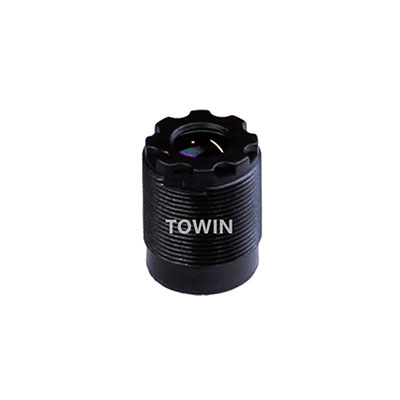
low-distortion-M8-Mount-lens
4. Check the Lens Specifications
Manufacturers often list distortion metrics in lens specs. Look for terms like “less than 1% distortion” or “zero visible distortion.” A Low Distortion Lens will typically advertise its optical precision, making it easier to compare models.
5. Use a Modulation Transfer Function (MTF) Chart
While MTF charts primarily measure sharpness, they can also indicate distortion trends. A Low Distortion Lens will maintain consistent performance across the frame, whereas distorted lenses may show uneven sharpness due to warping.
Conclusion
Measure Lens Distortion is critical for photographers seeking flawless results. By using a grid test, software analysis, real-world subjects, lens specs, or MTF charts, you can identify a Low Distortion Lens that delivers exceptional image quality. Investing in a high-quality lens saves time in post-processing and ensures your work stands out for its precision and clarity.