


How to Choose the Right CCTV Lens for Your Needs
11/11/2025
Saltwater-resistant Automotive lens
11/11/2025
Fisheye lens are a thrilling addition to any photographer’s toolkit, offering extreme wide-angle views that distort reality into a mesmerizing, spherical perspective. But to truly harness their creative potential, understanding aperture control is critical. Fisheye Lens Aperture Guide will walk you through how aperture affects depth of field, sharpness, and artistic expression—plus tips to avoid common pitfalls.
Why Aperture Matters for Fisheye Lenses
The aperture (measured in f-stops like f/2.8, f/8) controls how much light enters the lens and influences depth of field (DoF). For Fisheye Lenses, which inherently have a deep DoF due to their short focal lengths, aperture adjustments still play a role in image quality and creative effects.
Fisheye Lens Aperture Guide: Key Factors to Consider
1. Light Gathering vs. Sharpness
A wide aperture (e.g., f/2.8) lets in more light, ideal for low-light conditions. However, stopping down to f/8 or f/11 often yields sharper results by reducing lens aberrations. Fisheye Lenses, like the Nikon 8mm f/2.8, may show softening at the edges when wide open, so test your lens to find its sweet spot.
2. Depth of Field (DoF) Challenges
Fisheye Lenses naturally have an expansive DoF, but stopping down further (e.g., f/16) can extend sharpness across the entire frame. This is useful for landscape shots where every detail matters. Conversely, a shallow DoF is rarely achievable with Fisheye Lenses, limiting background blur—a trade-off for their unique perspective.
3. Diffraction at Small Apertures
Beyond f/16, diffraction can soften images. For crisp results, avoid excessively small apertures unless necessary. Fisheye Lenses already push the boundaries of distortion; adding diffraction may degrade edge-to-edge clarity.
4. Creative Effects
Use aperture creatively! For example, shooting at f/2.8 in a dimly lit room can emphasize a subject while keeping the chaotic Fisheye distortion as a backdrop. Alternatively, f/11 might render a starburst effect from light sources, adding drama to urban scenes.
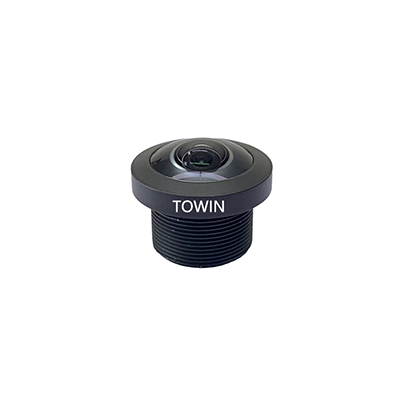
Fisheye lens 1/3″ Φ3 210° HD M12 mount lens
Practical Tips for Optimal Aperture Use
- Test Your Lens: Every Fisheye Lens behaves differently. Shoot test charts at varying apertures to identify where your model performs best.
- Prioritize Stability: Fisheye Lenses are prone to edge blurriness. Use a tripod and remote shutter to minimize camera shake, especially at slower shutter speeds.
- Balance ISO and Aperture: In low light, pair a wider aperture (e.g., f/4) with a moderate ISO to avoid noise. Fisheye Lenses often excel in dynamic environments, so adaptability is key.
- Avoid Over-Stopping: While f/22 might seem tempting for sunstars, the loss of sharpness often outweighs the benefits. Stick to f/11 or f/16 for most scenarios.
FAQs
1. What’s the Best Aperture for Fisheye Landscapes?
For sweeping vistas, use f/8–f/11 to maximize sharpness across the frame while maintaining manageable diffraction.
2. Can Fisheye Lenses Create Bokeh?
Due to their deep DoF, achieving pronounced bokeh is challenging. However, shooting at f/2.8 with a subject close to the lens can create subtle background blur.
3. Why Are My Fisheye Photos Blurry at the Edges?
Edge softness is common, especially at wide apertures. Stop down to f/5.6–f/8 or focus carefully to mitigate this.
4. Is f/22 Too Small for a Fisheye Lens?
Yes. Diffraction becomes noticeable, reducing overall clarity. Reserve f/22 for specialized effects like sunstars, but prioritize f/11 for general use.
5. How Does Aperture Affect Fisheye Distortion?
Aperture doesn’t alter the inherent distortion of a Fisheye Lens, but it impacts sharpness and light. Wider apertures may exaggerate edge distortion slightly due to softening.
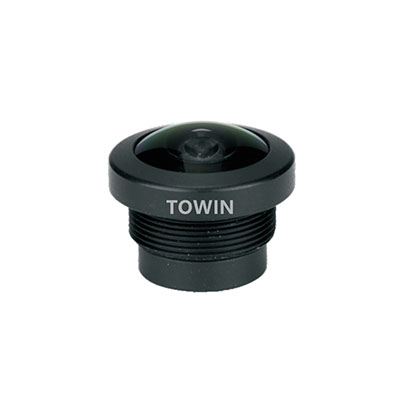
4-Megapixel F2.4 M12 mount fisheye lens
Conclusion
Mastering aperture with a Fisheye Lens opens doors to striking, immersive photography. Whether capturing vast landscapes or abstract urban scenes, understanding how f-stops influence light, sharpness, and creativity is essential. Use this Fisheye Lens Aperture Guide as your roadmap, and don’t be afraid to experiment—the Fisheye’s unique perspective thrives on bold choices!