


M12 lens for 1/2.3″ sensor
03/28/2026
3.7mm 1/3″ M12 mount pinhole lens
03/30/2026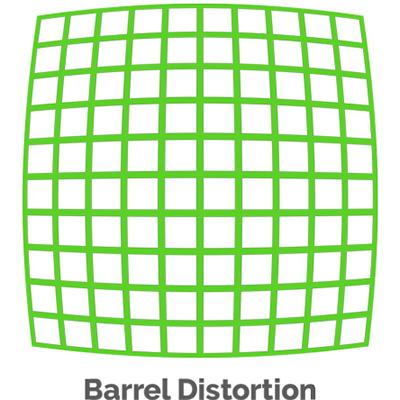
Table of Contents
Key Takeaways
- Barrel distortion causes straight lines to curve outward, ruining measurement accuracy and image consistency.
- Software correction helps but often crops images and cannot fix severe distortion at the source.
- Optically designed low-distortion lenses deliver the most reliable, repeatable results for industry applications.
- When selecting lenses, prioritize distortion rate, focal length, FOV, and sensor compatibility.
- Towin’s low-distortion lens series provides stable, high-precision imaging for vision systems, security cameras, and industrial inspection.
Introduction
In machine vision, security monitoring, automotive surround-view systems, and industrial imaging, image accuracy is everything. One of the most common optical issues engineers and integrators face is barrel distortion — a geometric aberration that bends straight lines outward, making accurate measurement, detection, and visual analysis difficult or impossible.
Whether you are designing a vision inspection system, upgrading a security camera setup, or selecting lenses for panoramic imaging, uncontrolled barrel distortion leads to:
- Inaccurate measurement data
- Misaligned object detection
- Unnatural, distorted visuals
- Extra post-processing time and costs
This guide explains what barrel distortion is, its main causes, practical methods to reduce it, key lens parameters to compare, and how to choose the right low-distortion lens for your project. We will also introduce how Towin’s low-distortion optical lenses solve this problem from the design stage.
What Is Barrel Distortion?
Barrel distortion is a type of optical distortion where the magnification of an image decreases toward the edges. This creates a “barrel-shaped” curvature:
- Straight lines near the frame edge bend outward
- Squares and rectangles appear rounded
- Wide-angle and large-FOV lenses are more prone to this effect
It is especially problematic in applications that rely on geometric precision, such as:
- Machine vision measurement & gauging
- Industrial defect inspection
- Security CCTV & IP cameras
- Automotive ADAS & surround-view systems
- Aerial and panoramic imaging
Unlike blurriness or chromatic aberration, barrel distortion is a structural issue related to lens design, glass selection, and optical assembly.
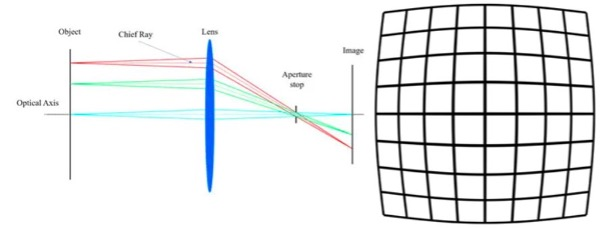
Distortion Representation
Why Barrel Distortion Occurs
Barrel distortion typically comes from three core factors:
1. Optical Structure & Lens Design
Simplified lens groups, asymmetric optical paths, and low-cost spherical lenses often produce uneven magnification across the image plane, leading to obvious distortion.
2. Wide Field of View (FOV)
Lenses with a wide FOV naturally push light rays toward the edge, increasing the chance of curvature.
3. Manufacturing & Assembly Tolerances
Inconsistent lens spacing, centering errors, and low-precision housing can worsen distortion even in designs that theoretically control it.
Understanding these causes helps us choose the most effective correction strategy.
How to Reduce Barrel Distortion: 3 Practical Solutions
There are three common ways to manage barrel distortion, each with different costs, effects, and suitability.
1. Software & Post-Processing Correction
This is the most accessible method and includes:
- In-camera distortion correction
- OpenCV algorithm calibration
- Image processing software (Lightroom, Photoshop, custom vision tools)
Pros:
- Low upfront cost
- Easy to implement
Cons:
- Crops the image and reduces effective field of view
- Cannot eliminate heavy distortion
- Reduces effective resolution
- Not ideal for high-precision measurement
Software correction is best used as a supplement, not a primary solution.
2. Hardware Calibration & Optical Tuning
Some industrial cameras support lens calibration files to digitally compensate for distortion. However, this still does not change the physical optical performance of the lens.
3. Use Low-Distortion Lenses (The Most Effective Solution)
High-quality low-distortion lenses use advanced optical design to minimize distortion at the source. Benefits include:
- Native straight-line imaging
- No image cropping
- Stable performance in mass production
- Ideal for measurement and inspection
- Long-term reliability
For industrial and security applications, selecting a purpose-built low-distortion lens is always the most reliable choice.
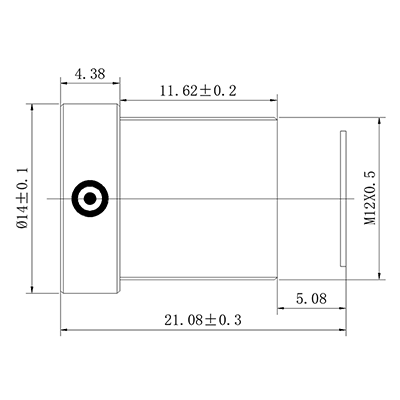
16mm Low-distortion 5-Megapixel CCTV lens
Lens Parameter Comparison: Standard vs. Low-Distortion Lenses
When choosing lenses to reduce barrel distortion, compare these critical specifications:
| Parameter | Standard General-Purpose Lenses | Low-Distortion Industrial Lenses | Recommendation |
| Distortion Rate | 1% – 5% or higher | ≤ 0.5% – 1% | ≤1% for security; ≤0.5% for measurement |
| Field of View (FOV) | Wide but distorted | Wide FOV + controlled distortion | Balance FOV and distortion |
| Optical Design | Basic spherical lenses | Aspherical lenses, optimized groups | Prioritize optical correction design |
| Image Consistency | Inconsistent between units | Stable in mass production | Critical for assembly lines |
| Typical Applications | Consumer imaging, basic monitoring | Machine vision, precision inspection, professional security | Match to your use case |
| Interface Support | M12 / C / CS | M12 / C / CS | Match your sensor and camera mount |
The lower the distortion rate, the more accurate your imaging system will be.
Step-by-Step Guide to Choosing Low-Distortion Lenses
Follow this process to select the best lens to reduce barrel distortion:
1: Define Your Application
- Measurement/inspection: Require ≤0.5% distortion
- Security/monitoring: Accept ≤1% distortion
- Automotive/panoramic: Need ultra-low distortion
2: Confirm Camera Interface
Choose between:
3: Match Focal Length & Sensor Size
Ensure the lens covers your sensor (1/3″, 1/2.7″, 1/2″, 1/1.8” etc.) to avoid vignetting and extra distortion.
4: Verify Distortion Specification
Always check the official datasheet for distortion rate before purchasing.
5: Test with Real-World Scenes
Use a checkerboard or straight-edge target to validate real-world performance.
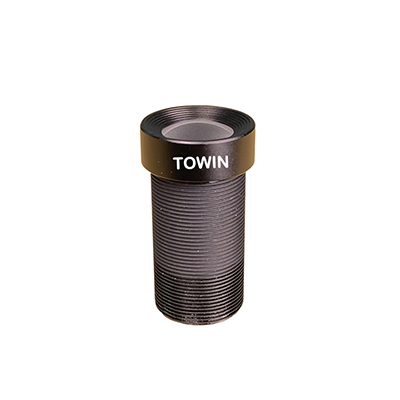
25mm M12 low-distortion lens
Reduce Barrel Distortion with Towin Low-Distortion Lenses
At Towin, we specialize in designing and manufacturing high-performance optical lenses for machine vision, security, industrial inspection, and automotive applications. Our low-distortion lens series is engineered to minimize barrel distortion from the optical design phase.
Advantages of Towin Low-Distortion Lenses
- Precision optical structure with optimized lens groups
- Low distortion rate (≤0.5% in key models)
- Stable performance in volume production
- Support M12, C, CS mount configurations
- Compatible with mainstream sensors for security and vision systems
- Custom optical design available for special projects
By using Towin low-distortion lenses, you can:
- Eliminate heavy post-processing
- Improve measurement accuracy
- Enhance image clarity and straight-line consistency
- Lower overall system integration costs
Whether you need standard off-the-shelf lenses or fully customized optical solutions, Towin provides reliable products to reduce barrel distortion effectively.
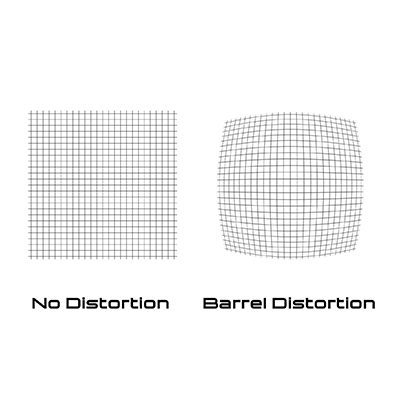
barrel distortion VS no distortion
FAQs
Q1: What is the difference between barrel distortion and pincushion distortion?
Barrel distortion curves lines outward; pincushion distortion curves lines inward. Both are geometric aberrations, but barrel distortion is more common in wide-angle lenses.
Q2: Can wide-angle lenses avoid barrel distortion completely?
Complete elimination is difficult, but low-distortion wide-angle lenses can control distortion to negligible levels for industrial use.
Q3: Is software correction enough to replace low-distortion lenses?
For general monitoring, it may be sufficient. For measurement, inspection, and high-precision systems, no — software cannot replace optically corrected lenses.
Q4: Does Towin offer M12 low-distortion lenses?
Yes, Towin provides a full lineup of M12-mount low-distortion lenses for compact cameras and embedded systems.
Q5: Can I request custom distortion specifications for my project?
Absolutely. Towin supports custom optical design, distortion tuning, and mass production for industrial clients.
Conclusion
Barrel distortion remains one of the most impactful issues in precision imaging. While software correction offers a quick fix, the most reliable and professional way to reduce barrel distortion is to use high-quality, purpose-built low-distortion lenses.
Key takeaways for your project:
- Prioritize lenses with a distortion rate ≤1%
- Match focal length, FOV, and sensor size
- Use optical correction over over-reliance on software
- Choose trusted manufacturers for consistent performance
If you are building or upgrading machine vision systems, security cameras, or industrial imaging equipment, Towin’s low-distortion lens series can help you achieve cleaner, straighter, and more accurate images.
Contact Towin today to get datasheets, samples, and customized low-distortion lens solutions for your project.
📧: info@towin-elec.com