


Automotive fog light lens
11/20/2025
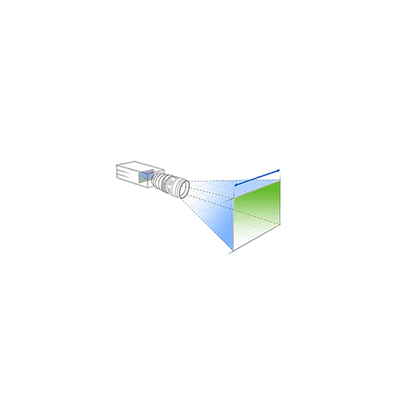
Difference between C-Mount and CS-Mount lenses
11/20/2025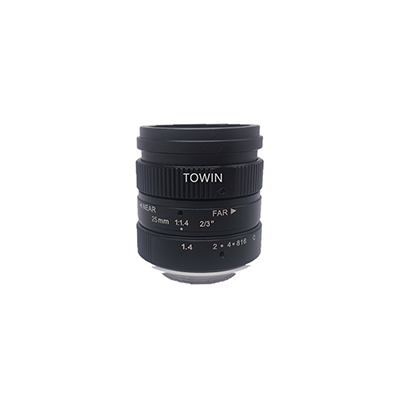
Low distortion lenses in aerospace applications, offering precise optical performance where accuracy is paramount. These lenses minimize optical aberrations in navigation systems and satellite imaging, ensuring clear, true-to-life images free from distortion.
What Are Low Distortion Lenses and Why Are They Important in Aerospace?
Low distortion lenses are specially designed to minimize optical distortions such as barrel or pincushion effects, which are common in traditional lenses. Distortions reduce image quality, causing inaccuracies in critical applications like surveillance, satellite imaging, and precision navigation.
In aerospace, low distortion lenses are used in several systems where clarity and precision are essential, including:
- 1. Flight navigation systems: Pilots rely on accurate imagery to make split-second decisions. Low distortion lenses help ensure that visual data is displayed without interference from lens-induced distortions.
- 2. Satellite imaging: Low distortion lenses capture accurate, undistorted images of Earth and planets, crucial for scientific research and military surveillance.
- 3. Optical sensors and cameras: These are integral parts of aerospace systems, providing real-time data and imagery. Low distortion lenses ensure that the sensors capture data accurately, without any unintended image warping.
Low distortion lenses provide clear images, crucial for decision-making and efficiency in space missions, navigation, and communication systems.
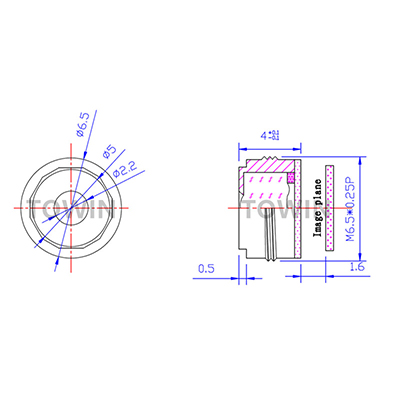
Low distortion wide angle 5mm 77° M6.5 mount lens
Key Benefits of Low Distortion Lenses in Aerospace
1. Enhanced Image Quality and Accuracy
Engineers design low distortion lenses to deliver clear, sharp images without the distortions common in traditional lenses. Low distortion lenses minimize barrel and pincushion distortions, ensuring accurate, true-to-life images that are essential for precise aerospace applications.
2. Improved Safety and Performance
In navigation systems, whether in aircraft or spacecraft, the ability to clearly interpret visual data is essential for safety. Low distortion lenses ensure that pilots and crew have an accurate view of their surroundings. This is especially important in challenging conditions like poor visibility or complex aerial maneuvers.
3. Accurate Data Collection for Scientific Missions
Aerospace missions, particularly those related to satellite imaging, require precise data collection for tasks such as Earth observation, climate studies, and planetary exploration. Low distortion lenses help avoid image inaccuracies that could compromise the integrity of scientific findings.
4. Increased Reliability of Optical Systems
Low distortion lenses are crafted from high-quality materials and undergo meticulous testing to ensure that they meet the rigorous demands of aerospace environments. Whether in extreme temperatures or high-speed flight conditions, these lenses offer reliability and durability.
Types of Low Distortion Lenses in Aerospace
- Aspherical Lenses: These lenses have a non-spherical shape that helps eliminate optical distortions. Aspherical lenses are particularly useful in applications like telescopes and satellite imaging systems, where precise focal control is necessary.
- Fisheye Lenses: While typically known for creating a wide-angle view, fisheye lenses with low distortion characteristics are often used in spacecraft for panoramic imaging or navigation systems. These lenses provide a vast field of view while maintaining minimal distortion.
- Panoramic Lenses: These are used for 360-degree imaging, often employed in drones and other unmanned aerial vehicles (UAVs) for surveying and reconnaissance missions. Low distortion panoramic lenses ensure that images from all angles are captured clearly without warping.
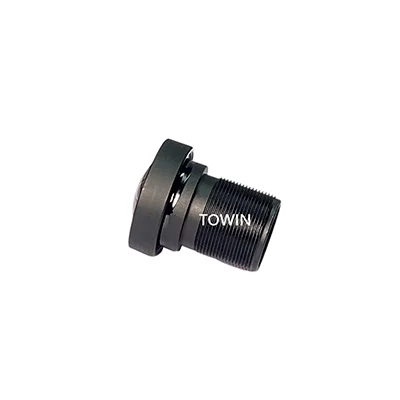
Low distortion lens 12-Megapixel M12 F2.2 CCTV lens
How Low Distortion Lenses Improve Aerospace Navigation Systems
In aerospace, one of the most crucial applications for low distortion lenses is in navigation systems. Whether in commercial aircraft, military jets, or unmanned aerial vehicles, clear and accurate visual data is vital for maintaining situational awareness, particularly during takeoff, landing, and mid-flight operations.
By using low distortion lenses, these systems are able to provide pilots and crew members with precise readings of their environment. This includes data such as altitude, direction, speed, and surrounding terrain. In space missions, these lenses enable accurate readings for spacecraft, helping astronauts navigate the complexities of deep space and avoid potential hazards.
The Role of Low Distortion Lenses in Satellite Imaging
Low distortion lenses are essential in satellite systems for capturing clear, detailed images of Earth’s surface. These lenses are used in various Earth-observation satellites to monitor environmental changes, track weather patterns, and gather intelligence for military and commercial purposes.
Because even minor distortions in satellite imaging can lead to significant misinterpretations, low distortion lenses ensure that the data received from space is as accurate as possible. This clarity is vital for environmental monitoring, mapping, and disaster response.
Future Trends in Low Distortion Lenses for Aerospace
- Advanced Materials: Innovations in materials science may lead to even more durable and efficient lenses that perform better under extreme conditions.
- Enhanced Precision: With the increasing need for accuracy in aerospace systems, future low distortion lenses will likely offer even higher levels of precision, reducing distortion to near-zero levels.
- Integration with AI: The integration of AI with optical systems could lead to adaptive lenses that automatically adjust for the surrounding environment, further improving image quality.
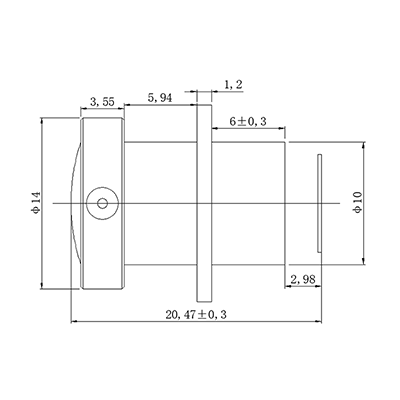
6mm Low Distortion Industrial Lens
FAQs
Why are low distortion lenses critical in aerospace navigation systems?
Low distortion lenses are critical because they provide clear, undistorted images, allowing pilots and aerospace professionals to make accurate decisions. In navigation, even minor distortions can lead to errors in positioning and flight path determination.
How do low distortion lenses contribute to satellite imaging?
Low distortion lenses help ensure that images captured by satellites are accurate and free from optical distortions. This is essential for Earth observation, scientific research, and military applications, where precise data is necessary for analysis and decision-making.
What types of low distortion lenses are commonly used in aerospace?
Common types include aspherical lenses, fisheye lenses, and panoramic lenses. Each type is designed for specific aerospace needs, such as providing wide-angle views or capturing detailed images of distant objects with minimal distortion.
Conclusion
Low distortion lenses are indispensable in aerospace applications, where accuracy and clarity are non-negotiable. Whether for navigation, satellite imaging, or optical sensors, these lenses help ensure that visual data is as true-to-life as possible, supporting critical operations and missions in the sky and space. As technology continues to evolve, the role of low distortion lenses will only become more vital, ensuring the continued advancement of aerospace exploration and technology.