Aperture size impact machine vision lenses
11/20/2025
Automotive fog light lens
11/20/2025
When it comes to capturing wide and expansive landscapes or creative and immersive shots, choosing the right lens is key. Two lenses that often come up in discussions are the fisheye lens and the ultra-wide lens. Both offer impressive wide-angle perspectives, but they differ significantly in how they capture the world.
What is a Fisheye Lens?
A fisheye lens is a type of ultra-wide-angle lens that creates a distinctive, hemispherical image. The lens offers an exaggerated perspective, curving straight lines in the image to create a circular effect. It usually has a focal length of around 8mm to 16mm, making it suitable for extreme wide-angle shots.
This lens is often used in creative photography, as its distorted, wide-angle view provides an interesting and surreal effect. Fisheye lenses are great for action shots, architecture, and experimental photography where the goal is to create a dramatic, exaggerated perspective.
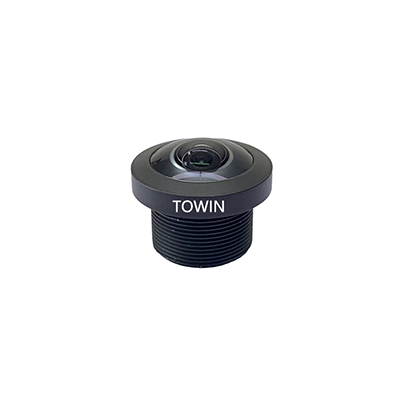
Fisheye lens 1/3″ Φ3 210° HD M12 mount lens
What is an Ultra-Wide Lens?
An ultra-wide lens, on the other hand, is a more conventional wide-angle lens with a focal length typically between 16mm and 35mm. Unlike the fisheye lens, ultra-wide lenses do not distort straight lines as much, offering a more natural and realistic view while still capturing a broader scene than a standard lens.
Ultra-wide lenses are often used in landscape, architecture, and interior photography, where you want to capture expansive scenes without the extreme curvature that a fisheye lens introduces. These lenses offer versatility without compromising too much on realism, making them a popular choice for professionals.

1.8mm F2.5 M12 S-Mount wide angle board lens
Fisheye Lens vs. Ultra-Wide Lens: Key Differences
1. Field of View:
- Fisheye Lens: Typically offers a 180-degree field of view, creating a circular or semi-circular image with dramatic distortion. It’s designed to capture everything in the frame with maximum wide-angle distortion.
- Ultra-Wide Lens: Usually offers a field of view between 100 and 130 degrees, which is still extremely wide but retains straight lines and doesn’t distort objects as much as the fisheye lens.
2. Distortion:
- Fisheye Lens: The most notable feature of the fisheye lens is the heavy barrel distortion. This distortion curves straight lines at the edges of the frame, which results in a rounded, fishbowl-like effect.
- Ultra-Wide Lens: While ultra-wide lenses do exhibit some barrel distortion, it’s generally much more controlled. The lines in the frame remain relatively straight, offering a more realistic depiction of the scene.
3. Application:
- Fisheye Lens: Best used for artistic, experimental photography. It is commonly used in skateboard and snowboard photography, action sports, and artistic shots where distortion can add to the composition.
- Ultra-Wide Lens: Ideal for situations where you need to capture expansive landscapes or large architecture, but still want to maintain a natural look. It’s widely used by professionals in landscape photography, real estate, and environmental portraiture.
4. Perspective:
- Fisheye Lens: Offers an exaggerated perspective that pulls objects toward the center of the image, creating a sense of depth. This perspective can be both striking and unusual.
- Ultra-Wide Lens: Provides a more balanced perspective, offering a wider view without overly distorting the scene.
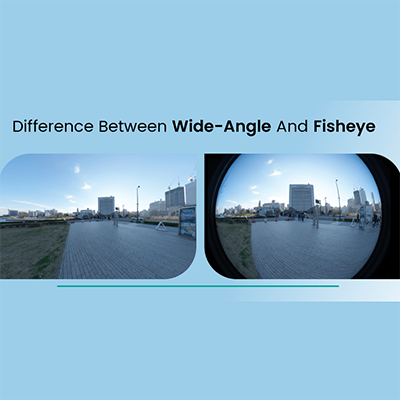
Fisheye Lens vs. Wide-Angle Lens
Pros and Cons of Fisheye Lens vs. Ultra-Wide Lens
1. Pros of Fisheye Lens:
- Unique and artistic distortion.
- Extreme wide-angle captures.
- Ideal for creative and action photography.
2. Cons of Fisheye Lens:
- Strong distortion, which may not be suitable for all subjects.
- The circular effect can make it difficult to compose certain shots.
- Limited flexibility for professional use.
3. Pros of Ultra-Wide Lens:
- Wider than standard lenses, but still maintains natural proportions.
- Versatile and practical for various types of photography.
- Retains detail across the entire image without excessive distortion.
4. Cons of Ultra-Wide Lens:
- While wide, it doesn’t offer the extreme visual effects of a fisheye lens.
- May require more careful composition when capturing large scenes to avoid distortions in corners.
Which Lens Should You Choose?
Ultimately, the choice between a Fisheye Lens vs. Ultra-Wide Lens comes down to your specific needs as a photographer or videographer.
If you’re looking for something dramatic and unique, and you enjoy pushing the boundaries of perspective, the fisheye lens is the right choice. It’s perfect for capturing extreme wide-angle shots that are distorted for a more creative and eye-catching effect.
However, if you need a lens that provides a wide field of view without losing the natural proportions of your subject, an ultra-wide lens is more practical. It’s a great option for professional work, such as landscape or architectural photography, where maintaining realism is key.
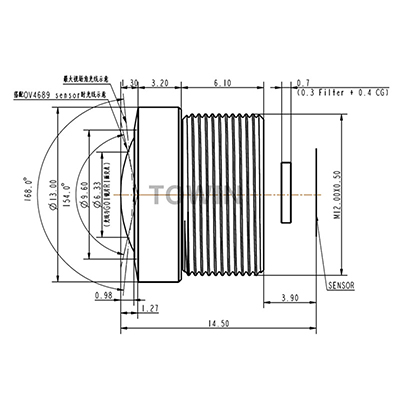
Wide angle M12 S-mount board lens
FAQ
What is the main difference between a fisheye lens and an ultra-wide lens?
The main difference lies in the amount of distortion each lens introduces. A fisheye lens creates a dramatic, circular distortion, while an ultra-wide lens offers a wider view with minimal distortion, retaining more natural perspectives.
Which is better for landscape photography: fisheye or ultra-wide lens?
An ultra-wide lens is generally better for landscape photography, as it provides a broader view without distorting the scene, giving you a more accurate representation of the landscape.
Can a fisheye lens be used for portraits?
While a fisheye lens can be used for creative portraits, the strong distortion may not always be flattering. It’s more commonly used for experimental or artistic shots.
Is an ultra-wide lens better for architecture photography?
Yes, an ultra-wide lens is typically better for architecture photography as it allows you to capture large buildings or interiors without significant distortion, maintaining the proportions of the structures.
Conclusion
In the battle of Fisheye Lens vs. Ultra-Wide Lens, the right choice depends on your photography goals. If you’re looking for creative, distortion-heavy shots, the fisheye lens is your best bet. On the other hand, if you want a wide field of view with more realistic proportions, the ultra-wide lens will serve you better. Both lenses are invaluable tools for photographers, each excelling in different areas, so understanding the unique characteristics of each can help you make the best choice for your photography style.