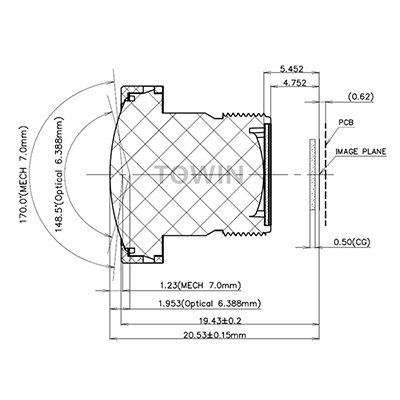



Wide angle M12 S-mount board lens
11/18/2025
Fisheye Lens Attachments for Smartphones
11/19/2025
In the realm of industrial automation and quality control, machine vision lenses are the unsung heroes that enable machines to “see” with precision. One of the most fundamental yet misunderstood aspects of these lenses is their focal length. What is the focal length of a machine vision lens, and why does it matter?
What is the Focal Length of a Machine Vision Lens?
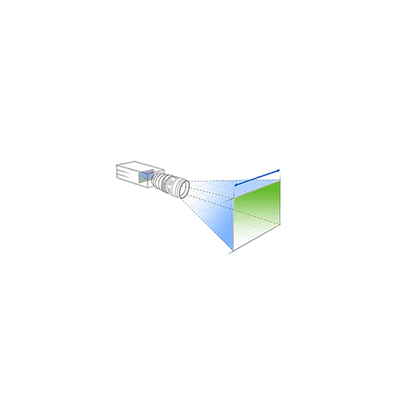
The focal length of a machine vision lens is the distance between the lens and the image sensor (or film plane) when the lens is focused at infinity. Measured in millimeters (mm), it determines the field of view (FOV) and magnification of the captured image. A shorter focal length provides a wider FOV, while a longer focal length narrows it, offering higher magnification.
For example, a machine vision lens with a 12mm focal length captures a broader scene than one with a 50mm focal length, which zooms in on a smaller area. This metric directly influences how a system perceives objects, making it essential for applications like inspection, measurement, and robotic guidance.
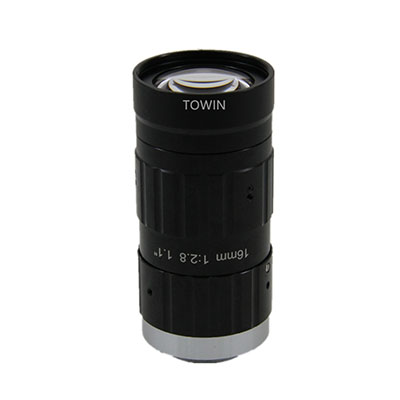
C-mount Machine Vision lens
Why Focal Length Matters in Machine Vision
The focal length of a machine vision lens is not just a technical specification—it’s the backbone of image formation. Here’s why it’s pivotal:
1. Field of View (FOV):
Focal length inversely affects FOV. A shorter focal length expands the FOV, ideal for capturing large objects or wide areas (e.g., conveyor belts in manufacturing). Conversely, a longer focal length is suited for inspecting small, detailed components (e.g., electronic circuits).
2. Working Distance:
The distance between the lens and the object being inspected (working distance) is intertwined with focal length. A longer focal length allows a greater working distance, which is crucial for safety or when physical access is limited.
3. Image Resolution and Clarity:
The right focal length ensures optimal light convergence on the sensor, minimizing distortion and maximizing sharpness. This is vital for high-precision tasks like defect detection or dimensional analysis.
4. System Size and Cost:
Shorter focal lengths enable compact systems, while longer ones may require larger setups. Balancing focal length with application needs helps optimize cost and space efficiency.

40mm C mount IR corrected machine vision lenses
How to Choose the Right Focal Length for Your Machine Vision Lens
Selecting the ideal focal length involves evaluating these factors:
1. Object Size and Distance:
Measure the object’s dimensions and the available working distance. Use the formula:
Focal Length = Sensor Size×Working Distance/Field of View
For instance, if your sensor is 1/2” (6.4mm horizontal) and you need a 100mm FOV at a 300mm working distance:
Focal Length = 6.4×300/100=19.2mm
A 20mm machine vision lens would be suitable.
2. Magnification Requirements:
For high-magnification tasks (e.g., reading tiny text), prioritize longer focal lengths. For broad-area scans, shorter focal lengths are preferable.
3. Lighting and Depth of Field:
Longer focal lengths reduce depth of field, requiring precise focusing. Ensure your lighting setup compensates for this to avoid blurry images.
4. Environmental Constraints:
In hazardous or confined spaces, a machine vision lens with a longer focal length may be necessary to maintain safety and accessibility.
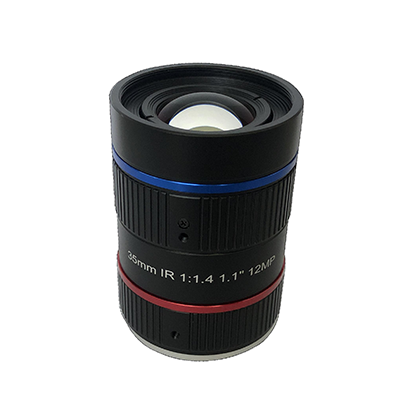
IR 12MP Low Distortion Machine Vision Lens
FAQs
What is the typical focal length range for machine vision lenses?
Machine vision lenses range from ultra-wide (4mm–10mm) to telephoto (50mm–150mm+). Most applications use 8mm–50mm lenses.
Can I use a camera lens for machine vision?
While possible, camera lenses lack the rugged design and precision required for industrial environments. Machine vision lenses are optimized for stability, low distortion, and high repeatability.
How does focal length affect depth of field?
Longer focal lengths reduce depth of field, making it harder to keep multiple planes in focus. Shorter focal lengths increase depth of field, ideal for 3D inspections.
What happens if I choose the wrong focal length?
An incorrect focal length may result in incomplete FOV coverage, blurry images, or inefficient use of space. Always validate calculations with prototypes.
Conclusion
Understanding the focal length of a machine vision lens is essential for designing systems that deliver accuracy, efficiency, and reliability. By aligning focal length with application requirements—such as FOV, working distance, and resolution—you can unlock the full potential of your machine vision setup.