



4mm FA Lens: Compact High-Res Imaging
10/15/2025
Fisheye Lens: How It Works
10/15/2025
In the realm of optical engineering, innovation often hinges on reimagining traditional components. The multi-pinhole array lens emerges as a groundbreaking advancement, merging the simplicity of pinhole technology with cutting-edge array design to achieve unparalleled imaging clarity.
What Is a Multi-Pinhole Array Lens?
A multi-pinhole array lens is an optical system composed of multiple strategically arranged pinholes. Unlike traditional pinhole lens, which rely on a single aperture to control light, this array leverages numerous tiny openings to capture and focus light simultaneously. The result? A dramatic improvement in image sharpness, depth of field, and light efficiency.
How It Works:
Each pinhole in the array acts as an independent imaging channel. Light passes through these apertures, creating overlapping projections on the sensor. Advanced algorithms then reconstruct these projections into a high-resolution image, effectively eliminating blur and distortion.
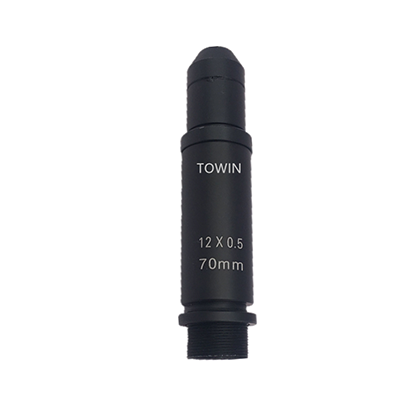
70mm pinhole M12 telecentric Low-Distortion lens
Key Advantages of the Multi-Pinhole Array Lens
1. Enhanced Resolution:
By capturing light from multiple angles, the multi-pinhole array lens reduces diffraction limits, a common issue in single-pinhole systems. This results in crisper images with finer details.
2. Compact Design:
Traditional lenses require bulky glass elements to focus light. The multi-pinhole array lens achieves similar results with a thin, lightweight structure, making it ideal for portable devices like smartphones and drones.
3. Depth of Field Mastery:
The array design inherently extends the depth of field, allowing objects at varying distances to remain in focus simultaneously. This is invaluable in macro photography and 3D imaging.
4. Cost Efficiency:
Manufacturing a multi-pinhole array lens is often more affordable than producing complex multi-lens systems, as it eliminates the need for precision-ground glass and intricate coatings.
5. Durability:
With no moving parts or delicate glass components, the multi-pinhole array lens is resistant to shocks, vibrations, and environmental stressors.
Applications Across Industries
The versatility of the multi-pinhole array lens has sparked adoption across diverse sectors:
1. Medical Imaging:
Endoscopes and microscopic tools benefit from the lens’s ability to capture high-contrast images in tight spaces.
2. Industrial Inspection:
Quality control systems use the lens to detect defects in electronics and machinery with sub-millimeter precision.
3. Consumer Electronics:
Smartphone cameras equipped with multi-pinhole array lenses achieve DSLR-like bokeh effects and low-light performance.
4. Astronomy:
Telescopes leverage the lens to reduce atmospheric distortion, capturing clearer images of distant celestial bodies.

45mm F1.6 pinhole M12 telecentric CCTV lens
Challenges and Limitations
While revolutionary, the multi-pinhole array lens is not without drawbacks:
1. Light Sensitivity:
The small apertures limit light intake, potentially requiring longer exposure times in low-light conditions.
2. Computational Demand:
Image reconstruction relies on sophisticated algorithms, demanding robust processing power.
3. Design Complexity:
Optimizing pinhole placement and spacing demands precise engineering to avoid artifacts like ghosting or aliasing.
Future Prospects
Researchers are actively addressing current limitations. Advances in nanofabrication could enable even smaller pinholes, while AI-driven processing may slash reconstruction times. Additionally, hybrid designs combining multi-pinhole arrays with traditional lenses could unlock hybrid imaging systems with unprecedented capabilities.
FAQs
1. Is the multi-pinhole array lenses suitable for low-light environments?
Its small apertures restrict light intake, making it less ideal for dim settings. However, advancements in sensor technology and image processing may improve performance over time.
2. How does the multi-pinhole array lenses improve depth of field?
By capturing light from multiple angles, the lens creates overlapping projections that algorithms use to extend the focal range, keeping more of the scene in focus.
3. Are multi-pinhole array lenses expensive to manufacture?
They are generally more cost-effective than multi-lens systems due to simpler materials and assembly processes. However, precision in pinhole placement can increase initial costs.
4. What industries benefit most from multi-pinhole array lenses?
Medical imaging, industrial inspection, consumer electronics, and astronomy are primary adopters, leveraging the lens’s precision and compact form factor.
5. Can the multi-pinhole array lenses be used in 3D imaging?
Yes! The extended depth of field and multi-angle light capture make it ideal for stereoscopic and light-field imaging applications.
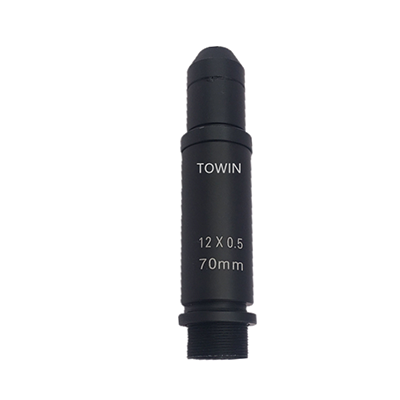
70mm pinhole M12 S-mount CCTV lens
Conclusion
The multi-pinhole array lens represents a paradigm shift in optical design, offering a compelling blend of precision, portability, and cost efficiency. While challenges remain, its potential to redefine imaging across industries is undeniable. As technology evolves, this humble yet powerful tool may soon become a staple in devices ranging from medical scanners to consumer smartphones.