


Machine Vision Lens Resolution
09/28/2025
The Science Behind Low-Distortion Lens
09/28/2025
Light painting is a mesmerizing photography technique that uses moving light sources to create ethereal, glowing patterns in long-exposure shots. But when you combine this artistry with a fisheye lens, the results are nothing short of magical. Fisheye Lens Light Painting pushes the boundaries of creativity, offering a 180-degree (or wider) perspective that warps reality into a surreal, immersive experience.
What Makes Fisheye Lens Light Painting So Unique?
The fisheye lens is renowned for its extreme wide-angle view and distinctive barrel distortion, which curves straight lines into dramatic arcs. When paired with light painting, this distortion amplifies the dynamic energy of light trails, creating swirling, otherworldly effects. Unlike traditional lenses, which capture flat, rectangular frames, fisheye lenses embrace the entire environment, turning even mundane settings into abstract landscapes.
Imagine spinning a glow stick in a dark room while shooting with a fisheye lens. The result? A hypnotic vortex of light that seems to engulf the viewer. This technique isn’t just about capturing light—it’s about sculpting it into a three-dimensional spectacle.

5 Techniques to Elevate Your Fisheye Lens Light Painting
1. Orbital Light Trails
Stand at the center of your frame and rotate your body while waving a light source (like an LED wand or flashlight). The fisheye’s distortion will stretch the trails into a circular, tunnel-like effect. Pro tip: Use a slow shutter speed (15–30 seconds) and a steady hand to avoid blurry edges.
2. Environmental Integration
Incorporate architectural elements or natural landscapes into your light painting. For example, shine light onto a wall or tree while using the fisheye lens to exaggerate their curves. This creates a juxtaposition between the organic and the artificial, as seen in works by light artist Eric Paré, who masterfully blends human forms with light and space.
3. Kinetic Light Sculptures
Attach light sources to drones, fans, or even yourself (using wearable LEDs) and move them rapidly. The fisheye lens will capture the motion as a blurred, energetic burst, perfect for abstract or action-packed shots.
4. Reflective Surfaces
Shoot near mirrors, water, or metallic objects to multiply light trails. The fisheye’s wide angle will reflect these patterns in a way that feels infinite, adding depth and complexity to your composition.
5. Color Play
Use colored gels or RGB lights to paint with hues. The fisheye lens distorts colors unevenly, creating gradients and overlaps that feel almost psychedelic. Experiment with contrasting colors (e.g., blue and orange) for maximum impact.
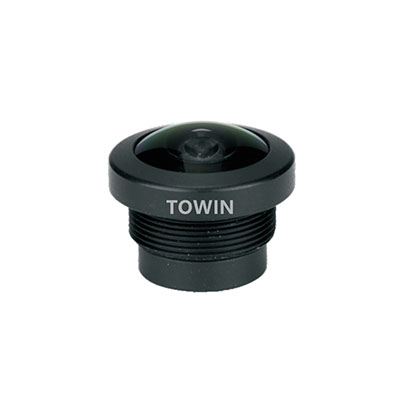
4-Megapixel F2.4 M12 mount fisheye lens
Gear and Settings for Success
To achieve professional-grade Fisheye Lens Light Painting, you’ll need:
- A fisheye lens (circular or full-frame).
- A sturdy tripod to avoid camera shake.
- A remote shutter release or intervalometer for precise timing.
- Light sources: LED wands, glow sticks, or even smartphone screens.
Camera Settings:
- Shutter Speed: 10–30 seconds (adjust based on motion speed).
- Aperture: f/8–f/11 to ensure sharpness across the distorted frame.
- ISO: 100–200 to minimize noise.
- Focus: Manual focus set to infinity or a specific distance.
Challenges and Solutions
While Fisheye Lens Light Painting is rewarding, it comes with hurdles:
- Distortion Overload: Too much curvature can make images chaotic. Compose carefully, placing key elements near the center.
- Light Bleed: Stray light can overexpose edges. Use lens hoods or shoot in darker environments.
- Focus Issues: Autofocus struggles in low light. Switch to manual and test shots beforehand.

1.1mm Waterproof Fisheye Lens
Conclusion
Fisheye Lens Light Painting isn’t just a technique—it’s a gateway to reimagining reality. By embracing distortion, motion, and color, you can transform ordinary scenes into surreal, immersive art.