


S-Mount Lens for Robotics Vision Systems
09/15/2025
Thermally stable pinhole lens
09/15/2025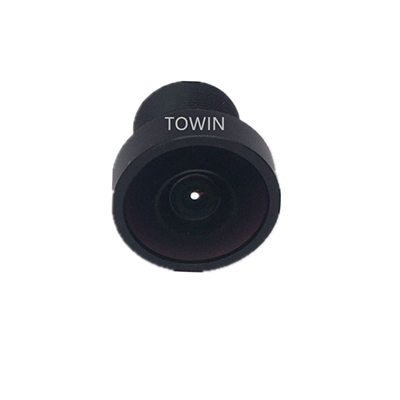
Fisheye lens are a thrilling tool for photographers, offering an extreme 180-degree field of view that bends reality into captivating, distorted frames. However, their unique design makes focusing a challenge. Mastering how to focus a fisheye lens is key for sharp, striking shots in landscapes, architecture, or creative portraits. Here’s how to do it right.
1. Understand Your Lens’s Hyperfocal Distance
Fisheye lenses have an incredibly deep depth of field, meaning much of the scene appears in focus even at wider apertures. To maximize sharpness, use the hyperfocal distance—the closest point where everything from that distance to infinity remains acceptably sharp.
- How to calculate it: Use a hyperfocal distance chart or app (like PhotoPills). For example, at f/8 on a 15mm fisheye, the hyperfocal distance might be just 2 feet.
- Why it matters: Setting focus to this distance ensures foreground and background details are crisp, even in chaotic scenes.

Fisheye IR Cut Filter S-Mount Lens
2. Manual Focus: Ditch Autofocus for Precision
Autofocus systems often struggle with fisheye lenses due to their curved distortion and vast depth of field. Switch to manual focus for greater control:
- Live View Zoom: Use your camera’s live view mode to zoom in on a high-contrast edge (e.g., a building corner or tree branch) and adjust focus manually.
- Focus Peaking: Enable this feature (if available) to highlight in-focus areas in real time.
3. Use Infinity Focus for Landscapes
When shooting vast landscapes or starry skies, set your lens to infinity focus (∞ symbol). This ensures everything beyond a few feet is sharp, though nearby objects may blur slightly.
- Pro Tip: Test infinity focus during daylight to confirm accuracy. Some lenses require slight adjustments even at ∞.
4. Leverage Aperture for Depth of Field Control
While fisheye lenses excel at wide apertures (e.g., f/2.8), stopping down to f/8–f/11 increases depth of field without sacrificing too much light. This is ideal for group shots or detailed environments.
- Avoid f/16+: Diffraction can soften images at very small apertures, negating the benefits of deep focus.
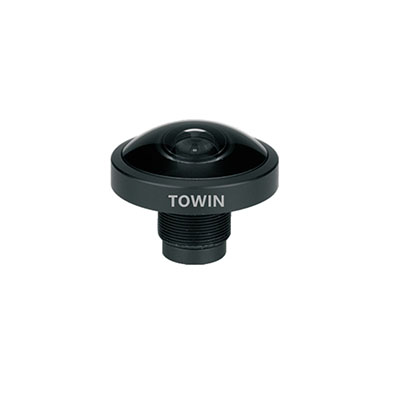
8-Megapixel F2.0 M12 mount Fisheye Lens
5. Check Focus Across the Frame
Fisheye distortion means edges and corners may appear softer than the center. To ensure uniform sharpness:
- Test Shots: Take sample images and review them at 100% zoom on your computer.
- Post-Processing: Use tools like Adobe Lightroom’s sharpening sliders to enhance edge definition if needed.
Common Mistakes to Avoid
- Relying solely on autofocus: Fisheye lenses confuse AF systems, leading to missed focus.
- Ignoring distortion: Corners may never be as sharp as the center—accept this limitation or crop creatively.
- Forgetting hyperfocal distance: Guessing focus wastes time and yields subpar results.
Final Thoughts
Learning how to focus a fisheye lens requires patience, but the payoff is worth it. By combining hyperfocal distance, manual focus, and aperture control, you’ll capture images that wow viewers with their clarity and creativity.