


Industrial optical lens supplier
09/09/2025
How to choose the right machine vision lens?
09/09/2025
When photographers reach for a zoom lens, they expect versatility—the ability to capture wide-angle landscapes and telephoto portraits without switching gear. But one challenge often lurks: distortion. Whether it’s barrel distortion at wide angles or pincushion distortion at longer focal lengths, these imperfections can compromise image quality. So, how does a zoom lens handle distortion effectively?
1. Optical Design: The Foundation of Distortion Control
A zoom lens’s ability to manage distortion starts with its optical design. Manufacturers use advanced computer simulations to map how light travels through the lens, identifying where aberrations occur. By strategically placing aspherical elements and low-dispersion glass, engineers can counteract distortion before it reaches the sensor. For example, a zoom lens might incorporate multiple lens groups that shift independently during zooming, maintaining alignment and reducing geometric warping.

5-50mm CS-mount CCTV lens
2. Internal Zooming Mechanisms: Stability Matters
Traditional zoom lenses extend or retract physically when adjusting focal length, which can introduce instability and distortion. Modern designs, however, often use internal zooming, where lens elements move within the barrel. This approach minimizes external movement, ensuring consistent performance across the zoom range. Brands like Canon and Nikon have perfected this technology in lenses like the Canon RF 24-105mm f/4L IS USM, which maintains sharpness and reduces distortion even at extreme focal lengths.
3. Digital Corrections: Software to the Rescue
While optical solutions are ideal, some distortion is inevitable—especially in budget-friendly zoom lenses. Here’s where digital corrections come into play. Many cameras and editing software (e.g., Adobe Lightroom) include built-in profiles for specific lenses. These profiles automatically adjust for distortion, vignetting, and chromatic aberration. For instance, Sony’s in-camera lens compensation feature can correct distortion in real time, saving photographers post-processing time.
4. Prime vs. Zoom: The Trade-Offs
Prime lenses are renowned for their distortion-free performance, but zoom lenses offer unmatched flexibility. So, how does a zoom lens handle distortion compared to primes? While primes may have a slight edge in purity, high-end zooms like the Nikon Z 24-70mm f/2.8 S now rival primes in distortion control. The key lies in balancing zoom range with optical complexity—a challenge manufacturers continue to refine.
5. User Techniques: Shooting Smart
Even the best zoom lens can benefit from proper technique. To minimize distortion:
- Avoid placing straight lines (e.g., buildings) at the edges of the frame at wide angles.
- Use the lens’s sweet spot—typically around f/8—for optimal sharpness and reduced aberrations.
- Calibrate your lens regularly, especially if using digital corrections, to ensure accuracy.
For a deeper dive into lens technology, check out this comprehensive guide on lens distortion by Cambridge in Colour. Recommended Reading: What is a zoom machine vision lens?
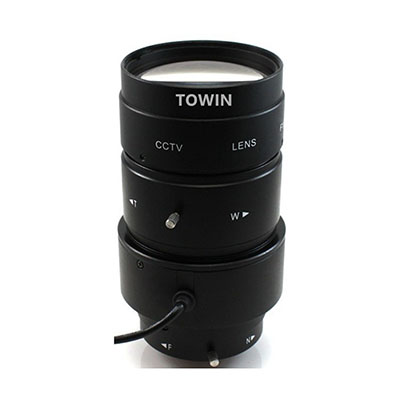
low-light-F1.0 IR Corrected Lens , CCTV Zoom Lens
Conclusion
The question of how does a zoom lens handle distortion has evolved from a technical hurdle to a solved challenge. Through innovative optical design, internal zooming, digital corrections, and user savvy, modern zoom lenses deliver stunning results across focal lengths.