


Low-light photography aperture tips
09/03/2025
Best Pinhole Lenses for DSLR Cameras
09/03/2025
Closed-circuit television (CCTV) systems are a cornerstone of modern security, used everywhere from homes to high-security facilities. But have you ever wondered, How do CCTV lenses work to deliver sharp, reliable footage? These lenses are not just simple glass components—they’re engineered marvels designed to optimize light, focus, and field of view.
1. The Basics of CCTV Lens Functionality
At its core, a CCTV lens works by directing light onto a camera’s image sensor, which converts the light into electrical signals. The quality of the lens determines how accurately this light is captured, affecting factors like clarity, brightness, and distortion. Unlike standard camera lenses, CCTV lenses are tailored for specific purposes, such as wide-angle monitoring or long-distance zooming.
Key Components of a CCTV Lens:
- Aperture: Controls the amount of light entering the lens, similar to the iris of a human eye. A wider aperture (lower f-number) allows more light, improving low-light performance.
- Focal Length: Determines the lens’s angle of view and magnification. Short focal lengths (e.g., 2.8mm) offer wide-angle views, while long focal lengths (e.g., 50mm) enable zoomed-in shots.
- Lens Mount: Connects the lens to the camera body, ensuring proper alignment with the image sensor.
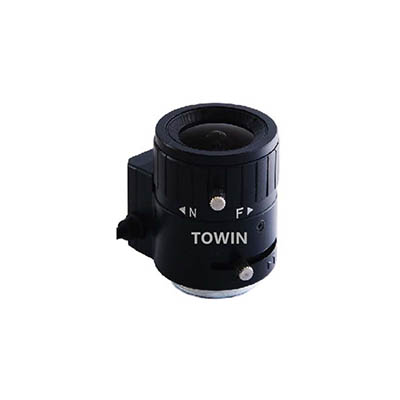
2.8-12mm F1.4 IR Corrected Lens , CCTV Zoom Lens
2. How Focal Length Impacts Surveillance
The focal length is a critical factor in answering, How do CCTV lenses work effectively? It dictates two primary aspects:
- Wide-Angle Lenses (2.8mm–4mm): Ideal for monitoring large areas like parking lots or retail floors. These lenses minimize blind spots but sacrifice detail at longer distances.
- Telephoto Lenses (12mm–50mm+): Used for focusing on specific targets, such as entry points or high-value assets. They provide greater detail but cover a smaller area.
- Varifocal Lenses (2.8mm–12mm): Offer flexibility by allowing manual adjustment of the focal length. This versatility makes them popular for dynamic environments.
For example, a 4mm lens might be perfect for a small office, while a 50mm lens could monitor a distant gate in a warehouse.
3. Aperture and Light Management
Another vital aspect of how CCTV lenses work is light control. The aperture, measured in f-stops (e.g., f/1.2, f/2.0), regulates the intensity of light hitting the sensor.
- Low-Light Performance: Lenses with wider apertures (e.g., f/1.2) excel in dim environments, such as nighttime surveillance. They capture more light, reducing noise and improving image clarity.
- Depth of Field: A smaller aperture (higher f-number) increases the depth of field, keeping more of the scene in focus. This is useful for monitoring areas with objects at varying distances.
Modern CCTV lenses often incorporate auto-iris technology, which adjusts the aperture dynamically based on lighting conditions. This ensures optimal performance whether it’s sunny or dark.
4. Lens Types and Their Applications
CCTV lenses come in various designs, each suited to specific scenarios. Understanding these types clarifies how CCTV lenses work in real-world settings:
- Fixed Lenses: Have a permanent focal length and are cost-effective for static surveillance needs.
- Motorized Zoom Lenses: Allow remote adjustment of focal length, making them ideal for large-scale installations like stadiums or traffic monitoring.
- Fisheye Lenses: Provide a 180° or 360° view, eliminating blind spots but introducing distortion. These are common in retail stores and smart homes.
For instance, a fisheye lens might secure a small room entirely, while a motorized zoom lens could track a suspect across a campus.
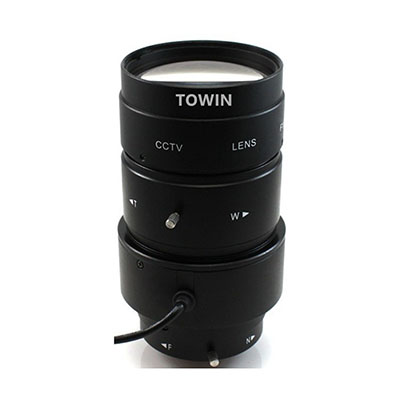
low-light-F1.0 IR Corrected Lens , CCTV Zoom Lens
5. Advanced Features Enhancing Lens Performance
Today’s CCTV lenses integrate cutting-edge technologies to overcome traditional limitations:
- Infrared (IR) Correction: Ensures clear images in low-light or IR-illuminated environments by minimizing focus shifts.
- Anti-Reflective Coatings: Reduce glare and lens flare, improving contrast and color accuracy.
- Environmental Sealing: Protects against dust, moisture, and vandalism, extending the lens’s lifespan.
These innovations address challenges like poor lighting or harsh weather, ensuring reliable operation 24/7.
6. Choosing the Right Lens for Your Needs
Selecting the ideal CCTV lens involves balancing several factors:
- Field of View: Measure the area you need to monitor and choose a focal length accordingly.
- Lighting Conditions: Opt for a wide aperture (f/1.2–f/2.0) if low-light performance is critical.
- Budget: Varifocal and motorized lenses offer flexibility but come at a higher cost.
Conclusion
Understanding how CCTV lenses work reveals their role as the unsung heroes of security systems. By manipulating light, focus, and field of view, these lenses transform raw data into actionable insights.