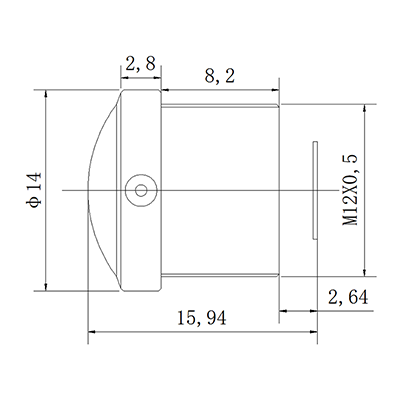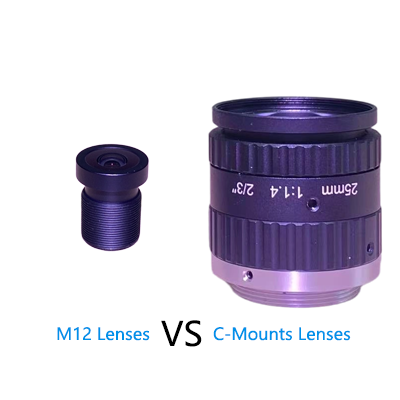



M12 lens RoHS and REACH compliance
08/20/2025
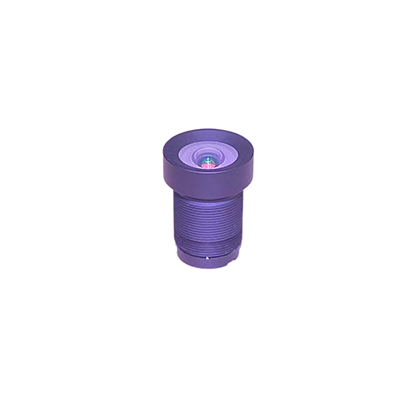
M12 Mount Low Distortion Lens
08/20/2025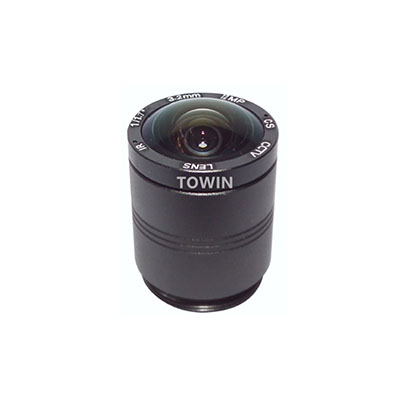
In advanced optics, IR correction lenses revolutionize performance by unifying visible and infrared light focus. These specialized lenses engineer solutions to correct chromatic aberrations, ensuring different wavelengths—especially visible and infrared light—converge at the same focal point.
1. Enhanced Chromatic Aberration Correction Across Spectrums
IR correction lenses excel at reducing chromatic aberration across visible and infrared light spectrums. Traditional lenses optimize performance for visible light, covering wavelengths roughly from 400 to 700 nanometers (nm). Infrared light spans 700 nm to 1 mm, varying by classification: near-, short-, mid-, or long-wave IR.
When uncorrected, the difference in focal lengths between visible and infrared light causes color fringing and blurriness, especially in high-contrast scenarios. IR correction lenses use specialized materials and coatings to tune refractive indices, aligning all wavelengths at one focal plane. This results in sharper images with true-to-life color reproduction, even in multi-spectral imaging systems.
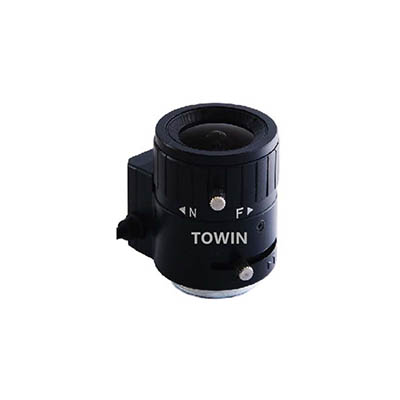
2.8-12mm F1.4 IR Corrected Lens , CCTV Zoom Lens
2. Multi-Spectral Imaging Capabilities
IR correction lenses are uniquely suited for multi-spectral imaging, a technique that captures data across multiple wavelengths simultaneously. IR correction lenses prove vital in agricultural monitoring, letting sensors assess plant health and water stress simultaneously. Similarly, in security and surveillance, IR Corrected Lens enable cameras to switch seamlessly between daytime (visible light) and nighttime (infrared) modes without sacrificing image clarity.
IR Corrected Lenses simplify system design, cut costs, and boost reliability by removing the need for separate lenses or filters. For instance, FLIR Systems, a leader in thermal imaging technology, integrates IR Corrected Lens into its advanced cameras to deliver high-resolution thermal and visual data in a single package.
3. Athermal Design for Temperature Stability
IR correction lenses feature athermal designs that maintain consistent performance across varying temperatures. Optical materials expand or contract with temperature changes, potentially altering the lens’s focal length and causing defocus. This is particularly problematic in outdoor or industrial environments where temperatures can fluctuate dramatically.
IR Corrected Lens address this issue by using materials with complementary thermal expansion coefficients or by incorporating athermal glass elements. These design strategies maintain focal stability, ensuring that the lens performs optimally whether it’s used in a freezing Arctic environment or a scorching desert. IR correction lenses’ temperature resilience suits UAVs, automotive lidar, and outdoor security cameras perfectly.
4. High Transmission Efficiency in IR Bands
Effective infrared imaging requires lenses that transmit IR light with minimal loss. IR correction lenses use germanium, zinc selenide, or chalcogenide glasses for high IR transmission and unwanted wavelength blocking. Additionally, anti-reflective coatings are applied to reduce surface reflections and maximize light throughput.
This high transmission efficiency is crucial in low-light or thermal imaging applications, where every photon counts. For example, in medical thermography, IR Corrected Lens enable non-contact temperature measurement with micro-degree precision, aiding in early detection of fevers or inflammation. Similarly, in astronomy, these lenses help telescopes capture faint infrared signals from distant celestial objects.
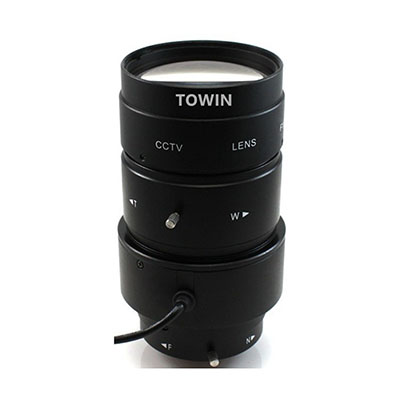
low-light-F1.0 IR Corrected Lens , CCTV Zoom Lens
5. Compact and Lightweight Form Factors
Despite their advanced capabilities, IR correction lenses are often designed to be compact and lightweight, making them suitable for portable and space-constrained applications. Advances in optical manufacturing, such as diamond turning and molded aspheric surfaces, allow for the creation of complex lens shapes without sacrificing performance or increasing size.
This miniaturization is particularly valuable in consumer electronics, where IR Corrected Lens are used in smartphones for facial recognition or in augmented reality (AR) headsets for environmental mapping. By integrating these lenses into sleek, ergonomic devices, manufacturers can offer cutting-edge functionality without compromising user comfort.
Conclusion
IR correction lenses represent a significant leap forward in optical engineering, combining multi-spectral imaging, athermal design, and high transmission efficiency in a compact package. Their ability to correct chromatic aberrations across visible and infrared spectrums makes them indispensable in industries ranging from defense and aerospace to healthcare and agriculture.