



Fisheye HD lens 1/3.2″ Φ2.9 205° M12 mount lens
12/03/2025
Pinhole lens 4mm 1/3″ auto iris CCTV CS-mount lens
12/04/2025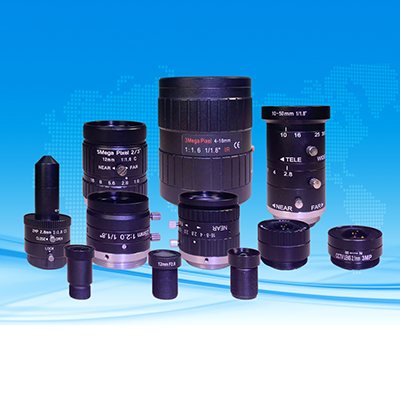
This is a hassle-free guide to TOWIN lens, compiling a variety of useful and highly reliable lenses for you. Perhaps you’re a photography enthusiast needing a practical lens to capture stunning images; or perhaps you’re a drone enthusiast looking for the perfect lens to showcase the grandeur of mountains and the beauty of rivers. Whatever your preference, you’ll find the lens that suits your needs here.
Not every lens can satisfy you; the perfect fit might just be found at TOWIN.
When it comes to TOWIN lenses, I was really confused when I first started out. The main categories include M12 Lenses, C-Mount Lenses, CS-Mount Lenses, etc., while the subcategories are further divided into Low Distortion Lenses, Automotive Lenses, CCTV Lenses, and many more. The sheer variety is overwhelming. The model names, like encrypted codes, correspond to different lenses, and not only do the names and prices vary, but their uses and applications are also incredibly diverse. More importantly, the terminology used in different recommendation articles can be inconsistent, easily leading to confusion. It wasn’t until after careful classification and research that I gradually understood: the quality of a TOWIN lens isn’t determined by its specifications or price, but by how and where it will be used.
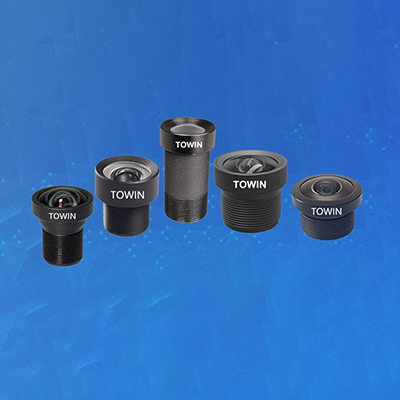
TOWIN lenses
This “TOWIN Lens Lazy Person’s Guide” helps you organize and analyze the parameters, uses, and applications of various commonly used lenses, allowing you to clearly distinguish which lens meets your needs.
TOWIN Lens Naming Conventions: What are S-mount, C-mount, and CS-mount? Key Abbreviations You Need to Understand
If you see S-mount, C-mount, and CS-mount lenses when buying TOWIN lenses but don’t know their differences, you’re not alone. I used to think that as long as it matched my focal length and aperture, it was fine, until I bought the wrong mount and couldn’t focus. That’s when I realized that understanding the model specifications is much more important than I thought.
The S-Mount Lens has a standard mount with a M12X0.5 thread, usually is called “M12 lens”. Because it could be threaded directly into the M12 mount of the PCB (Printed Circuit Board)camera, we also call it “board lens”. It is also called “miniature lens”, as the tiny lens size.
The C-Mount Lens with a flange focal distance of 17.526 mm, 5mm more than CS-mount, is mounted to a C-mount camera. It is typically used in Machine Vision camera, USB, GigE and 3D cameras for industrial application then often called “MV lens” , ”FA lens” and “industrial lens”. Now many C-mount lenses are using in traffic monitoring cameras for Intelligent Traffic Systems then called “ITS lens” and “traffic lens”.
The CS-Mount Lens with a flange focal distance of 12.526 mm is designed to attach CS mount CCD/CMOS camera. Our high resolution megapixel CS-mount lenses have Fixed Focal and Vari-Focal length with Manual Iris, DC Auto Iris, P-Iris types, which are widely used in CCTV camera,Network camera, IP camera for video surveillance applications. Using Muti-Coating technology, the lens with IR corrected is perfect for Day/Night security camera.
The TOWIN lens series introduction allows you to understand the naming mechanism beforehand, so you can know which lens best suits your needs and requirements. Buying the wrong lens wastes not only money, but also trust and time.
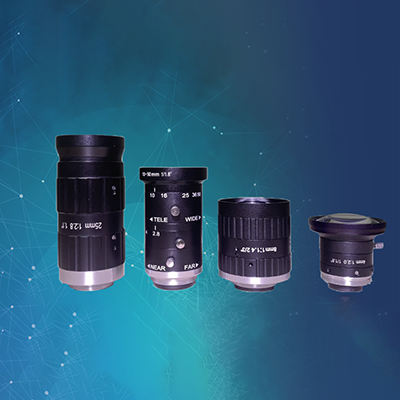
C-mount lenses
How to Choose TOWIN Lenses? Quickly Locate Them Based on Budget, Application, Optical Performance, and Compatibility
I. Filter by Budget: Price-Performance Ratio for Professional Scenarios
Entry-Level (USD$5-20)
- Suitable Scenarios: Basic surveillance, simple industrial inspection, low-precision machine vision.
- Recommendation: TOWIN offers basic prime lenses (e.g., 2.8mm wide-angle) or low-magnification zoom lenses (e.g., 6-12mm), meeting basic imaging needs and suitable for users with limited budgets who need coverage for multiple scenarios.
- Example: TOWIN 2.8mm prime lens, suitable for indoor surveillance, covering a wide-angle area.
Advanced Level (USD$20-100)
- Suitable Scenarios: High-definition surveillance, medium-precision industrial inspection, standardized machine vision.
- Recommendation: TOWIN offers high-resolution lenses (e.g., 5-megapixel), zoom lenses (e.g., 10-50mm), or lenses with image stabilization, suitable for users with high requirements for image quality and flexibility.
- Example: TOWIN 10-50mm zoom lens, suitable for industrial production line inspection, with flexible focal length adjustment.
High-end (USD$100 and above)
- Applicable Scenarios: Ultra-high-definition surveillance, high-precision industrial inspection, complex machine vision (such as 3D measurement, defect identification).
- Recommendation Logic: TOWIN offers ultra-high-definition lenses (such as 12-megapixel lenses), telecentric lenses (for industrial measurement), or special function lenses (such as infrared lenses), suitable for professional needs or users with extreme performance requirements.
- Example: TOWIN telecentric lens, used for precision industrial measurement, eliminating perspective errors.
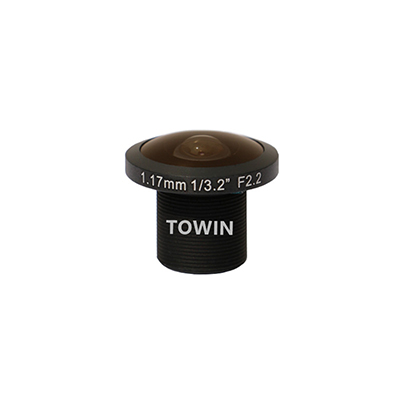
IR corrected 1.17mm M12 Fisheye CCTV lens
II. Filtering by Application: Matching Professional Scenarios
1. Surveillance Lenses
- Core Requirements: Wide-angle coverage, low-light imaging, long-distance clarity, dust and water resistance.
Recommended Lens Types:
- Fixed-focus lenses: such as 2.8mm, 3.6mm, suitable for indoor wide-angle surveillance (such as offices, shops).
- Zoom lenses: such as 6-12mm and 10-50mm, suitable for outdoor zoom monitoring (e.g., parking lots, roads).
- Telephoto lenses: such as 50-200mm, suitable for long-distance monitoring (e.g., border areas, ports).
- TOWIN advantages: May offer low-distortion, high-transmittance lenses, adaptable to complex lighting environments (e.g., nighttime, backlighting).
2. Industrial Lenses
- Core requirements: High resolution, high contrast, low distortion, environmental resistance (e.g., high temperature, vibration).
Recommended lens types:
- Telecentric lenses: Used for precision measurement (e.g., circuit board inspection), eliminating perspective errors.
- FA lenses (Industrial fixed focal length lenses): such as 50mm and 85mm, suitable for standardized inspection (e.g., product size measurement).
- Zoom lenses: such as 12-36mm, suitable for multi-position inspection (e.g., different workstations on an assembly line).
- TOWIN advantages: May offer high MTF (modulation transfer function) lenses, ensuring clear image details.
3. Machine Vision Lenses
- Core Requirements: High precision, high-speed focusing, compatibility with multiple sensors (e.g., CMOS, CCD), support for special light sources (e.g., infrared, ultraviolet).
Recommended Lens Types:
- Megapixel Lenses: Such as 1/1.8-inch, 2/3-inch lenses, compatible with high-resolution sensors.
- Liquid Crystal Lenses: Support fast zoom, suitable for dynamic scenarios (e.g., robot grasping).
- Infrared Lenses: Used in nighttime or low-light environments (e.g., agricultural drone monitoring).
- TOWIN Advantages: May offer low-dispersion, high-transmittance lenses, improving image processing efficiency.

12-50mm-P-Iris-CS-Mount Industrial lenses
III. Filtering by Optical Performance and Compatibility: Key Indicators for Professional Scenarios
1. Resolution
- Surveying: At least 2 megapixels (1080P), high-end requirements include 4K (8 megapixels).
- Industrial/Machine Vision: Matched to the sensor, such as 5 megapixel, 12 megapixel lenses.
- TOWIN Recommendation: Choose lenses labeled “High Resolution” or “Megapixel Level”.
2. Aperture Size
- Monitoring: F1.2-F2.0, suitable for low-light environments (e.g., nighttime monitoring).
- Industrial/Machine Vision: F2.8-F8, balancing depth of field and light intake (e.g., large depth of field required for product inspection).
- TOWIN Recommendation: Choose according to lighting conditions; prioritize large apertures in low-light environments.
3. Focal Length and Field of View
- Wide-angle lens (<35mm): Suitable for large-area monitoring or industrial panoramic inspection.
- Standard lens (35-85mm): Suitable for portrait-level monitoring or medium-precision inspection.
- Telephoto lens (>85mm): Suitable for long-distance monitoring or small defect inspection.
- TOWIN Recommendation: Calculate the required focal length based on the monitoring distance or the size of the object being inspected.
4. Interface Type
- Monitoring: Common C/CS interface, requires compatibility with the camera.
- Industrial/Machine Vision: May require industrial interfaces such as M42 or M58, or lenses with special flange distances.
- TOWIN Recommendation: Ensure the lens mount is compatible with your device (e.g., labeled “Supports C-mount”).
5. Special Features
- Image Stabilization: Suitable for mobile surveillance or vibrating environments (e.g., vehicle monitoring).
- Infrared Coating: Suitable for nighttime or low-light scenarios (e.g., security monitoring).
- Telecentric Design: Suitable for industrial measurement (e.g., length and angle measurement).
- TOWIN Recommendation: Choose lenses labeled “Image Stabilization,” “Infrared,” or “Telecentric” based on your needs.
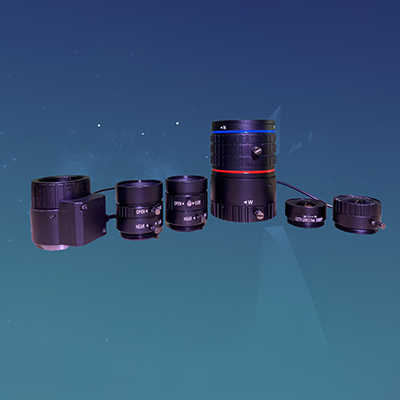
cs-mount lenses
TOWIN lens selection isn’t about “which one is the best,” but rather “which one is best for you.” Choose the lens that best suits your actual application.
TOWIN Lens Recommendation List TOP 5
S06611707116F69-Wide-angle 8-Megapixel M12 CCTV lens
I. Core Advantages
1. High Resolution and Wide-Angle Coverage
- 8 Megapixels: Supports 4K image output, meeting high-definition monitoring needs and capturing details (such as facial features and license plate numbers).
- Wide-Angle Design: Wider field of view than standard lenses, providing a larger coverage area per lens and reducing blind spots (such as indoor halls and parking lots).
2. Extremely Strong Environmental Adaptability
IP67/IP69K Waterproof and Dustproof:
- IP67: Can withstand short-term immersion (1 meter depth, 30 minutes), adaptable to rain, snow, and dusty environments.
- IP69K: Resistant to high-pressure water washing (such as car washing and industrial spray scenarios), suitable for harsh conditions in vehicles or outdoors.
- Built-in Infrared Filter: Filters infrared light interference, improving image quality for day and night monitoring and preventing image color distortion.
3. Optimized Optical Performance
- F1.6 Large Aperture: Ample light intake ensures clear imaging even in low-light conditions (such as nighttime), reducing the need for supplemental lighting.
- M12 Interface: High versatility, compatible with most security cameras and automotive ADAS systems, reducing adaptation costs.
4. Lightweight and Compact Design
- Small size facilitates integration into vehicle cameras, drones, or compact surveillance equipment, saving space.
II. Recommended Application Scenarios
1. Security Monitoring Field
Indoor and Outdoor High-Definition Monitoring:
- Suitable for scenarios requiring wide-area coverage, such as banks, shopping malls, and traffic intersections. 8MP resolution clearly records human activity.
- Example: Wide-angle monitoring at shopping mall entrances; a single lens covers the entire passageway, reducing the number of devices required.
Low-Light Environments:
- The F1.6 aperture combined with an infrared filter ensures usable images even in low-light conditions such as nighttime or underground parking garages.
2. Automotive Sector
Automotive Cameras:
- IP69K waterproof rating withstands car washes, heavy rain, and other harsh conditions, extending device lifespan.
- Wide-angle design is suitable for surround-view systems (such as 360° panoramic imaging), reducing blind spots and improving driving safety.
ADAS (Advanced Driver Assistance Systems):
- High resolution supports lane line recognition, pedestrian detection, and other algorithms, aiding in the development of autonomous driving functions.
3. Industrial and Machine Vision
Outdoor Industrial Inspection:
- IP67 waterproof and dustproof, suitable for dusty or humid environments such as factories and mines, used for equipment status monitoring.
Robot Vision:
- Compact design allows integration into mobile robots or AGVs for environmental perception and navigation.
III. Purchase Recommendations
1. Prioritize Your Needs:
- For harsh outdoor environments or automotive applications, IP69K waterproofing and a compact design are key.
- If a low-cost solution is desired, compare with other brands’ IP65 lenses, but be prepared to accept performance compromises.
2. Verify Compatibility:
- Confirm that the device supports the M12 interface and 8-megapixel sensor to avoid interface incompatibility or resolution bottlenecks.
3. Test Actual Performance:
- It is recommended to request a sample unit for testing, focusing on verifying low-light imaging, wide-angle distortion control, and waterproof performance.
This TOWIN lens boasts high resolution, strong environmental adaptability, and a compact design as its core competitive advantages, making it particularly suitable for security and automotive applications with high requirements for image quality and reliability. It is the preferred solution for outdoor surveillance, vehicle surround view, or industrial inspection scenarios.

Wide-angle 8-Megapixel M12 CCTV lens
CCL1301020MP-Fisheye lens 1/3″ Φ3 210° HD M12 mount lens
I. Advantages
- 1. Ultra-wide-angle field of view: The CCL1301020MP boasts an ultra-wide-angle field of view of 210° (horizontal, vertical, and diagonal), making it ideal for applications requiring panoramic monitoring or 360° AR panoramic video recording.
- 2. High resolution: This lens supports 8 Megapixel resolution, capturing detailed and clear images to meet the needs of high-definition monitoring and image recognition.
- 3. Low optical distortion: Optical distortion is less than -99%, meaning the lens maintains high geometric accuracy and reduces image distortion when capturing images.
- 4. Compact design: Utilizing an M12x0.5 threaded interface, the lens has a diameter of only Φ3, making it compact and easy to integrate into various compact devices.
- 5. Fixed aperture: The fixed aperture of F2.0 simplifies the complexity of the optical system while ensuring stable performance under various lighting conditions.
- 6. Close-up Capability: With a minimum focusing distance (M.O.D.) of 0.1 meters, the lens maintains clear image quality even when shooting at close range.
II. Reasons for Recommendation
- 1. Panoramic Monitoring Applications: For applications requiring panoramic monitoring, such as smart cities, large shopping malls, and transportation hubs, the CCL1301020MP’s ultra-wide-angle field of view and high resolution provide comprehensive monitoring coverage.
- 2. AR Panoramic Camera: In the field of augmented reality (AR) panoramic cameras, this lens can capture 360° panoramic images, providing rich visual information for AR applications.
- 3. Machine Vision and Industrial Inspection: In the fields of machine vision and industrial inspection, the high resolution and low optical distortion characteristics make the CCL1301020MP an ideal lens choice, meeting the needs of precision inspection and identification.
- 4. Compact Device Integration: Due to its small size and compact design, this lens is ideal for integration into various compact devices, such as drones, robots, and portable monitoring equipment.
With its advantages of ultra-wide field of view, high resolution, low optical distortion and compact design, the TOWIN lens has broad application prospects in fields such as panoramic monitoring, AR panoramic photography, machine vision and industrial inspection, and compact equipment integration.
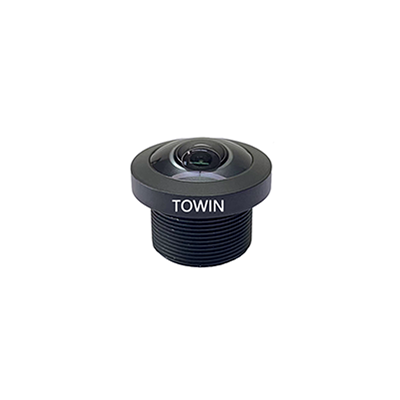
Fisheye lens Φ3 210° HD M12 mount lens
S02112312022F-Low distortion lens Wide-angle 12-Megapixel
I. Core Advantages
1. Ultra-Low Distortion Design
- TV Distortion <5%: Compared to ordinary wide-angle lenses (distortion often exceeds 10%), this lens significantly reduces image edge distortion, making it especially suitable for scenarios requiring precise measurement (such as face recognition, license plate recognition, and industrial dimensional measurement).
- Wide-angle and Low Distortion Balance: A 132° (diagonal) field of view covers a wide range while maintaining image linearity, avoiding the “fisheye effect” of traditional wide-angle lenses.
2. Ultra-High Resolution Support
- 12MP (1/2.3-inch sensor): Supports 4K and above image output, with detail capture capabilities far exceeding conventional lenses (such as 2MP-5MP), clearly distinguishing tiny targets (such as distant text and minor defects).
- Compatible with High-Pixel Sensors: Compatible with 1/2.3-inch or larger CMOS/CCD sensors, fully utilizing sensor performance.
3. Environmental Adaptability Optimization
- Built-in Filter: Filters stray light and infrared interference, improving image quality for day and night monitoring and preventing color cast or glare in nighttime images.
- Compact Structure: M12 interface design, small size, easy integration into compact devices (such as drones, robots, and vehicle cameras).
4. Outstanding Optical Performance
- F2.2 Aperture: Balances light intake and depth of field, suitable for general indoor and outdoor scenarios, maintaining a certain level of clarity even in low-light environments.
- 4-Group 2-Edge Optical Structure: Optimized aberration correction, improving edge image quality and reducing chromatic aberration and blur.
II. Recommended Application Scenarios
1. Security Monitoring Field
High-Precision Face Recognition:
- 12-megapixel resolution clearly captures facial features (such as pores and wrinkles), suitable for scenarios requiring identity verification such as airports and banks.
- Example: Entrance/exit gate camera; low distortion design ensures accurate facial proportions and improves recognition accuracy.
Long-Distance License Plate Recognition:
- Wide-angle coverage of parking lots or road entrances; 12MP resolution can recognize license plates up to 50 meters away; low distortion avoids character deformation.
Day & Night Monitoring:
- Built-in filters adapt to day and night switching; clear images are still output under infrared supplemental lighting at night, reducing noise.
2. Industrial and Machine Vision
Precision Dimension Measurement:
- Low distortion characteristics ensure the accuracy of measuring linear dimensions (such as part length, hole diameter), with errors controlled at the micrometer level, suitable for the inspection of electronic and automotive parts.
- Example: Mobile phone screen bezel width detection, avoiding measurement deviations caused by distortion in traditional lenses.
Surface Defect Detection:
- 12MP resolution can identify defects at the 0.1mm level (such as scratches, bubbles), suitable for high-precision manufacturing such as semiconductors and displays.
Robot Vision Navigation:
- Wide-angle coverage of the robot’s working environment; low-distortion images improve the stability of SLAM (Simultaneous Localization and Mapping) algorithms.
3. Automotive and Transportation Sector
Automotive Surround View System:
- A 132° field of view covers blind spots around the vehicle. Low distortion design ensures natural image stitching, improving safety when reversing and changing lanes.
Traffic Monitoring:
- 12MP resolution captures fast-moving targets (such as vehicles and pedestrians). Low distortion avoids license plate or facial distortion, aiding in evidence collection for traffic violations.
4. Drones and Aerial Photography
Wide-Angle Aerial Photography:
- Lightweight design (M12 interface) suitable for drone payloads. A 132° field of view captures panoramic images. Low distortion maintains the straightness of the horizon.
Topographic Mapping:
- 12MP resolution supports high-precision map creation. Low distortion reduces post-processing image correction workload.
III. Purchase Recommendations
1. Prioritize Your Needs:
- For high-precision measurement or facial recognition, low distortion and 12MP resolution are key; prioritize this lens.
- If budget is limited and distortion is not a major concern, a 5-megapixel lens can be considered, but performance compromises must be accepted.
2. Verify Compatibility:
- Confirm that the device supports a 1/2.3-inch sensor and M12 interface to avoid resolution bottlenecks or interface incompatibility.
3. Test Actual Performance:
- It is recommended to request a sample unit for testing, focusing on verifying low distortion performance (e.g., observing distortion in grid images), edge sharpness, and low-light imaging.
The S02112312022F lens boasts ultra-low distortion, ultra-high resolution, and a compact design as its core competitive advantages. It is particularly suitable for security, industrial inspection, automotive, and drone applications where image accuracy is extremely important, making it the preferred solution for users seeking both image quality and reliability.
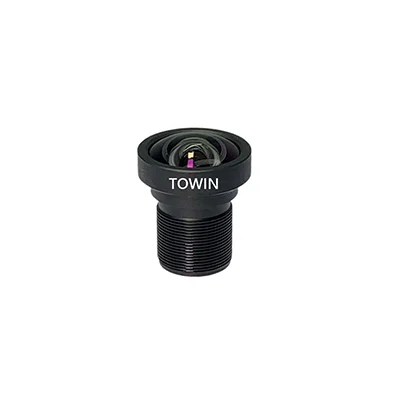
Low distortion lens 12-Megapixel M12 F2.2 CCTV lens
S05911806056F-Low distortion 5-Megapixel lens
I. Core Advantages
1. Low-Distortion Optical Design
- Distortion Control: Although specific values are not explicitly stated, as a “low-distortion lens,” its design goal is to minimize image edge distortion, making it suitable for scenarios requiring precise measurement (such as industrial dimensional inspection and robot positioning).
- Wide Angle and Distortion Balance: A 78° (diagonal) field of view covers a medium range while maintaining image linearity, avoiding the “edge stretching” problem of traditional wide-angle lenses.
2. High-Resolution Adaptation
- 5 Megapixel (1/1.8-inch sensor): Supports high-definition image output, with detail capture capabilities superior to conventional lenses (such as 2-3 megapixel lenses), clearly distinguishing tiny targets (such as electronic component pins and textile textures).
- Compatible with High-Pixel Sensors: Compatible with 1/1.8-inch or larger CMOS/CCD sensors, fully utilizing sensor performance.
3. Industrial-Grade Environmental Adaptability
- Built-in Filter: Filters stray light and infrared interference, improving image contrast and reducing chromatic aberration, suitable for complex lighting environments (such as factory fluorescent lights and outdoor natural light).
- Compact and Durable Structure: M12 interface design, small size, metal casing, adaptable to industrial scenarios with vibration and dust.
4. Fixed Aperture Optimization
- F5.6 Aperture: Balances light intake and depth of field, suitable for stable lighting environments in industrial settings (such as production lines), eliminating the need for manual aperture adjustment and simplifying system design.
- Deep Depth of Field: Small aperture provides a wider range of sharpness, suitable for scenarios requiring simultaneous focus on near and far objects (such as logistics sorting and parts assembly).
II. Recommended Application Scenarios
1. Industrial Automation and Machine Vision
Precision Dimension Measurement:
- Low distortion design ensures the accuracy of measuring linear dimensions (such as part length and aperture), with errors controlled within micrometers, suitable for the inspection of electronic, semiconductor, and automotive parts.
- Example: Mobile phone chip pin spacing detection, avoiding measurement deviations caused by distortion in traditional lenses.
Surface Defect Detection:
- 5MP resolution identifies defects as small as 0.05mm (e.g., scratches, bubbles), suitable for high-precision manufacturing of displays, metal surfaces, etc.
Robot Vision Navigation:
- Medium-wide-angle lens covers the robot’s working area; low-distortion images improve the stability of the SLAM (Simultaneous Localization and Mapping) algorithm, suitable for AGVs and welding robots.
2. Intelligent Transportation and Logistics
License Plate Recognition:
- 5MP resolution clearly captures license plate characters; 78° field of view covers lane entrances, adaptable to different installation heights and angles.
Cargo Sorting:
- Deep depth of field ensures simultaneous focus on packages at different heights on the conveyor belt, enabling automated sorting in conjunction with barcode recognition systems.
3. Medical and Life Sciences
Microscopic Imaging Assistance:
- Low-distortion design reduces image distortion, suitable for microscope cameras, assisting in pathological slide observation or cell analysis.
Endoscopic Imaging:
- Compact structure allows integration into medical endoscopes, providing high-definition, distortion-free in vivo images.
4. Agriculture and Environmental Monitoring
Crop Growth Monitoring:
- 5MP recording of plant leaf morphology and pest/disease characteristics; low distortion ensures image data accuracy and supports agricultural AI analysis.
Water Quality Testing:
- In conjunction with an underwater camera, clearly captures microorganisms or pollutants in water samples, aiding environmental research.
III. Purchase Recommendations
1. Prioritize Your Needs:
- For industrial-grade low-distortion detection or deep depth-of-field applications, this lens offers excellent value.
- For higher resolution (e.g., 8MP or higher), consider higher-end models in the same series, but be prepared for the price increase.
2. Verify Compatibility:
- Confirm that the device supports a 1/1.8-inch sensor and M12 interface to avoid resolution bottlenecks or interface incompatibility.
3. Test Actual Performance:
- It is recommended to request a sample unit for testing, focusing on verifying low distortion performance (e.g., observing distortion when shooting grid images), edge image quality, and depth-of-field range.
The S05911806056F lens boasts low distortion, high resolution, compact design, and durability as its core competitive advantages. It is particularly suitable for scenarios requiring precise imaging, such as industrial automation, intelligent transportation, and medical applications, making it an ideal choice for users seeking image quality stability and cost-effectiveness.
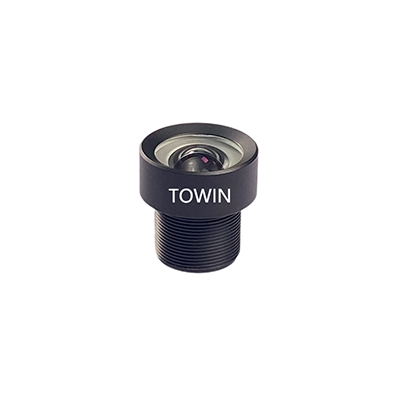
Low distortion 5-Megapixel lens
S01714012013IRB9-1.7mm Wide-Angle TOF lens
I. Core Advantages
1. Ultra-Wide Viewing Angle and Compact Design
- 147° Diagonal Field of View (D): Covers an ultra-large area, reducing the need for multi-lens stitching, suitable for confined spaces or large-scale scenarios (such as indoor positioning, robot navigation).
- 1.7mm Ultra-Short Focal Length: Achieves wide-angle coverage with limited installation distance; for example, it can capture an area with a diameter of approximately 50cm at a distance of 20cm.
- M12 Interface and Lightweight Structure: Compact size (TTL only 14.84mm), easy to integrate into drones, AR/VR devices, or handheld terminals.
2. High-Precision 3D Sensing Capability
- 940nm Narrow-Band Filter: Effectively suppresses ambient light interference (such as visible light, other infrared bands), improves the signal-to-noise ratio of the TOF sensor, and ensures the accuracy of depth data.
- F1.3 Large Aperture: Increases light intake, shortens exposure time, reduces the risk of motion blur, suitable for dynamic scenarios (such as gesture recognition, motion-sensing games).
- Low distortion design (<59%): Although the distortion value is higher than ordinary lenses, in TOF applications, algorithmic correction can balance wide-angle and measurement accuracy.
3. Environmental adaptability optimization
- Manual focus and fixed aperture: Simplifies the structure, improves reliability, and adapts to industrial or outdoor environments with vibration and temperature differences.
- All-glass lens group: Wear-resistant and anti-aging, maintaining stable optical performance over long-term use.
II. Recommended application scenarios
1. Consumer electronics and interactive devices
AR/VR gesture control:
- Ultra-wide field of view captures user hand movements, combined with TOF depth information to achieve precise interaction (such as virtual keyboards, game controls).
- Example: VR headsets recognize user gestures through the lens, replacing traditional controllers.
Smartphone 3D modeling:
- 1.7mm focal length is suitable for front-facing TOF cameras, enabling face unlock, background blur, or object size measurement.
Motion-sensing game consoles:
- Large aperture improves motion capture sensitivity in low-light environments and reduces latency.
2. Robotics and Autonomous Driving
Service Robot Obstacle Avoidance:
- A 147° field of view covers the area in front of and to the sides of the robot, detecting obstacle distances in real time to avoid collisions.
- Example: Food delivery robots plan paths using cameras to adapt to complex restaurant environments.
Autonomous Driving Cabin Monitoring:
- Detects driver fatigue (e.g., closed eyes, head tilt), with an ultra-wide field of view ensuring full coverage of the cabin.
UAV Mapping:
- Lightweight design reduces the drone’s load, and a wide-angle lens quickly scans the terrain to generate a 3D point cloud model.
3. Industrial Automation and Logistics
AGV Navigation:
- TOF depth data assists SLAM algorithms to achieve centimeter-level positioning, adapting to dynamic factory environments (e.g., moving obstacles, changes in lighting).
Cargo Volume Measurement:
- Combining wide-angle and depth information, quickly calculates the length, width, and height of packages, optimizing warehouse space utilization.
Safety Monitoring:
- Detects the distance between personnel and hazardous areas (e.g., robotic arm operating areas), with an ultra-wide field of view reducing blind spots.
4. Medical Treatment and Rehabilitation
Rehabilitation Training Assessment:
- Captures patient limb movement trajectories, combines depth data to analyze movement amplitude and speed, and assists in developing rehabilitation plans.
Surgical Navigation:
- Integrated into medical endoscopes, providing a 3D field of view to help doctors accurately locate lesions.
III. Purchase Recommendations
1. Define TOF System Requirements:
- If an ultra-wide field of view + high-precision 3D data (e.g., robot navigation, AR interaction) is required, this lens is the preferred choice.
- If only basic distance measurement is required, a lower-cost ordinary TOF lens can be considered.
2. Verify Compatibility:
- Confirm that the TOF sensor supports a 940nm wavelength and that the interface is compatible with M12 (or adapted via an adapter ring).
3. Test Actual Performance:
- Focus on verifying depth data accuracy (e.g., compared to a laser rangefinder), edge field of view coverage, and stability in dynamic scenes.
With its ultra-wide field of view, anti-interference narrowband filter, and large aperture as its core competitive advantages, the S01714012013IRB9 lens is especially suitable for consumer electronics, robotics, and industrial scenarios that require large-scale 3D perception. It is an ideal choice for developers of TOF systems who pursue high performance and integration.
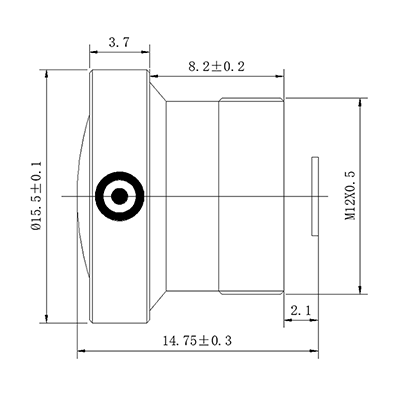
1.7mm Wide-Angle TOF lens
If you’d like to learn about other TOWIN lenses, you can check out TOWIN’s product page: https://www.towinlens.com/products
Choosing the Right Lens for Accurate Image Transmission! TOWIN Lenses Aren’t That Complicated
At this point, we want to emphasize again: Don’t choose the most expensive TOWIN lens; choose the one that best suits your needs. Whether you’re doing outdoor photography or garage surveillance, choosing the right lens is the most crucial step.
Here are 5 practical TOWIN lenses recommended, designed to help you save on your budget and improve efficiency. You’ll find that some seemingly unassuming lenses are actually the ones you need most, because clear images and practicality are the most worthwhile investments.
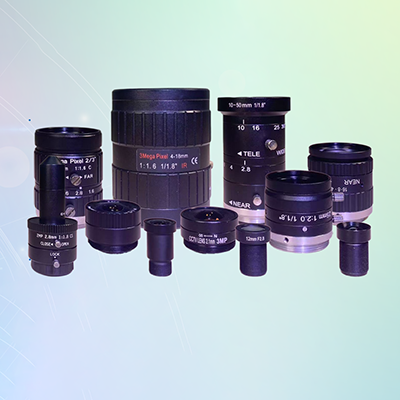
TOWIN LENSES
TOWIN lenses offer a wide variety; understanding the core concepts of “focal length and intended use,” “budget allocation,” and “optical performance” is key to selecting the right lens combination.
FAQs
What are the different TOWIN lens mounts?
TOWIN lenses are mainly divided into S-mount lenses, C-mount lenses, CS-mount lenses, F-mount lenses, and other lens accessory series.
Can TOWIN customize lenses to my specifications?
Absolutely! TOWIN specializes in the design and manufacture of custom lenses, ensuring precise and efficient fulfillment of your unique needs.
How does TOWIN guarantee lens quality?
TOWIN implements rigorous quality control measures at every stage of the production process, from material selection to final inspection, ensuring that every lens meets the highest standards of excellence.
What kind of optical lenses meet EU standards?
Optical lenses that meet EU standards must comply with the stringent safety, performance, and environmental regulations set by the EU. This includes meeting standards regarding material composition, optical sharpness, and durability.
Are ToWin lenses suitable for industrial applications?
Yes, ToWin lenses, including C-mount and CS-mount lenses, are designed for industrial applications such as machine vision, traffic monitoring, and video surveillance, providing robust performance in challenging environments.