


What Are IR-Corrected CCTV Lenses?
09/16/2025Custom Color Fisheye Lens
09/16/2025
What Is a Pinhole Lens? A pinhole lens is a simple yet revolutionary optical device that uses a minuscule aperture—often no larger than a pin’s tip—to project an image onto a surface. Unlike traditional lenses with glass elements, a pinhole lens relies on the principle of light traveling in straight lines. When light passes through the tiny hole, it creates an inverted image on the opposite side, such as a camera sensor or film.
The Science Behind the Pinhole Lens
The core mechanism of a pinhole lenses dates back to ancient civilizations. Early philosophers like Aristotle observed how light could create images through small openings, but it wasn’t until the Renaissance that artists and inventors formalized its use in devices like the camera obscura. Today, a pinhole lenses operates on the same physics: light rays from a scene enter the hole and converge to form a sharp image, provided the aperture is small enough to minimize diffraction.
Key Advantages of a Pinhole Lens:
- Infinite Depth of Field: Due to its tiny aperture, everything from a few inches to infinity appears in focus, ideal for landscape or street photography.
- No Chromatic Aberration: Unlike multi-element lenses, pinholes don’t split light into colors, eliminating color fringing.
- Compact and Lightweight: The absence of glass reduces weight, making it portable for experimental setups.
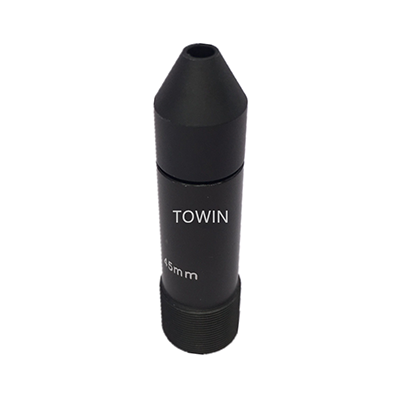
45mm F1.6 high temperature Low-Distortion pinhole lens
Modern Applications of Pinhole Lenses
While traditional cameras rarely use pinhole lenses today, they remain popular in niche fields. For instance, security cameras sometimes employ pinhole designs to hide lenses in inconspicuous locations. Additionally, artists use pinhole cameras to create dreamy, soft-focus images with a vintage aesthetic.
A notable example is the Lensless Camera Movement, where photographers build custom pinhole devices from everyday materials like aluminum cans or matchboxes. Websites like Pinhole Resource offer DIY guides and historical insights into this art form.
Challenges and Limitations
Despite its creativity, a pinhole lens has drawbacks. The tiny aperture drastically reduces light intake, requiring long exposure times—often seconds or minutes—even in bright conditions. This makes capturing moving subjects nearly impossible. Additionally, images tend to be less sharp than those from high-quality lenses, as diffraction blurs fine details.
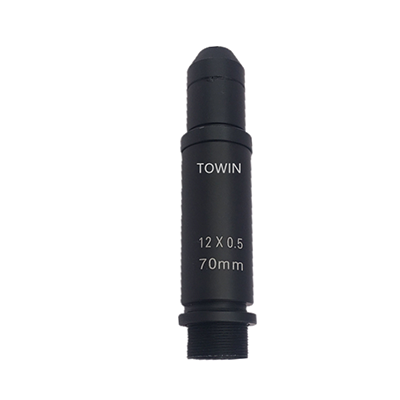
70mm pinhole M12 S-mount CCTV lens
Conclusion
What Is a Pinhole Lens? It’s a testament to simplicity’s power in optics. From ancient observations to modern art, this tiny aperture continues to inspire innovation and creativity. Whether you’re a hobbyist experimenting with DIY cameras or a professional seeking unique effects, the pinhole lenses offers esa window into the fundamentals of light and imagery.